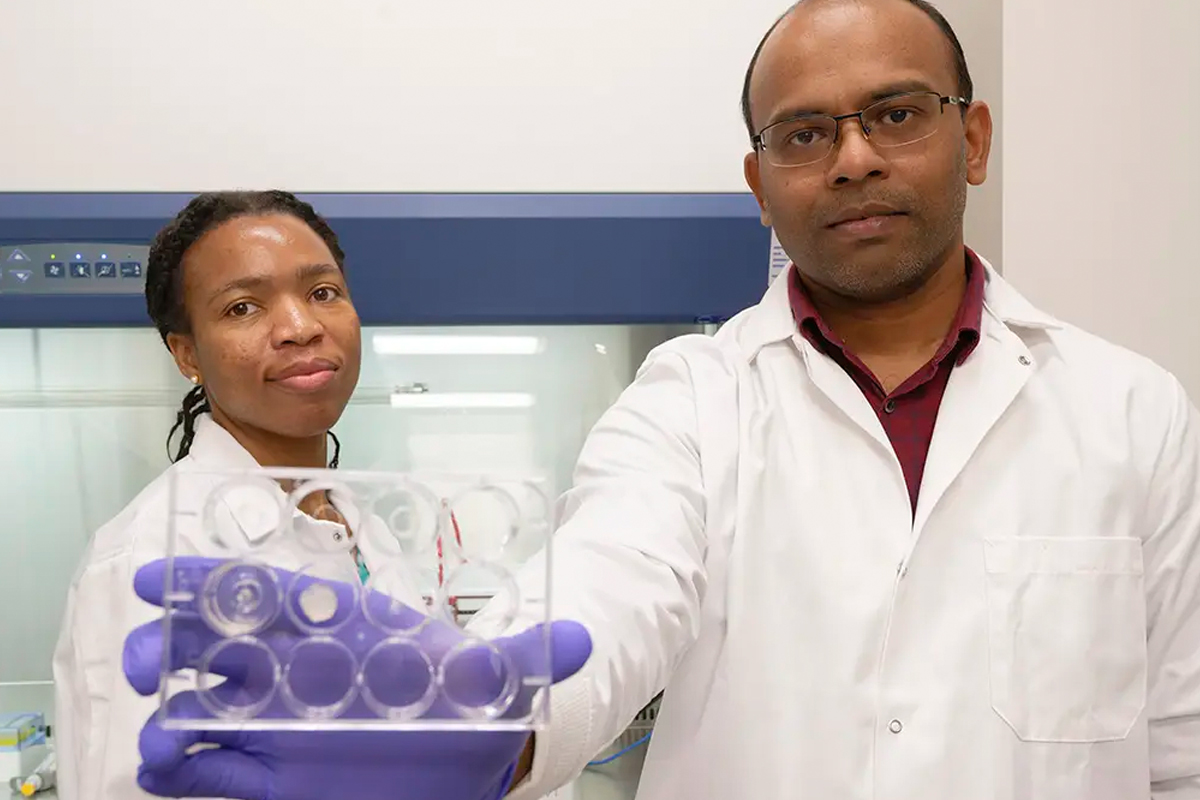
University of Mississippi demonstrates 3D-printed hydrogel drug delivery system for direct tumor targeting of anticancer drugs
Originally reported by ShareLab
Researchers at the University of Mississippi have published a study in Pharmaceutical Research demonstrating a 3D-printed drug delivery system that embeds anticancer-drug-loaded nanoparticles called spanlastics directly into a hydrogel carrier for local tumor implantation. The team used FRESH 3D printing - a support-bath method for soft materials - to fabricate the hydrogel structures, which carry nanoparticles measuring 200–300 nanometers capable of penetrating cell membranes. In vitro tests against breast cancer cells confirmed effective cell death, though the work remains at the preclinical stage with no in vivo data yet. The lead researchers are doctoral student Elom Doe and principal investigator Jaidev Chakka from the university's pharmacy school.
This work extends additive manufacturing into drug delivery systems, a frontier distinct from the more established medical AM applications of implants and surgical guides. The FRESH printing method, originally developed for bioprinting soft tissues, is here repurposed as a fabrication platform for drug-eluting devices - a cross-process application that bridges bioprinting and pharmaceutical manufacturing. The significance lies not in immediate clinical readiness but in demonstrating that AM can serve as the enabling fabrication method for localized chemotherapy delivery, potentially reducing the systemic side effects that plague conventional intravenous or oral chemotherapy. This aligns with the broader medical-dental vertical's push toward patient-specific, minimally invasive therapeutic devices, though the qualification pathway through FDA 510(k) or PMA for a combination drug-device product will be substantially longer and more complex than for a structural implant.
From a practical standpoint, this is an early-stage academic proof-of-concept, not a commercial product. The critical next steps are in vivo animal studies to validate tumor targeting, biodistribution, and toxicity profiles, followed by formulation stability and sterilization protocols. For AM industry observers, the takeaway is that FRESH printing and similar hydrogel-based techniques are gradually expanding beyond tissue engineering into functional drug delivery - but the regulatory and manufacturing scale-up challenges for a drug-device combination product are formidable and will require partnerships with pharmaceutical companies and contract development organizations to advance beyond the lab.
Topics