

$205M Quarter, $50M Siemens Bet, and the Design-to-Source Digital Thread
$205 million in quarterly revenue. $10.5 million in adjusted EBITDA - a $10.4 million year-over-year swing into profitability. A $50 million equity investment from Siemens. And a single-day stock surge that added roughly $1 billion to market capitalization. (Company PR; Stock Titan, May 7, 2026)
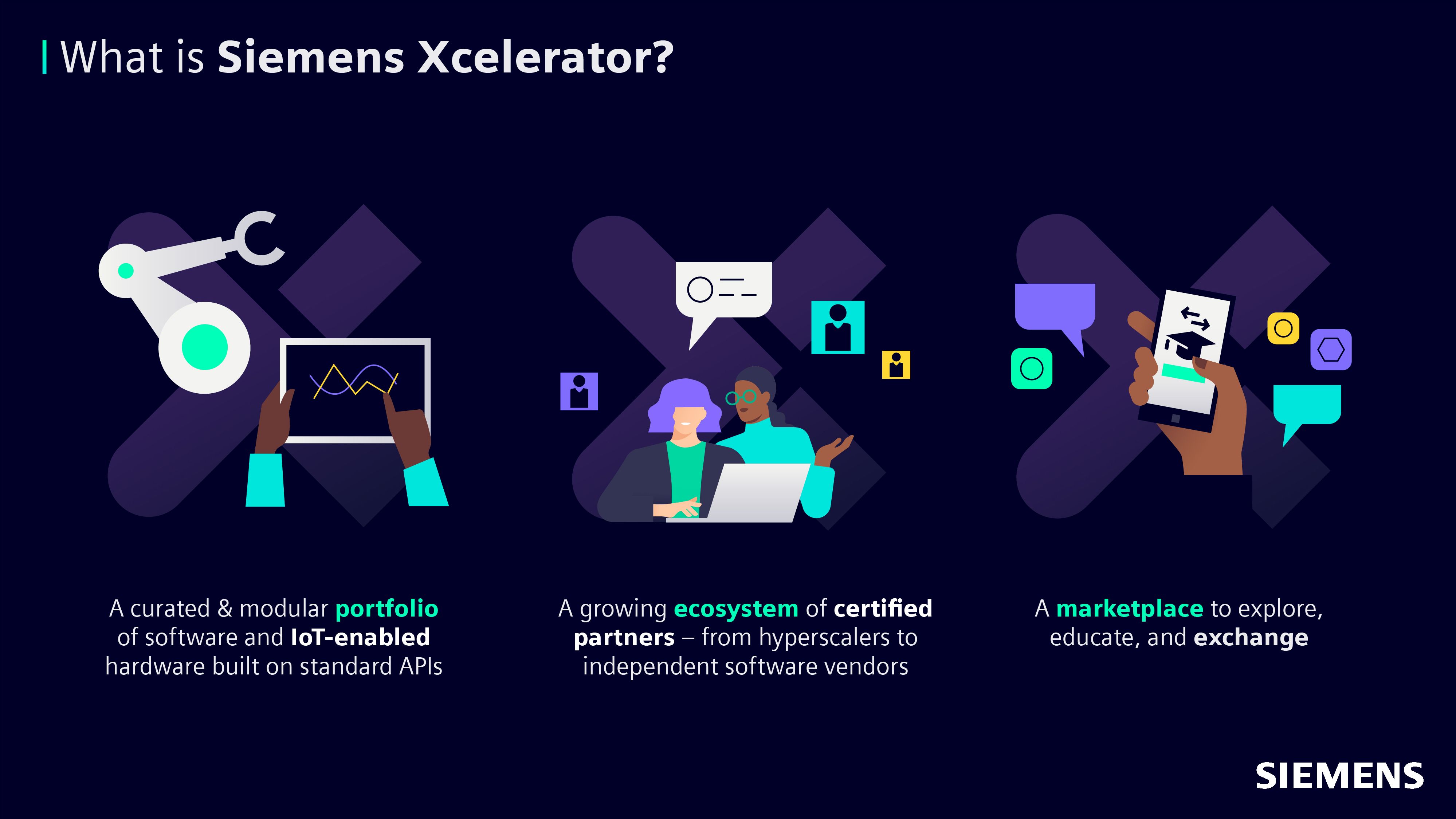
The numbers from Xometry's May 7, 2026 announcement are striking enough on their own. But the structural signal beneath them matters more for the additive manufacturing industry than any single quarterly beat. Xometry's partnership with Siemens embeds the company's AI-powered manufacturability analysis, instant quoting, and supplier network directly into Siemens Xcelerator - the digital platform used by millions of engineers worldwide. For the first time, a major industrial software platform is natively integrating a custom-manufacturing marketplace that includes 3D printing alongside CNC machining, injection molding, and sheet metal. The design-to-source digital thread is no longer a concept. It is a product.
How Xometry's AI Marketplace Connects Design to Delivered Part
Xometry's core technology is not a machine or a material - it is a proprietary AI engine that ingests a CAD file and returns, in seconds, a manufacturability analysis, a price, and a delivery date across multiple process families. The company's marketplace connects tens of thousands of active buyers with thousands of supplier partners. Accounts spending at least $50,000 annually grew 21% year-over-year. (Company PR, May 7, 2026)
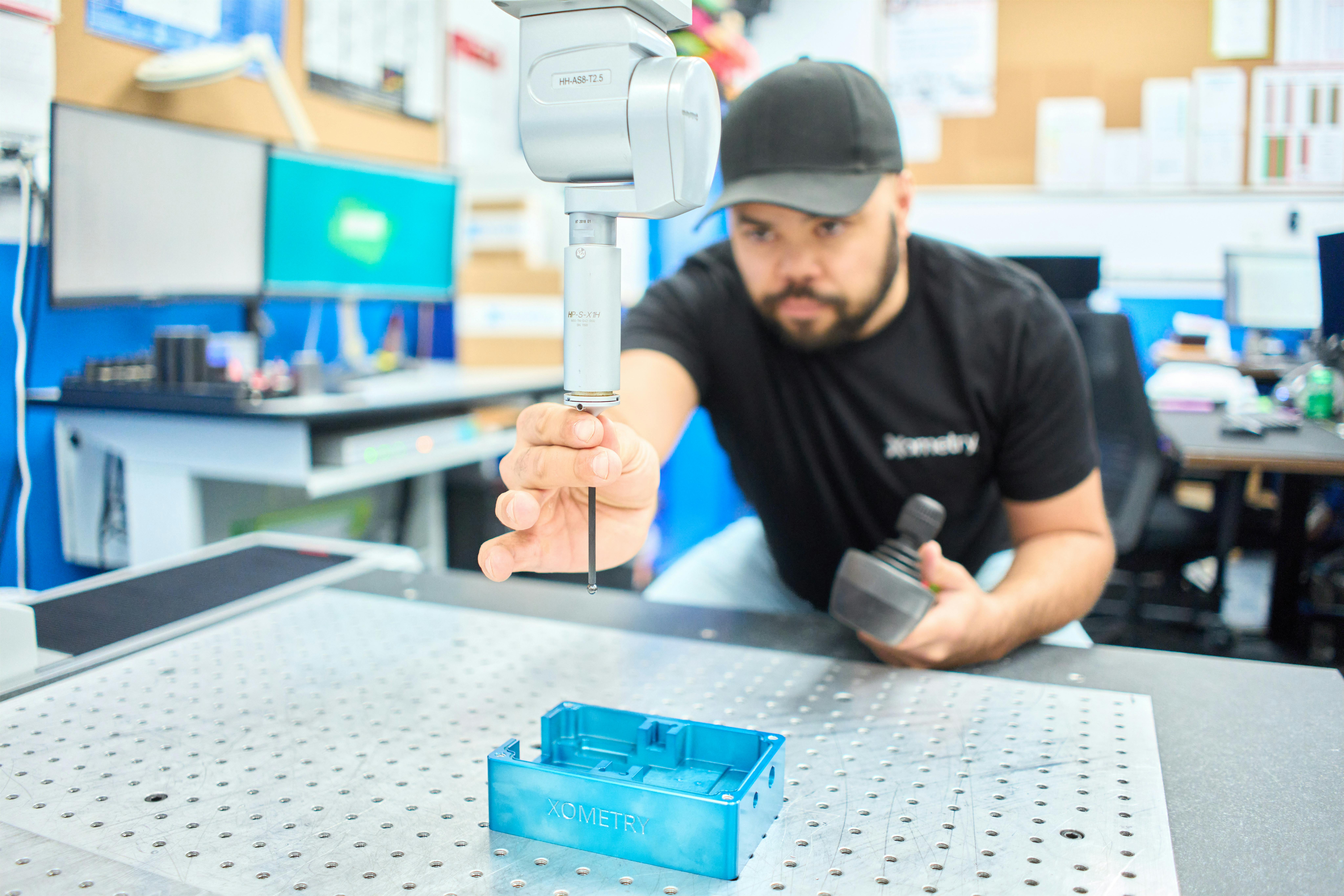
What makes the Siemens integration different from a standard API partnership is the insertion point. Xometry's intelligence will live inside Siemens Designcenter software, reaching engineers at the moment they make design decisions - not after they export a file and visit a separate website. A designer choosing between a 3D-printed titanium bracket and a CNC-machined aluminum part will see cost and lead-time implications before committing to the model. The feedback loop compresses what has historically been a multi-step, multi-department procurement cycle into a single software environment.
The partnership also integrates Thomas, Xometry's North American industrial sourcing network, with Siemens' Supplyframe - extending design-to-source intelligence across both electronic components (Supplyframe's domain) and mechanical parts (Xometry's domain). The full bill of materials, from resistor to injection-molded housing, becomes sourceable from within the same software environment. (Siemens PR, May 7, 2026)
Xometry vs. Protolabs vs. Fictiv: The Marketplace Landscape at Scale
Xometry's $205M quarterly revenue and 40% marketplace growth rate place it ahead of its closest public competitor. Protolabs reported Q1 2026 revenue growth of roughly 10% year-over-year, with metal DMLS growing significantly driven by aerospace and defense demand. (3DPrint.com, May 2026) Both companies are benefiting from the same macro tailwind - accelerating adoption of digital procurement for custom parts - but Xometry's marketplace model is growing roughly four times faster than Protolabs' more traditional service-bureau-plus-digital-quoting model.
The closest structural parallel is Fictiv, another AI-native custom manufacturing marketplace. Fictiv pursued a different scaling strategy, acquiring its way into global expansion under MISUMI Group ownership in 2025. Xometry's approach - embedding into the dominant industrial software platform rather than acquiring geographic capacity - represents a fundamentally different bet on where the value accrues. Fictiv bought scale. Xometry is buying distribution into the engineer's workflow.
The Siemens deal also creates a moat that pure marketplace competitors will struggle to replicate. Siemens Xcelerator is not a generic API - it is a deeply integrated industrial software ecosystem with qualification workflows, digital twin capabilities, and enterprise deployment standards. Recreating that integration would require years of development and certification work.
The Bull Case, the Bear Case, and the Execution Gap
The bull case: Xometry is on a path to $1 billion in annual revenue with improving unit economics. Marketplace gross margin expanded to 34.7% in Q1 2026, up from 31.8% a year earlier. The company raised its full-year 2026 revenue growth outlook from at least 21% to 27-28%. (Company PR, May 7, 2026) The Siemens partnership opens a distribution channel that reaches millions of engineers, many of whom have never used Xometry's platform. If even a fraction of Siemens' customer base begins sourcing mechanical parts through the integrated workflow, the revenue acceleration could outpace current guidance.
The bear case: Xometry still reported a GAAP net loss in Q1 2026, though that narrowed substantially year-over-year. The Siemens integration is announced but not deployed - no timeline for when engineers will see the embedded capabilities in their design environment. Technical integration between a cloud-native marketplace and an enterprise industrial software platform is non-trivial, and adoption by Siemens' conservative, heavily regulated customer base will take quarters, not weeks. Services revenue declined 5% year-over-year to $13.8 million, suggesting the company's own production capacity is shrinking relative to its supplier-network business - a potential vulnerability if quality control across the network becomes strained at scale.
The key risk is that the partnership's strategic logic is sound but the execution timeline is long. The market's strong single-day reaction priced in the vision, not the deployment. If the integration slips or adoption underwhelms, the stock - and the narrative - will correct.
What This Means for Additive Manufacturing Adoption
For the AM industry specifically, the Siemens-Xometry partnership matters because it removes friction from the most critical decision point in the adoption funnel: the moment an engineer chooses a manufacturing process. Today, specifying a 3D-printed part requires either deep AM expertise or a separate trip to a quoting platform. Embedded inside Siemens Xcelerator, the cost and lead-time comparison between AM and conventional processes becomes instantaneous and contextual.
This is not a new technology breakthrough. It is a distribution breakthrough. The AM industry has spent two decades improving machines, materials, and software. What it has not done effectively is put AM decision intelligence in front of engineers at the point of design, inside the tools they already use. Xometry and Siemens just built that bridge. Whether engineers cross it will determine whether this partnership becomes a footnote or a template for how manufacturing software works from now on.