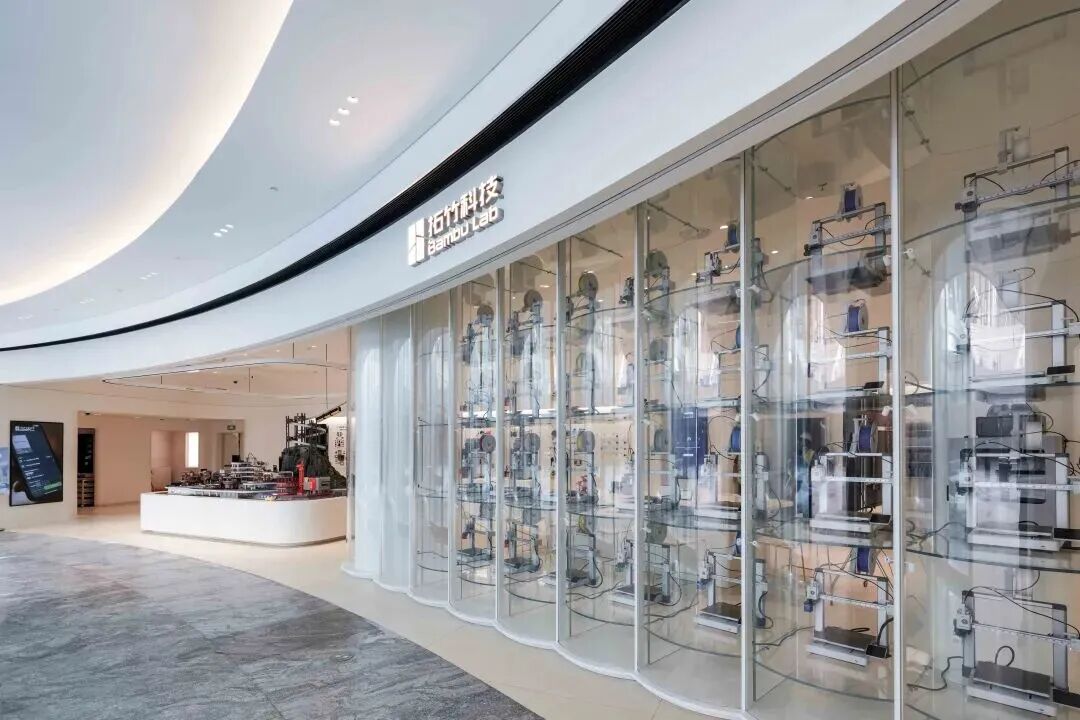
Shenzhen Zhuhe Technology Wins Land Bid for World's Largest 3D Printing Manufacturing Center
Hardware
Originally reported by finance.sina.cn
Shenzhen Zhuhe Technology, a wholly owned subsidiary of Bambu Lab, has secured a 83,590-square-meter industrial land parcel in Shenzhen's Guangming District for 141.2 million RMB (approximately $19.5 million). The site will host a "3D Printing Intelligent Manufacturing Headquarters Base" with 376,158 square meters of planned floor area, 75.3% dedicated to production facilities. The project targets an annual capacity exceeding 3 million 3D printers, positioning it as potentially the world's largest 3D printing manufacturing center. The land transaction, completed just four months after Bambu Lab signed a strategic framework agreement with the Guangming District government in February 2026, includes a commitment to generate cumulative output value of no less than 22.5 billion RMB over five years, with annual post-production output exceeding 4.5 billion RMB.
This move represents a significant escalation in production scale for Bambu Lab, which has rapidly become the dominant force in the consumer and prosumer FDM/FFF segment since its 2022 market entry. The planned 3-million-unit annual capacity dwarfs current industry benchmarks - by comparison, the entire global desktop 3D printer market shipped approximately 6 million units in 2025, according to industry estimates. Bambu Lab's aggressive vertical integration strategy, moving from contract manufacturing to purpose-built factory infrastructure, mirrors the Chinese localization arc pattern seen across AM hardware segments. The Guangming facility's focus on core component R&D, material pilot production, and final assembly suggests Bambu Lab is building a vertically integrated supply chain that could further compress its already aggressive pricing while improving quality control. This land acquisition also signals long-term commitment to Shenzhen's manufacturing ecosystem, with the interim production line already operational at the nearby Minghu Zhigu industrial park.
From a practical standpoint, Bambu Lab must now execute on a massive industrial buildout while maintaining its breakneck product release cadence and managing the transition from contract manufacturing to in-house production at scale. The 3-million-unit target implies a factory utilization challenge that few AM hardware companies have ever faced - even established industrial players like Stratasys and 3D Systems operate at annual unit volumes in the tens of thousands. For buyers and competitors alike, the key question is whether Bambu Lab can maintain its quality consistency and supply chain reliability as it scales from a fast-growing startup to a high-volume manufacturer operating one of the largest AM production facilities globally. The next 18 months of construction and production ramp will test whether the company's operational execution can match its product design prowess.