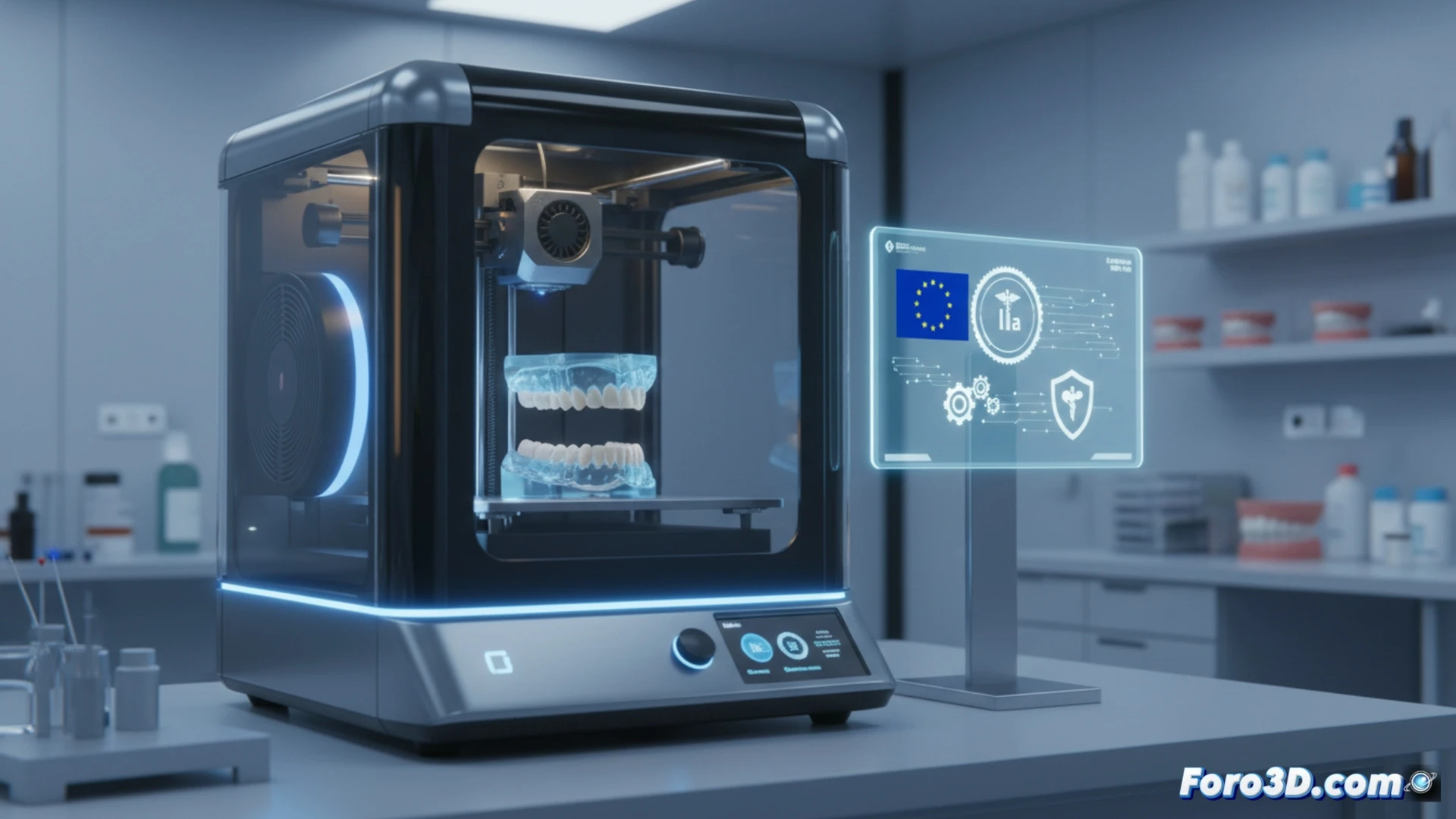
3D Systems receives EU Class IIa MDR certification for complete denture printing system

Hardware
Originally reported by foro3d.com
3D Systems has obtained European Class IIa certification under the Medical Device Regulation (MDR) 2017/745 for its complete denture printing system. The certified workflow combines the NextDent 5100 3D printer with NextDent Base and NextDent C&B MFH biocompatible materials, covering the full digital process from intraoral scanning and CAD design through automated post-processing. This certification validates that the entire production chain-material, printer, software, and final part-meets EU safety and quality standards for class IIa medical devices, ensuring traceability and repeatability for dental laboratories manufacturing full removable prostheses via additive manufacturing.
This certification is significant because it moves 3D Systems beyond component-level material approvals to a fully validated, end-to-end digital workflow for a high-volume dental application. In the medical-dental vertical, where regulatory burden is high and switching costs are embedded in certified processes, a system-level MDR certification creates a meaningful barrier to entry for competitors. The NextDent 5100 is a polymer vat photopolymerization (VPP) platform, and this certification directly competes with Stratasys’s TrueDent system and Desktop Health’s Flexcera line, both of which target the same denture market. The European dental lab market, estimated at several hundred million euros annually for prosthetics, is fragmented but increasingly digitizing; a certified turnkey workflow reduces the qualification burden for individual labs and accelerates adoption. This aligns with the broader pattern of IP lock-in through regulatory embedding-once a lab invests in a certified workflow, switching costs rise significantly.
From a practical standpoint, this certification gives 3D Systems a clear commercial advantage in European dental labs that are transitioning from analog to digital workflows. The company must now execute on distribution, training, and service support to convert certification into recurring material and printer sales. For dental labs evaluating digital denture production, this system-level certification simplifies their own regulatory compliance and reduces time-to-market for certified patient devices. The real test will be adoption velocity-whether labs see enough clinical and economic benefit to switch from established subtractive or manual methods to this fully digital AM workflow.
Topics