3D Systems launches SLA 825 Dual printer and AddiTrak management software at RAPID + TCT 2026

Hardware
Originally reported by epnc.co.kr
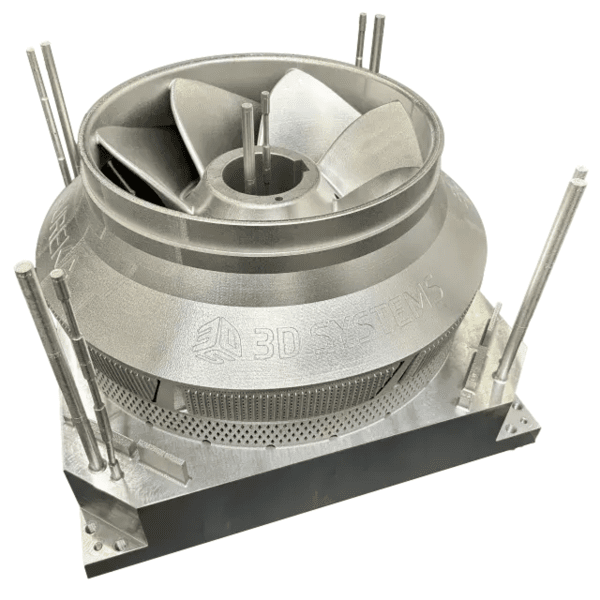
3D Systems unveiled two new industrial additive manufacturing solutions at RAPID + TCT 2026 in Boston. The SLA 825 Dual is a vat photopolymerization system with a 22% larger build volume and up to 25% faster print speeds compared to its predecessor, targeting high-throughput production of precision patterns, large prototypes, and investment casting masters. The company also launched AddiTrak, an on-premise fleet management platform that aggregates machine status and production data across multiple printers in a single dashboard, supporting MTConnect and OPC UA industrial protocols for integration into smart factory environments. CEO Jeff Graves positioned both products as immediately deployable in production settings where precision and repeatability are critical.
This launch is significant because it addresses two persistent bottlenecks in industrial polymer AM: throughput for serial production and operational visibility across distributed printer fleets. The SLA 825 Dual competes directly with systems from Stratasys (Neo series) and Carbon (DLS platform) in the high-end vat photopolymerization segment, where build volume and speed remain key differentiators for applications like motor sports tooling and precision casting patterns. AddiTrak, meanwhile, enters a software segment dominated by Oqton, Materialise, and Link3D, but with a distinct on-premise architecture that appeals to defense and aerospace customers who cannot route production data through cloud servers. The combination of hardware and software under one vendor simplifies procurement for manufacturers seeking end-to-end workflow control, a strategy that mirrors HP's approach with its Multi Jet Fusion ecosystem and 3D Sprint integration.
From an industry perspective, the practical value here is in the operational detail: AddiTrak's on-premise design and OPC UA support mean it can slot into existing factory IT architectures without data sovereignty concessions, which matters for regulated verticals like aerospace and defense. The SLA 825 Dual's speed and volume improvements are incremental rather than revolutionary, but they lower the per-part cost for high-value polymer production runs where surface finish and accuracy are non-negotiable. Buyers evaluating these systems should benchmark the claimed 25% speed gain against their own part geometries, as vat photopolymerization throughput is highly geometry-dependent. 3D Systems must now demonstrate that AddiTrak integrates reliably with third-party printers beyond its own fleet to avoid creating a siloed ecosystem.
This article is an AI-assisted rewrite of the linked source report. Facts originate from the source; phrasing is AMPulse's. Use Read Original below to verify, or Report an issue if something is wrong.
Topics