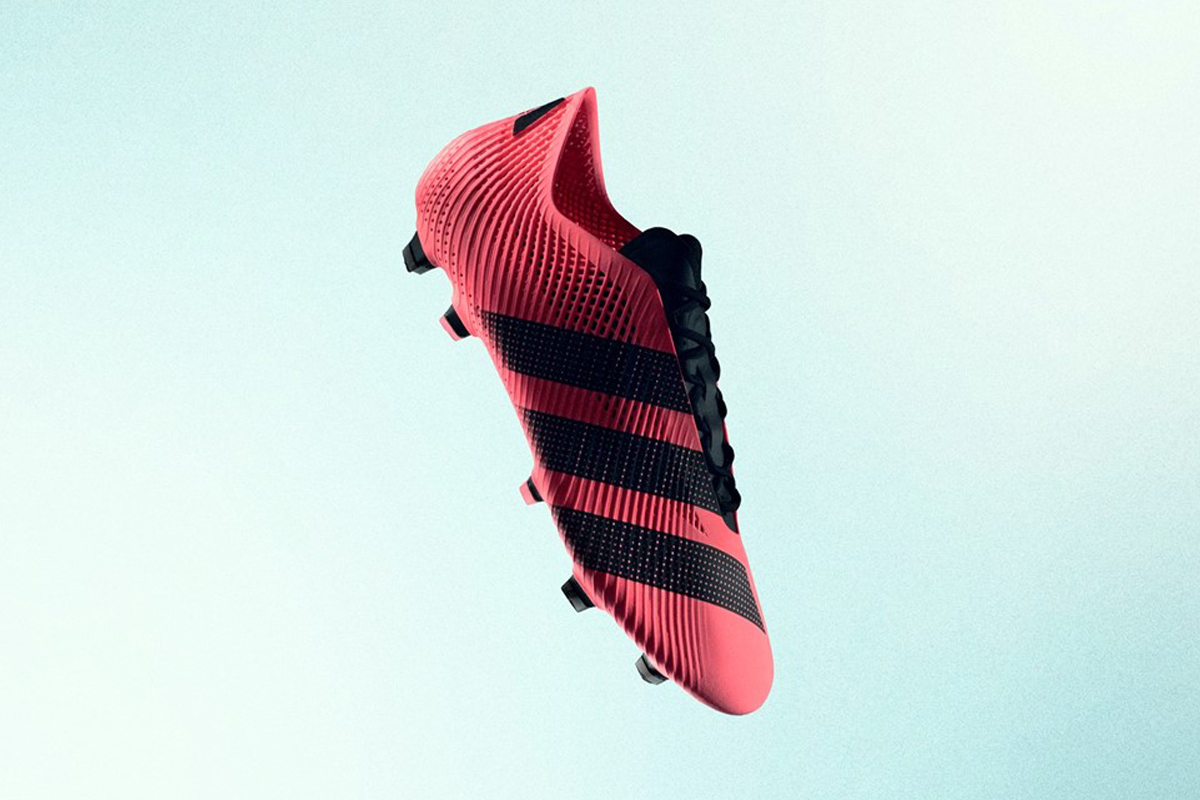
adidas unveils fully 3D-printed soccer cleats under R.A.P. project, targeting player-custom designs

Application
Originally reported by ShareLab
adidas has unveiled a fully 3D-printed soccer cleat, the second product from its Radical Athlete Perception (R.A.P.) platform announced in March 2026. The cleat was developed using player data and feedback from professional footballers Khvicha Kvaratskhelia and Ademola Lookman, with adidas aiming for custom-fit designs tailored to individual foot shape and playing style. The company has not disclosed the specific additive manufacturing process or material used, nor has it announced a release date, pricing, or commercialization plan, stating only that more information will follow in the coming months. A football-specific model is also in development under the same R.A.P. initiative.
This move extends adidas's long-running but uneven engagement with 3D-printed footwear. The company previously commercialized the Futurecraft 4D midsole using Carbon's DLS technology, but that program never scaled beyond limited-edition releases and was largely phased out by 2023. The R.A.P. project represents a more ambitious attempt: a fully printed shoe rather than just a midsole. However, the cleat remains a concept model with no confirmed production pathway. The consumer-electronics and athletic footwear vertical has seen several high-profile AM experiments - from New Balance's printed midsoles to Nike's Zoom Superfly spikes - but none have achieved serial production at scale. The key barrier remains balancing the cost of individual customization against the throughput and material properties required for competitive sport.
From an AM industry perspective, this is a design and marketing exercise, not a production milestone. The real test for adidas will be whether it can move from concept to a commercially viable manufacturing process that meets FIFA standards for durability, weight, and traction. Until then, this cleat belongs in the same category as other brand-driven AM showcases: technically interesting, commercially unproven, and far from the qualification grind that defines serial production in regulated sportswear.
Topics