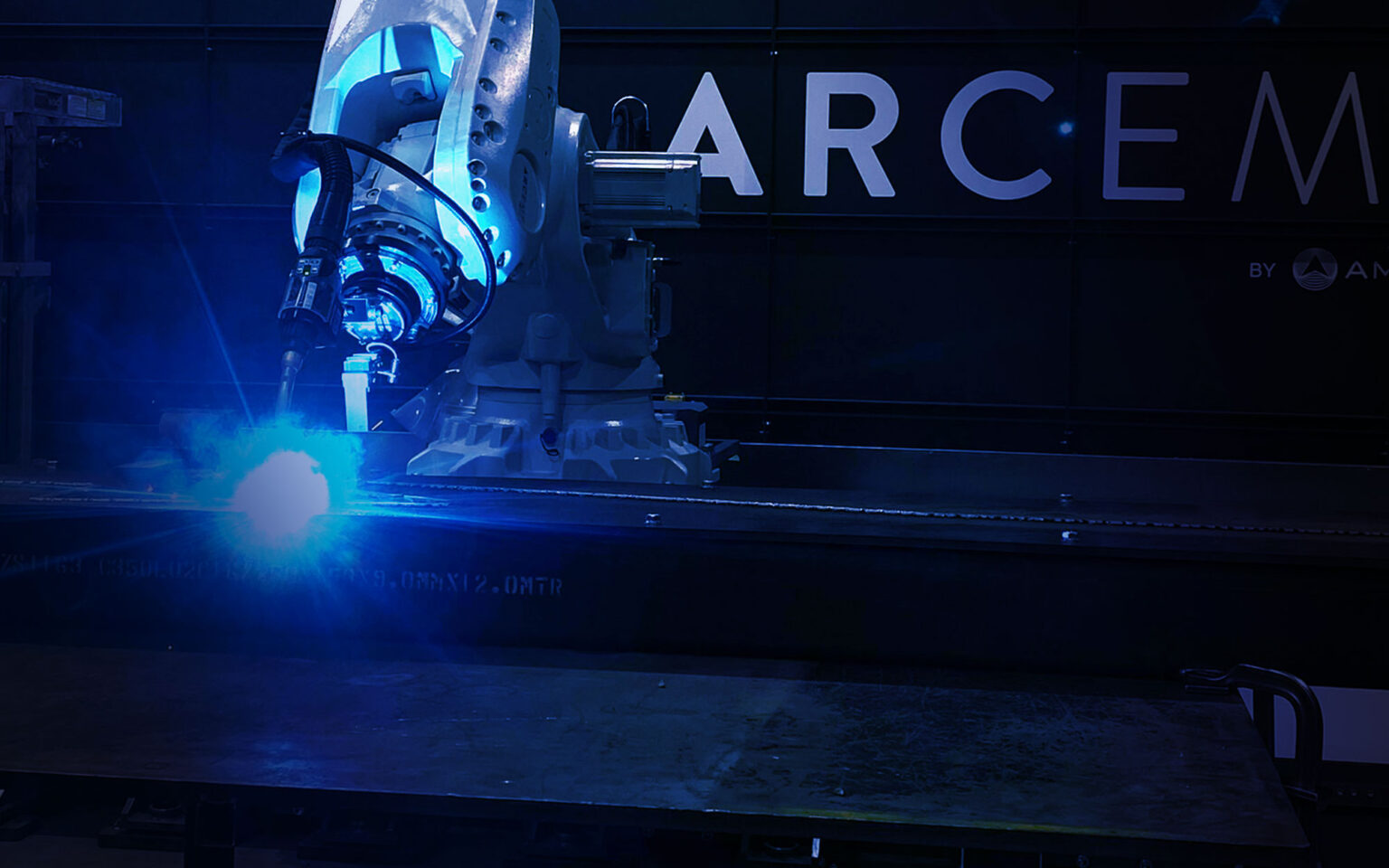
AML3D Commissions Two ARCEMY X Systems at Newport News Shipbuilding, Second Order for Four More Systems Follows

Hardware
Originally reported by 3D Printing Industry
Australian metal additive manufacturing company AML3D has commissioned two ARCEMY X large-format DED systems at Newport News Shipbuilding (NNS), a division of Huntington Ingalls Industries that builds nuclear-powered aircraft carriers and submarines for the U.S. Navy. The initial order, valued at approximately AU$4.5 million (US$3.2 million), includes a final payment of roughly AU$892,000 upon completion. Each system integrates a 10,886 kg positioner for heavy-capacity metal builds. NNS has placed a second order for four additional custom ARCEMY X systems, valued at approximately AU$9.9 million, with delivery scheduled for early 2027 from AML3D's manufacturing hub in Stow, Ohio. CEO Sean Ebert cited strong demand from the U.S. Marine Industrial Base as the primary driver for the company's ongoing capacity expansion at the Stow facility, which is doubling output.
This deployment represents a concrete step in the U.S. Navy's broader push to embed large-format metal AM across its shipbuilding supply chain, a pattern that fits the defense vertical's politically accelerated adoption wave seen since 2025. The Navy's mid-2025 Letter of Intent to AML3D, forecasting procurement of approximately 1,600 AM components annually by 2030 and installation of up to 100 large-format metal printers across the Marine Industrial Base, provides the demand signal underpinning this expansion. AML3D's strategy mirrors the Chinese localization arc in reverse: an Australian company building U.S. manufacturing capacity to serve a protected domestic defense market, while also planning a European hub to support AUKUS partners. The ARCEMY X competes in the metal DED segment against systems from Lincoln Electric's Wolf, Meltio, and WAAM-focused players like WAAM3D, but AML3D's differentiation lies in its containerized, positioner-integrated architecture and its growing installed base within Navy-affiliated sites, including three systems at the Additive Manufacturing Center of Excellence in Danville, Virginia.
For AML3D, the NNS order moves the company from pilot placements to repeat orders at a single shipyard, which is the practical signal that matters more than the headline dollar value. The company must now execute on the Stow capacity expansion and the European hub build-out without overextending its balance sheet, while ensuring that the six systems at NNS deliver the component lead-time reductions the Navy expects. For buyers in the defense industrial base, this is a reference case that demonstrates DED can move beyond tooling and repair into production of certified naval components, but the qualification burden for each part family remains the real gating factor.