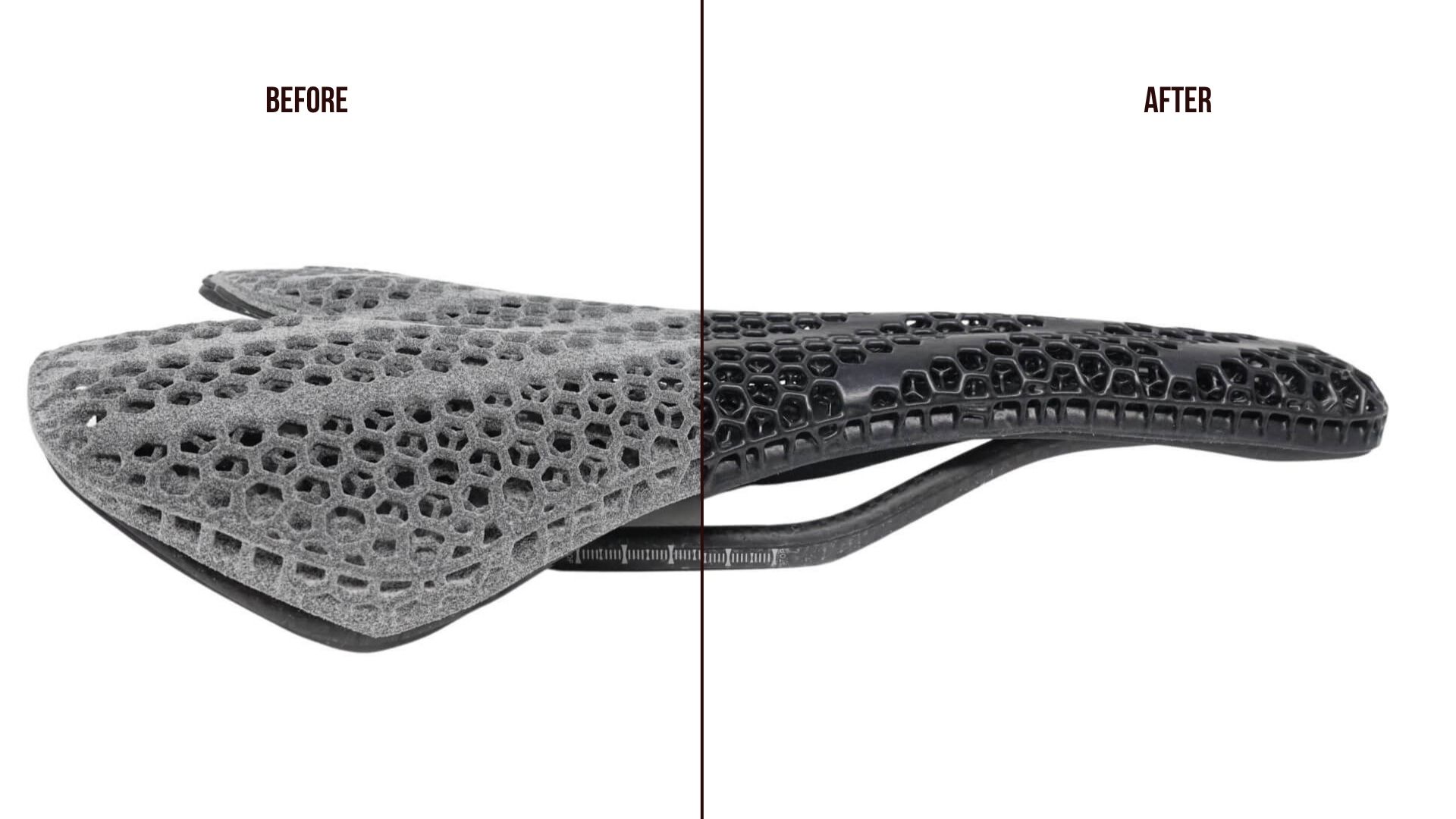
AMT PostPro VP discusses post-processing as critical bridge from prototype to production in polymer AM

Post-Processing
Originally reported by 3Druck
AMT PostPro, a UK-based specialist in polymer post-processing equipment, is positioning its automated depowdering, blasting, and vapor smoothing systems as essential infrastructure for industrial additive manufacturing. In a July 3, 2026 interview with 3Druck.com, VP Sales & Marketing Giorgio Ioannides detailed how the company, founded in 2017, has evolved alongside the shift from prototyping to serial production. Ioannides emphasized that post-processing is no longer an optional finishing step but a critical, repeatable process stage required to meet regulatory and quality standards in medical, food, automotive, and aerospace applications. The company's hardware targets the gap between printed green parts and end-use components, focusing on consistency across batches rather than isolated surface improvement.
This interview lands at a moment when the polymer AM segment is confronting its own industrialization bottleneck. While SLS and HP Multi Jet Fusion have proven capable of producing thousands of parts per build, the downstream steps of powder removal, surface finishing, and quality verification remain labor-intensive and operator-dependent. AMT's value proposition directly addresses this: automated vapor smoothing can reduce surface roughness from roughly 10-15 µm Ra to below 2 µm Ra, while also improving chemical resistance and sealing properties. The company competes with manual finishing workflows and, to a lesser degree, with DyeMansion's automated finishing systems. Ioannides' framing - that post-processing is where printed parts become production parts - reflects a maturing industry understanding that machine speed alone does not determine throughput; the entire process chain must be repeatable.
From an analyst perspective, AMT's challenge is execution, not vision. The company must demonstrate that its systems can integrate into existing production lines without creating new bottlenecks, and that the vapor smoothing process yields consistent results across different polymer grades and part geometries. For buyers evaluating polymer AM for serial production, the practical takeaway is clear: post-processing automation should be budgeted and specified at the same stage as the printer itself, not treated as an afterthought. The interview reinforces that the real frontier in polymer AM is no longer print speed or build volume, but the repeatability of the complete production workflow.
Topics