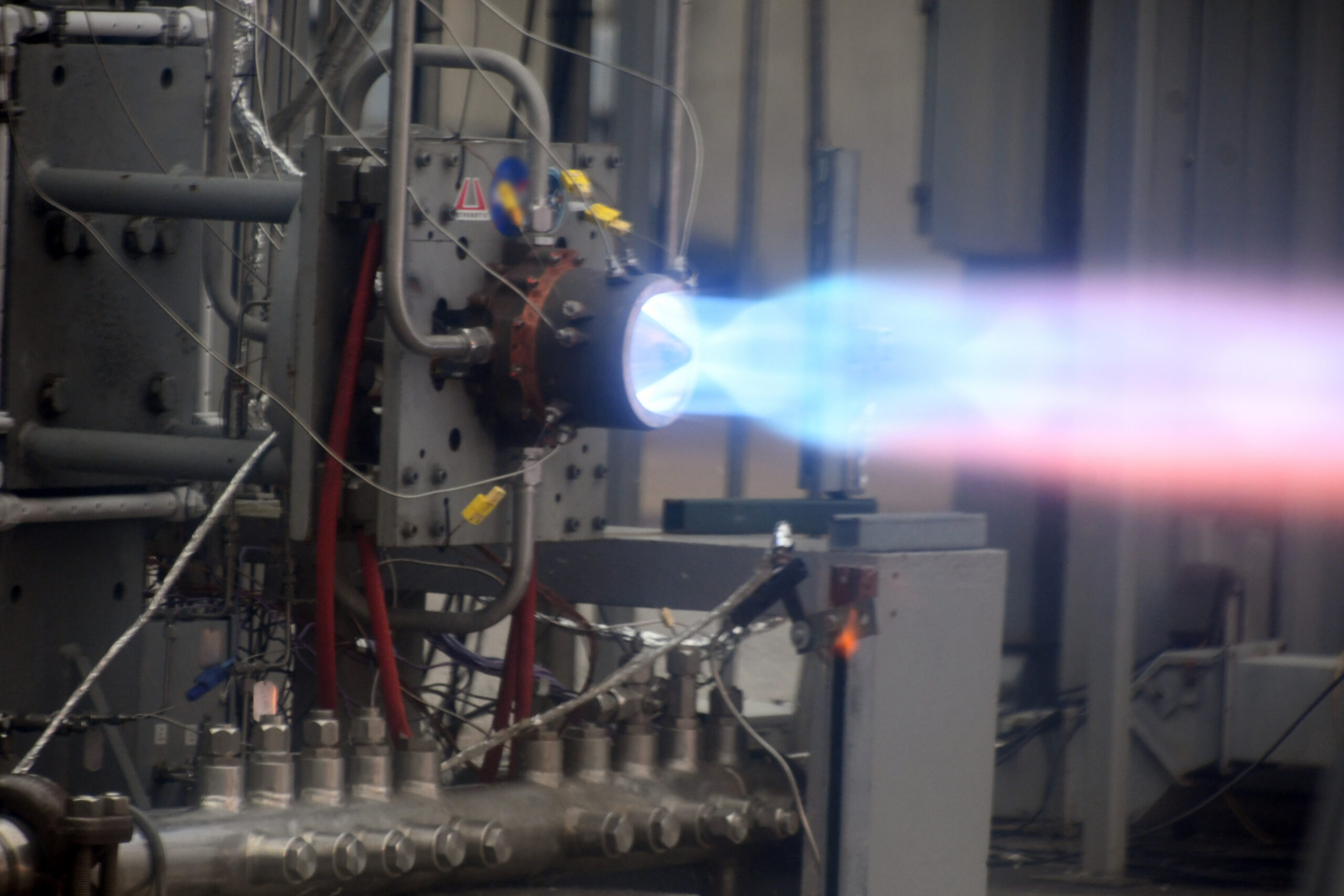
Astrobotic hot-fires Chakram rotating detonation engine built with Elementum 3D PermiAM materials

Hardware
Originally reported by 3DPrint.com
Astrobotic has completed a series of hot-fire tests for its Chakram rotating detonation rocket engine at NASA Marshall Space Flight Center, running two prototypes across eight tests totaling 470 seconds of burn time, including a 300-second continuous burn that may be the longest sustained firing of its type. The engine was built using Elementum 3D's PermiAM process, a proprietary metal additive manufacturing approach that enables controlled porosity within a single printed part, allowing dense structural regions to coexist with porous zones for integrated cooling and fluid management. This capability directly addresses the extreme thermal and fluid-dynamic challenges inherent in rotating detonation engines, which use supersonic detonation waves traveling around an annular chamber to achieve up to 15% greater propellant efficiency than conventional rocket engines.
This test sits at the intersection of two long-running AM industry patterns: the aerospace qualification grind and the materials-driven IP lock-in grind. Astrobotic is not a propulsion company by primary identity - it is a lunar logistics and lander developer - but by embedding PermiAM into a critical engine component, it is effectively qualifying Elementum 3D's material-process combination for flight-like conditions. The 300-second continuous burn is significant because rotating detonation engines have historically struggled with thermal stability and durability over sustained operation; demonstrating that a 3D-printed, porosity-controlled structure can survive that duration moves the technology from laboratory curiosity toward practical propulsion. For the broader metal AM substrate, this reinforces that the value capture in aerospace AM increasingly flows to materials and process know-how, not just printer hardware. Elementum 3D, headquartered in Erie, Colorado, competes in the specialized metal powder and process-development segment against players like 6K Additive and Carpenter Technology, but PermiAM's porosity-control capability is a differentiated technical moat if it can be replicated across other high-temperature alloys and engine architectures.
From a practical standpoint, the key question is whether Astrobotic can transition this test campaign into a qualified engine for an actual mission - the Peregrine lander or a future lunar cargo vehicle - and whether Elementum 3D can supply PermiAM materials at the consistency and scale that NASA or DoD program offices will require for formal certification. The test data is promising, but the aerospace qualification grind typically demands hundreds of firings, material lot traceability, and full documentation before any engine is declared flight-ready. Astrobotic and Elementum 3D have cleared an important technical milestone; the harder work of embedding this into a program with a launch date and a customer contract still lies ahead.
This article is an AI-assisted rewrite of the linked source report. Facts originate from the source; phrasing is AMPulse's. Use Read Original below to verify, or Report an issue if something is wrong.
Topics