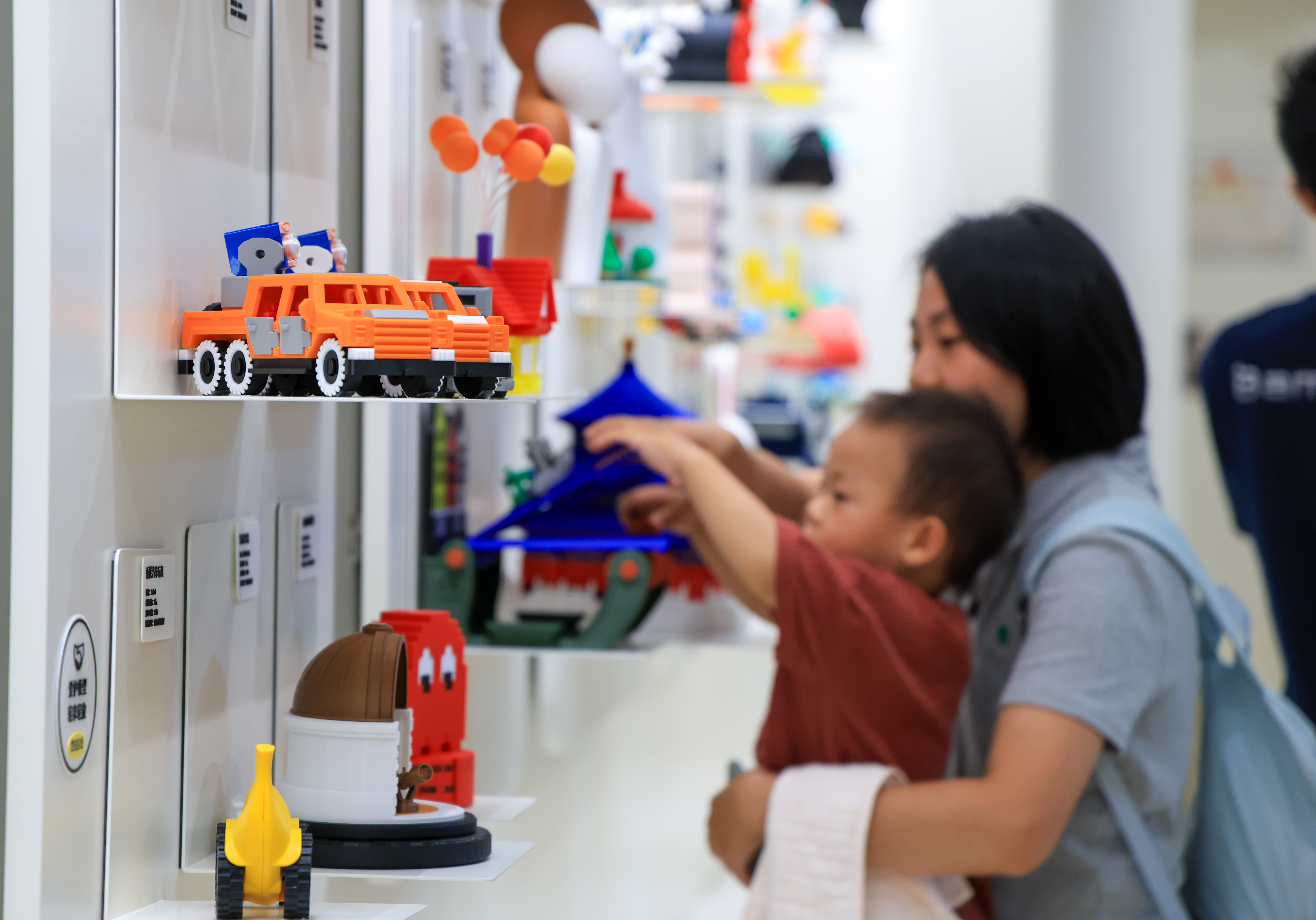
Bambu Lab Shenzhen flagship store draws crowds as consumer 3D printing sales surge during China's 618 festival

Hardware
Originally reported by ifeng.com
Bambu Lab's flagship store in Shenzhen saw heavy customer traffic during China's 618 shopping festival in June 2026, as consumer-grade 3D printers emerged as a top-selling category. The store, located in a major commercial district, allowed visitors to test-print toys and other objects on Bambu Lab's FDM/FFF printers, which have become the most visible consumer AM brand in China. The company's product lineup, including the X1 series and A1 mini, now retails from approximately ¥1,500 to ¥5,000, placing them within reach of hobbyists, educators, and small businesses. The 618 surge confirms that desktop 3D printing has crossed from enthusiast niche into mainstream consumer electronics in China, driven by plug-and-play usability and sub-¥2,000 entry prices.
This development fits the broader consumer-electronics pull-through pattern for polymer material extrusion, where Bambu Lab has effectively redefined the category since its 2022 launch. The company's competitive edge rests on integrated motion control algorithms, a closed-loop extrusion system, and a tightly coupled hardware-software stack that reduces the learning curve to near-zero - a stark contrast to earlier open-frame FDM printers from Creality or Anycubic that required manual bed leveling and slicing tweaks. Bambu Lab's vertical integration with China's mature机电 supply chain for motors, rails, and controllers allows rapid iteration and cost reduction that Western competitors like Prusa Research or UltiMaker cannot match at comparable price points. The 618 data suggests consumer AM is now a volume business in China, with unit sales likely exceeding 500,000 printers across all brands during the promotional period, though Bambu Lab's share of the premium segment is dominant.
For the industry, Bambu Lab's retail success demonstrates that consumer AM adoption is now primarily a distribution and brand-building challenge, not a technology one. The company must now sustain quality control across rapidly scaling production volumes and manage after-sales service expectations as its installed base grows into the millions. Competitors should note that the Chinese consumer AM market has already bifurcated: sub-¥1,000 entry printers compete on price alone, while the ¥1,500–¥5,000 band is owned by brands that deliver a complete, frustration-free user experience out of the box.
Topics