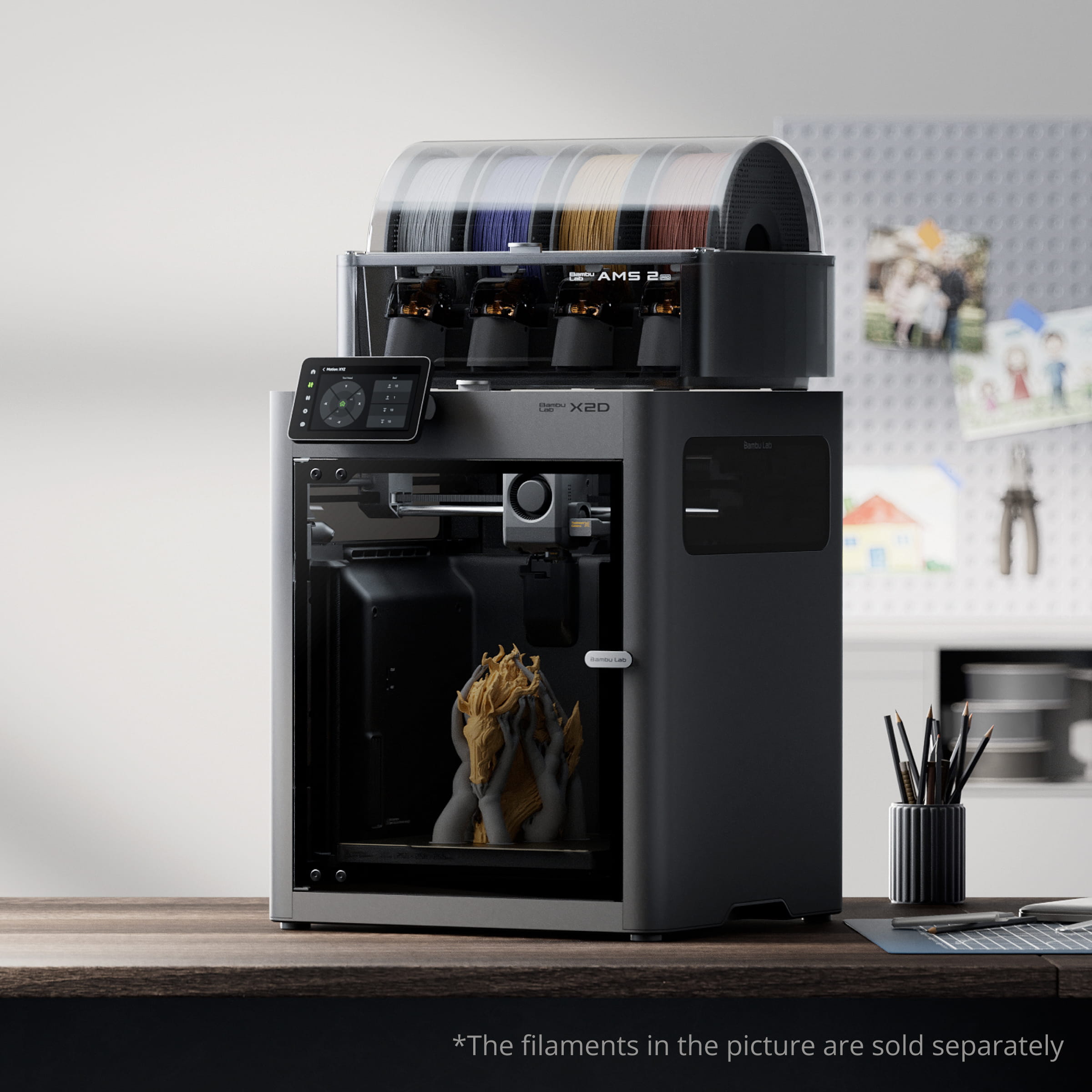
Bambu Lab Launches X2D FDM 3D Printer in Japan via Distributor APPLE TREE

Hardware
Originally reported by SEKAPRI
Bambu Lab Launches X2D FDM 3D Printer in Japan via Distributor APPLE TREE
Bambu Lab has officially introduced the X2D 3D printer to the Japanese market through its local distributor, APPLE TREE, with reservations opening on April 15, 2026. The X2D serves as the successor to the X1 Carbon, featuring a dual-nozzle system designed to enhance production throughput and print quality. The hardware provides a build volume of 256 x 256 x 260 mm, a maximum nozzle temperature of 300 degrees Celsius, and a heated chamber capable of reaching 65 degrees Celsius. These specifications enable the processing of engineering-grade thermoplastics such as ABS and nylon while mitigating thermal warping and internal stresses during the build process.
This release strengthens Bambu Lab's position in the Japanese desktop FDM market, where it competes against established players like Creality and Prusa Research. By integrating a heated chamber and automated calibration, the X2D addresses the common barrier of material reliability for users transitioning from basic PLA printing to more demanding engineering applications. The collaboration with APPLE TREE, a distributor established in 2012 with operations in Osaka and Tokyo, provides the necessary local technical support and maintenance infrastructure required for professional adoption in the region. This move aligns with the broader trend of high-speed, automated FDM systems capturing market share from traditional open-source hobbyist platforms.
For professional users, the X2D represents a incremental refinement of the existing Bambu Lab ecosystem rather than a fundamental change in printing technology. The inclusion of a heated chamber is the primary functional upgrade, making it a viable tool for small-batch production of functional parts in ABS or nylon. Prospective buyers should evaluate the specific dual-nozzle implementation against their existing workflow requirements to determine if the productivity gains justify the upgrade from the X1 series.
This article is an AI-assisted rewrite of the linked source report. Facts originate from the source; phrasing is AMPulse's. Use Read Original below to verify, or Report an issue if something is wrong.