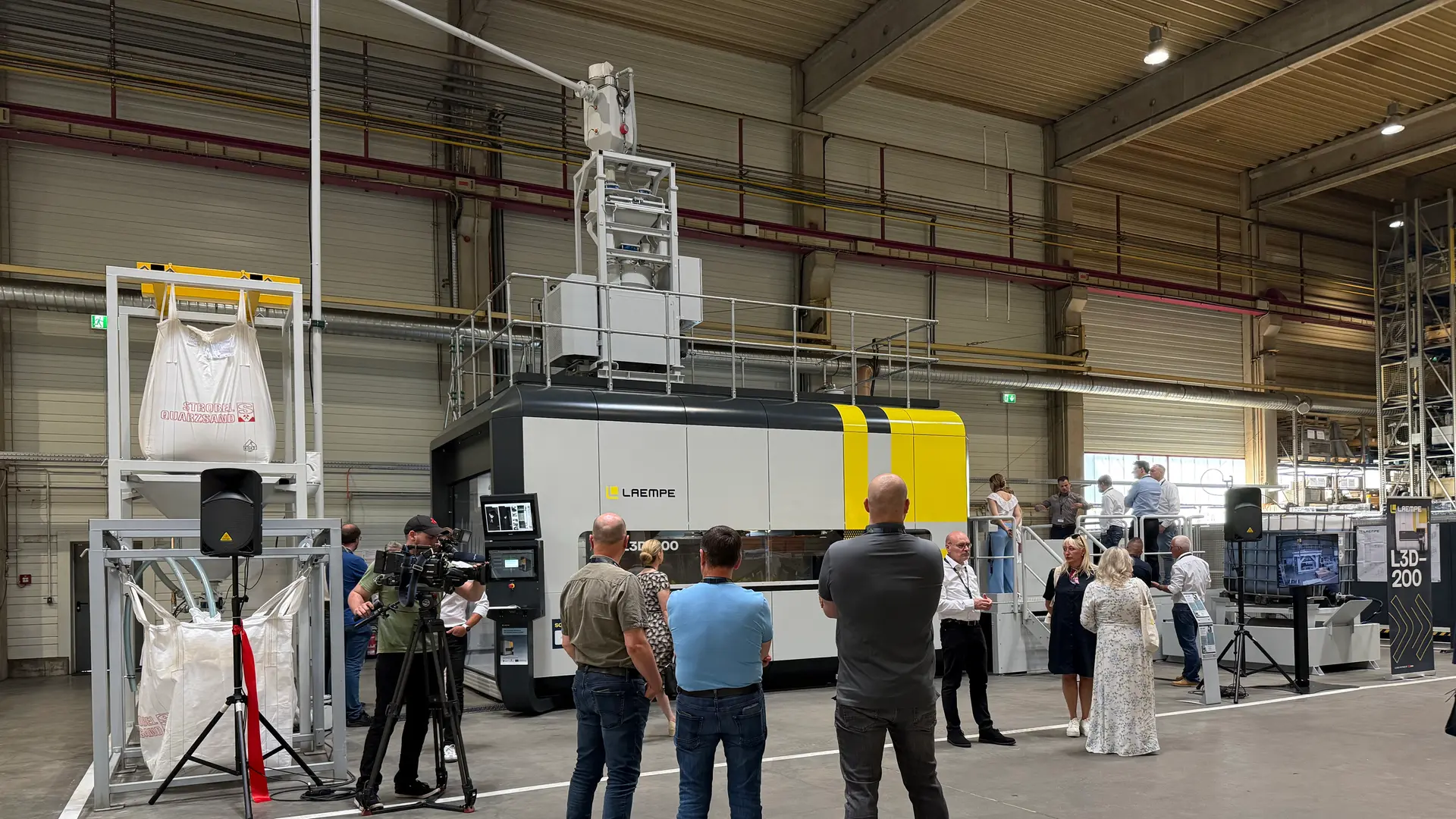
Barlebener 3D-Drucker launches L 3D-200 binder jetting system, prints foundry cores four times faster for BMW and others

Hardware
Originally reported by mdr.de
Laempe Moessner Sinto GmbH, operating as Barlebener 3D-Drucker at its Meitzendorf facility in Saxony-Anhalt, Germany, has launched the L 3D-200, a binder jetting system for foundry core and mold production. The machine prints sand cores four times faster than previous methods, with precision in the hundredth-millimeter range and full material flexibility for the sand feedstock. One unit is already deployed at BMW Group, with additional machines installed at other industrial customers. Chief developer Frank Wedemeyer led the 18-month development cycle, and the company expects to reduce future development timelines to nine months.
This launch is significant for the industrial tooling and automotive supply chain because it directly addresses the throughput bottleneck that has historically limited binder jetting adoption in high-volume foundry operations. While most metal binder jetting news focuses on sintering and final-part production, this application targets the upstream core-making process - a high-wear, high-volume segment where speed and material flexibility directly impact casting lead times. The L 3D-200 competes with systems from voxeljet and ExOne/Desktop Metal in the sand binder jetting space, but Barlebener claims a 4x speed advantage that could shift foundry economics toward broader AM adoption. The machine is fully developed and manufactured in Germany, with the company exporting globally from its 280-employee site.
For foundries evaluating binder jetting, the practical takeaway is that throughput parity with conventional core shooting is now closer than ever. The L 3D-200 does not eliminate post-processing or qualification steps, but it removes the speed penalty that made sand printing a niche tool for prototypes and low-volume work. Barlebener must now demonstrate repeatability across multiple customer sites and material types to convert early interest into sustained production contracts.
Topics