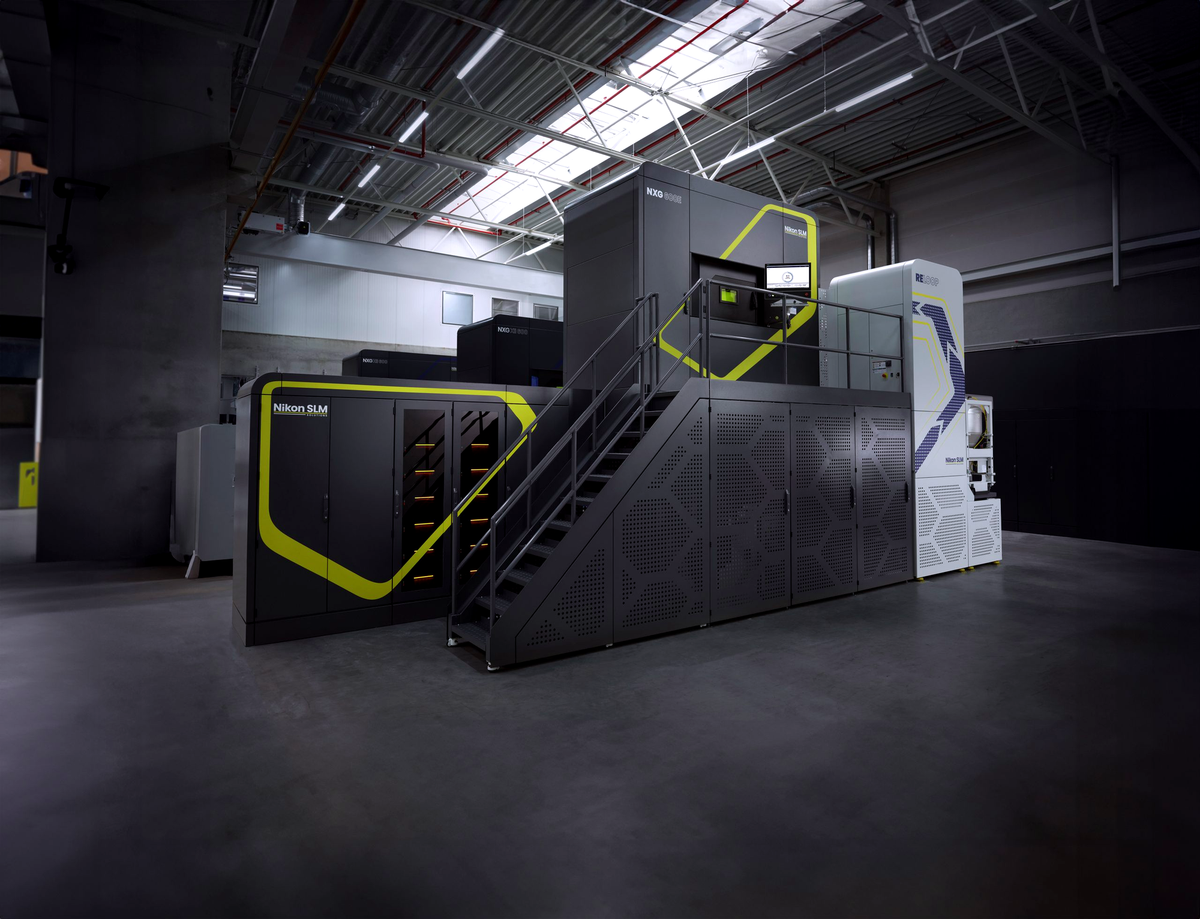
Beehive Industries adds two Nikon SLM NXG 600E systems for large-format aerospace metal AM

Hardware
Originally reported by TCT Magazine
Beehive Industries has purchased two Nikon SLM Solutions NXG 600E metal additive manufacturing systems, dedicating one to Constellium’s Aheadd CP1 aluminum and the other to Ti-6Al-4V titanium. The NXG 600E features a 600 x 600 x 1500 mm build envelope and 12 1kW lasers, making it one of the largest commercial LPBF platforms available. This investment follows Beehive’s $50 million commitment last month to install 30 EOS metal AM machines, and the company describes the new purchase as self-funded. Executives Darius Ehteshami (COO/CFO) and Jonaaron Jones (President of Additive Parts Sales) framed the move as expanding large-format capability for aerostructures, satellite substructures, and defense applications.
This purchase signals that Beehive is building a deliberately diversified, multi-vendor metal AM fleet rather than locking into a single OEM. The choice of the NXG 600E-a machine with a 1.5-meter z-height-targets a specific gap in the US aerospace supply chain: large, qualification-grade structural parts that cannot be produced on standard 250-400 mm LPBF systems. By pairing this with the earlier EOS investment, Beehive is creating a tiered production capability: high-throughput medium parts on EOS platforms, and large-format, low-volume structural components on the Nikon SLM machines. The dedicated material assignments (Aheadd CP1 for one system, Ti-64 for the other) suggest Beehive is optimizing for process qualification rather than flexible job-shop operation, which aligns with the aerospace qualification grind where material-specific parameter sets and repeatability data are the real assets.
From a practical standpoint, Beehive now faces the execution challenge of turning these two large-format machines into qualified production cells, not just demonstration assets. The NXG 600E’s 12-laser architecture requires sophisticated scan strategy management to avoid thermal distortion at scale, and the Aheadd CP1 aluminum alloy is still relatively new to production qualification. The company’s self-funded stance and existing propulsion customer base give it a credible path, but the real test will be whether it can deliver repeatable, certified parts for programs like whole vehicle bodies or satellite substructures within the next 12-18 months. For buyers in aerospace and defense, this signals that large-format LPBF capacity is becoming available domestically, but the qualification timeline remains the binding constraint.
Topics