Hanwha Aerospace signs MOU with 49 domestic partners to build Korean aircraft engine ecosystem, including additive manufacturing

Hardware
Originally reported by thirdanglenews.com
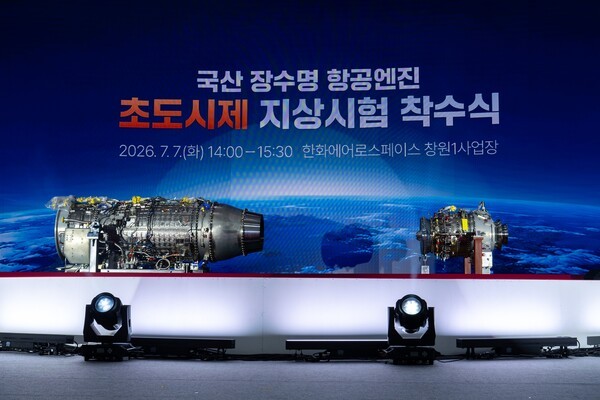
Hanwha Aerospace has signed a 'Mutual Growth Business Agreement' with 49 domestic suppliers and related agencies to accelerate the development of a Korean aircraft engine ecosystem. The agreement, formalized on July 8 at the Changwon Convention Center in South Korea, covers technology development, job training, R&D cost and infrastructure support, and improved transaction environments. The initiative is directly tied to the government's programs for a 10,000-pound-thrust turbofan engine and next-generation advanced aircraft engines, aiming to preemptively secure supply chains for these strategic programs.
This move is significant because it addresses a persistent gap in South Korea's defense industrial base: while the country has developed tanks, howitzers, naval vessels, missiles, and fighter airframes domestically, aircraft engines remain heavily dependent on foreign technology. The MOU extends beyond simple supplier support to build foundational capabilities in design, materials, and testing - areas where additive manufacturing is increasingly critical. For the AM industry, this signals a structured, government-backed demand pull for metal AM technologies, particularly for high-temperature superalloys and precision components like turbine blades, where LPBF and DED processes are already being qualified in Western engine programs. The partnership model - 49 suppliers plus agencies - mirrors the ecosystem-building approach seen in aerospace supply chains globally, where AM adoption is driven not by single-machine sales but by integrated qualification and production networks.
From a practical standpoint, this is a long-cycle play consistent with the aerospace qualification grind: engine development timelines of 10–15 years mean that AM adoption here will be gradual, embedded in qualification documents and supplier workflows rather than announced in press releases. The real test will be whether Hanwha Aerospace can translate this MOU into actual material and process certifications, particularly for single-crystal superalloys and hot-section components where AM is still proving itself against cast and wrought baselines. For now, the signal is clear: Korean defense aerospace is committing to domestic engine sovereignty, and AM will be part of that infrastructure, not a headline.
Topics