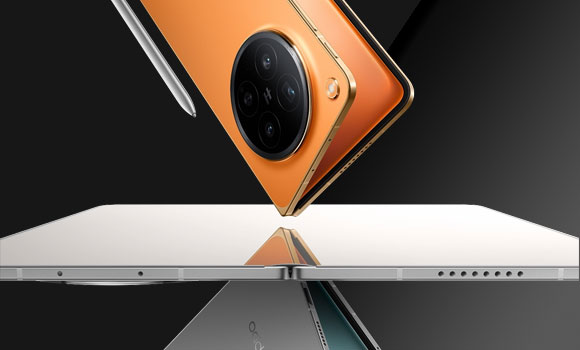
BLT metal 3D printing technology used in OPPO foldable smartphone hinge system
Hardware
Originally reported by TCT Magazine
BLT, the Chinese metal additive manufacturing systems manufacturer, has disclosed that its laser powder bed fusion (LPBF) technology was used to produce the hinge system for OPPO's Find N5 and N6 foldable smartphones, the latter of which launched globally in March 2026. The hinge comprises wing plates on both sides that bear the majority of folding stresses, produced via BLT's metal AM process. This marks a production-scale consumer electronics application for BLT, moving beyond its traditional aerospace and medical customer base into high-volume, structurally demanding consumer hardware.
This deployment fits the consumer-electronics titanium pull-through pattern, where additive manufacturing enables geometries-thin, high-strength, fatigue-resistant wing plates-that cannot be economically machined or cast for a foldable phone hinge. OPPO joins Apple (Watch Ultra 3, iPhone Air) as a major consumer electronics OEM embedding metal AM into serial production, validating the vertical's fast qualification cycle relative to aerospace. For BLT, the win is strategically significant: it provides a marquee reference in a high-volume, design-driven market, directly competing with Western LPBF vendors like EOS and SLM Solutions who have also targeted consumer electronics but lack a comparable disclosed production partnership at this scale. The hinge application also demonstrates BLT's ability to integrate materials, process parameters, and post-processing into a qualified production workflow, a capability that historically has been a barrier for Chinese AM firms seeking export credibility.
The practical takeaway is that BLT has secured a reference that carries weight beyond the consumer electronics vertical. For buyers evaluating Chinese LPBF systems for production applications, the OPPO hinge provides documented evidence of process repeatability and part performance under cyclic loading. BLT must now demonstrate that it can replicate this qualification depth across other customers and verticals, particularly in aerospace and medical, where certification requirements are more stringent. The hinge itself is a reminder that the most commercially impactful AM applications are often invisible to end users-embedded in the product, not marketed as a feature.
Topics