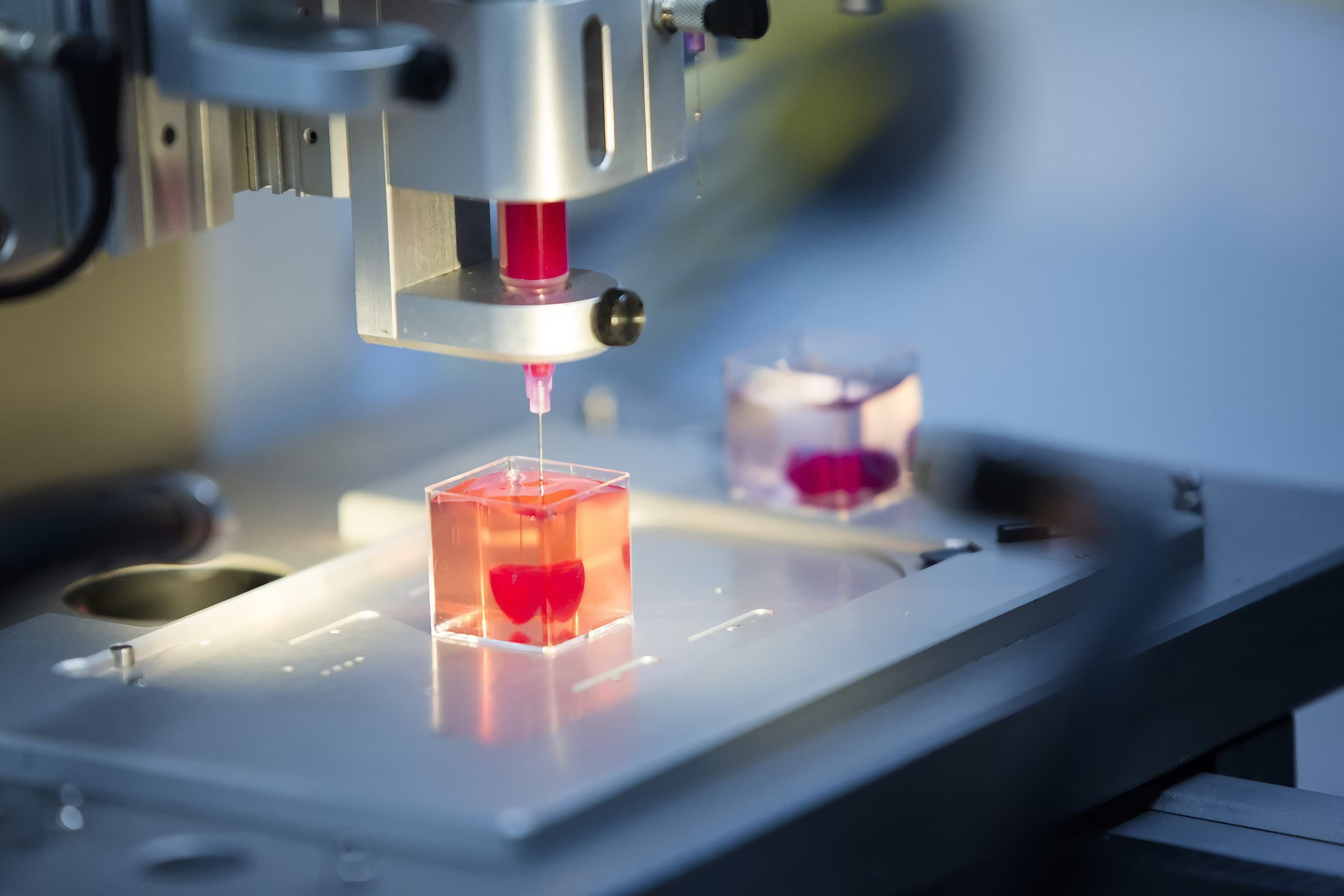
Carnegie Mellon University secured a 28.5 million dollar ARPA-H award for the LIVE project, developing 3D-printed human liver patches.
Technology
1 min read

Carnegie Mellon University secured a 28.5 million dollar ARPA-H award for the LIVE project, developing 3D-printed human liver patches.

Originally reported by techspot.com

Carnegie Mellon University secured a 28.5 million dollar ARPA-H award for the LIVE project, developing 3D-printed human liver patches. Using the FRESH platform and hypoimmune cells, these scaffolds provide 2 to 4 weeks of metabolic support to allow organ regeneration without immunosuppressants. This shifts the medical paradigm from organ replacement to biomanufactured repair. Scaling this for human-sized tissues marks a systemic turning point for regenerative medicine. 🚀🧬 #3DBioprinting #AM #RegenerativeMedicine

How This Connects

6 related events
  1. Same pattern

    Washington State University researchers developed the first fully synthetic, 3D-printed beating heart model for surgical rehearsal.

  2. Same pattern

    Auxilium Biotechnologies is partnering with Starlab Space to deploy the AMP-1 bioprinting platform for scalable medical manufacturing in low Earth orbit.

  3. Same pattern

    PrintBio has joined a federal consortium led by WFIRM to receive up to 24.8 million USD from ARPA-H for bioprinting vascularized kidney tissue.

  4. This article

    Carnegie Mellon University secured a 28.5 million dollar ARPA-H award for the LIVE project, developing 3D-printed human liver patches.

  5. Same pattern

    Aspect Biosystems has expanded its partnership with Novo Nordisk to develop bioprinted islet therapies for Type 1 diabetes.

  6. Same pattern

    UC San Diego secured a 25.7M dollar ARPA-H award to develop 3D bioprinted, patient-specific human livers.

  7. Same pattern

    Nanochon secured $4.1M in funding to launch first-in-human trials for its 3D-printed knee implant.