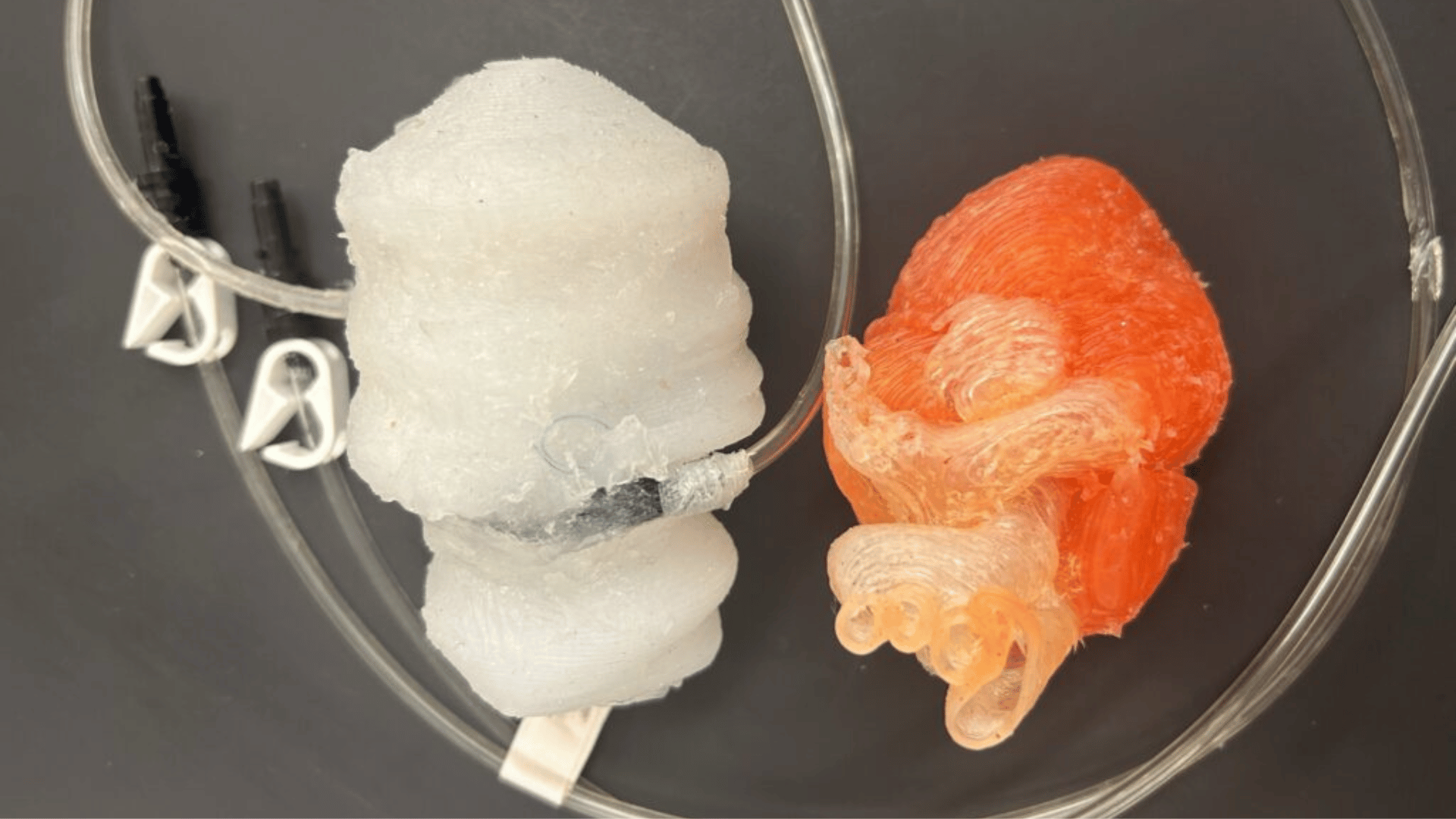
Washington State University researchers developed the first fully synthetic, 3D-printed beating heart model for surgical rehearsal.
Technology
1 min read

Washington State University researchers developed the first fully synthetic, 3D-printed beating heart model for surgical rehearsal.

Originally reported by tomorrowsworldtoday.com

Washington State University researchers developed the first fully synthetic, 3D-printed beating heart model for surgical rehearsal. The system uses pneumatic actuators and sensors to replicate dynamic function for the 800,000+ cardiac procedures performed annually. This shift from static models to functional, patient-specific replicas significantly reduces reliance on animal models and cadavers. This technology represents a critical leap in precision training and surgical safety. 馃珋鈿欙笍 #AdditiveManufacturing #MedTech #3DPrinting #SurgicalTraining

This article is an AI-assisted rewrite of the linked source report. Facts originate from the source; phrasing is AMPulse's. Use Read Original below to verify, or Report an issue if something is wrong.

Read Original

How This Connects

6 related events
  1. Same pattern

    Cyfuse partners with Keio University and Fujita Health University for 3D bioprinted knee joint clinical trials

  2. Same pattern

    Beijing Institute of Technology researchers Dr.

  3. Same pattern

    Aspect Biosystems secures $280M to scale bioprinted tissue therapy production in Canada.

  4. This article

    Washington State University researchers developed the first fully synthetic, 3D-printed beating heart model for surgical rehearsal.

  5. Same pattern

    Auxilium Biotechnologies is partnering with Starlab Space to deploy the AMP-1 bioprinting platform for scalable medical manufacturing in low Earth orbit.

  6. Same pattern

    PrintBio has joined a federal consortium led by WFIRM to receive up to 24.8 million USD from ARPA-H for bioprinting vascularized kidney tissue.

  7. Same pattern

    Carnegie Mellon University secured a 28.5 million dollar ARPA-H award for the LIVE project, developing 3D-printed human liver patches.