CeramTec Highlights Technical Ceramics for Sensor Technology and 3D Printing at Sensor+Test 2026

Materials
Originally reported by 3Druck
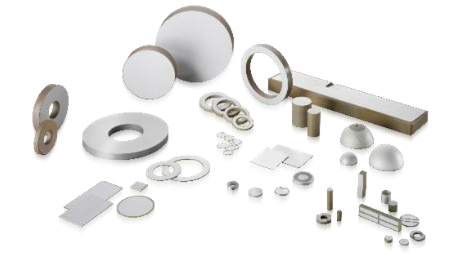
CeramTec, a specialist in technical ceramics based in Germany, is showcasing its comprehensive portfolio for industrial measurement and testing applications at the Sensor+Test trade fair in Nuremberg, June 9–11, 2026. The company is presenting piezoceramic components, ultrasonic solutions, hermetic feedthroughs, and structural ceramics at booth 530 in Hall 1. Notably, CeramTec offers over 40 ceramic material grades for additive manufacturing, enabling complex geometries such as internal channels and sensor housings that are difficult or impossible to produce with conventional methods. The company also features its CeramSense water-coupled 2 MHz ultrasonic flow sensors for smart water meters, level measurement, and industrial applications.
This presentation underscores a quiet but meaningful trend: the convergence of advanced ceramic materials with additive manufacturing for functional, high-reliability components. While most AM industry attention focuses on metals and polymers, technical ceramics occupy a distinct niche where mechanical, thermal, and electrical performance requirements exceed what metals or plastics can provide. CeramTec’s ability to offer more than 40 ceramic formulations-alumina, zirconia, silicon nitride, and others-positions it as a supplier to segments like medical devices, aerospace, and industrial sensing, where qualification burdens are high but unit economics can justify ceramic AM’s cost structure. The company’s presence at a sensor-specific trade fair rather than a pure AM event signals that ceramic 3D printing is increasingly being evaluated from the application side, where material properties drive the choice rather than process novelty.
For AM industry observers, CeramTec’s approach reinforces a practical reality: ceramic 3D printing will not compete as a volume manufacturing method against metal LPBF or polymer MJF, but it solves specific problems where polymers degrade and metals corrode or interfere electrically. The company’s next challenge is not technical capability but converting trade-show interest into qualified production programs, particularly in sensor housings for harsh environments and hermetic medical feedthroughs. Buyers evaluating ceramic AM should expect longer lead times for material qualification and part certification compared to established metal or polymer routes, and should engage CeramTec early in the design phase to capture the geometry advantages that justify the process.
This article is an AI-assisted rewrite of the linked source report. Facts originate from the source; phrasing is AMPulse's. Use Read Original below to verify, or Report an issue if something is wrong.
Topics