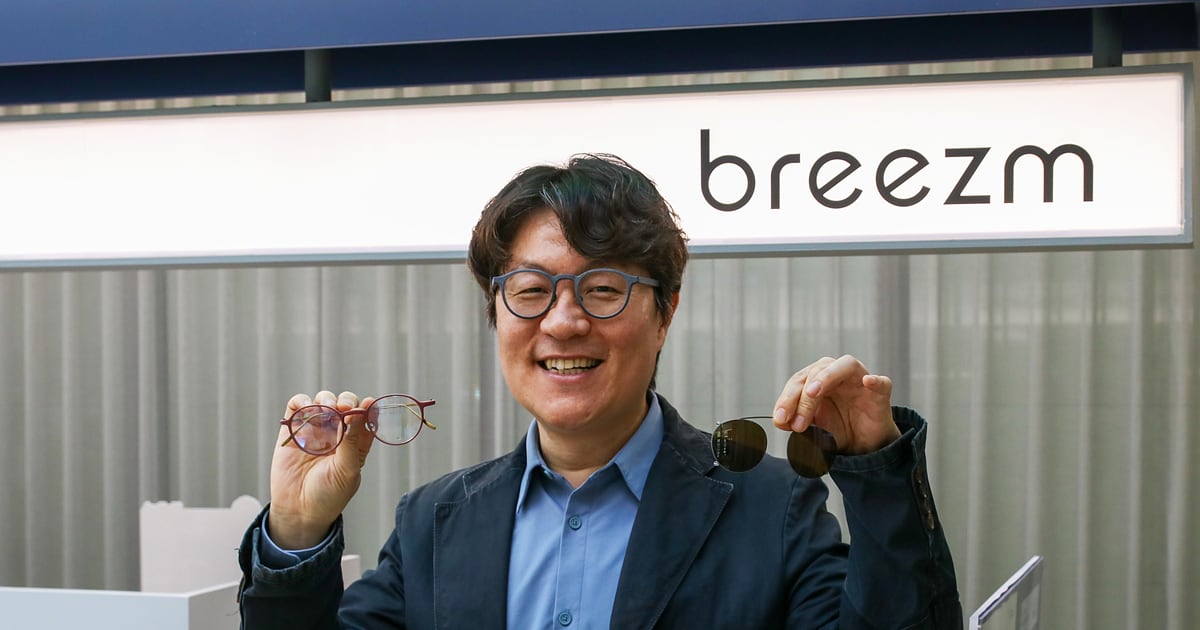
Coptic CEO Park Hyung-jin targets US market with AI-customized 3D-printed eyewear brand 'Brizm

Application
Originally reported by biz.chosun.com
Coptic, a South Korean additive manufacturing company, is pivoting toward the US consumer market with its AI-driven custom eyewear brand Brizm, according to CEO Park Hyung-jin in a July 2026 interview. The company has developed an end-to-end workflow combining facial scanning, AI-based frame design, and vat photopolymerization (VPP) printing to produce prescription eyewear tailored to individual facial geometry. Coptic claims its process reduces production time to under 24 hours per frame and targets a retail price point competitive with premium mass-produced eyewear. Park stated that the US launch is the company's primary growth vector for 2026-2027, following successful pilot runs in South Korea and Japan.
This move places Coptic in a narrow but growing segment of the AM industry: direct-to-consumer, mass-customized end-use products enabled by VPP. The company's approach mirrors the production model of Align Technology (Invisalign), the largest production user of AM globally, but applied to eyewear rather than orthodontics. Coptic's competitive differentiation lies in its proprietary AI design software, which automates frame geometry optimization from a smartphone scan, and its vertically integrated printing service model - it sells the finished product, not the printer. The US eyewear market, valued at approximately $45 billion annually, has seen limited AM penetration beyond prototyping and small-batch luxury frames. Coptic's challenge will be scaling production throughput and managing post-processing costs while maintaining the fit accuracy that justifies the custom premium.
From a practical standpoint, Coptic must demonstrate that its AI-to-print pipeline can deliver consistent fit quality across diverse facial types at volumes that justify the service infrastructure investment. The company's success will hinge on customer acquisition cost and return rates, not print speed or material novelty. For the AM industry, this is a useful test case of whether VPP can move beyond dental aligners into another high-volume, consumer-facing custom product category - but the economics of single-unit production at scale remain unproven outside of Align's tightly controlled workflow.
Topics