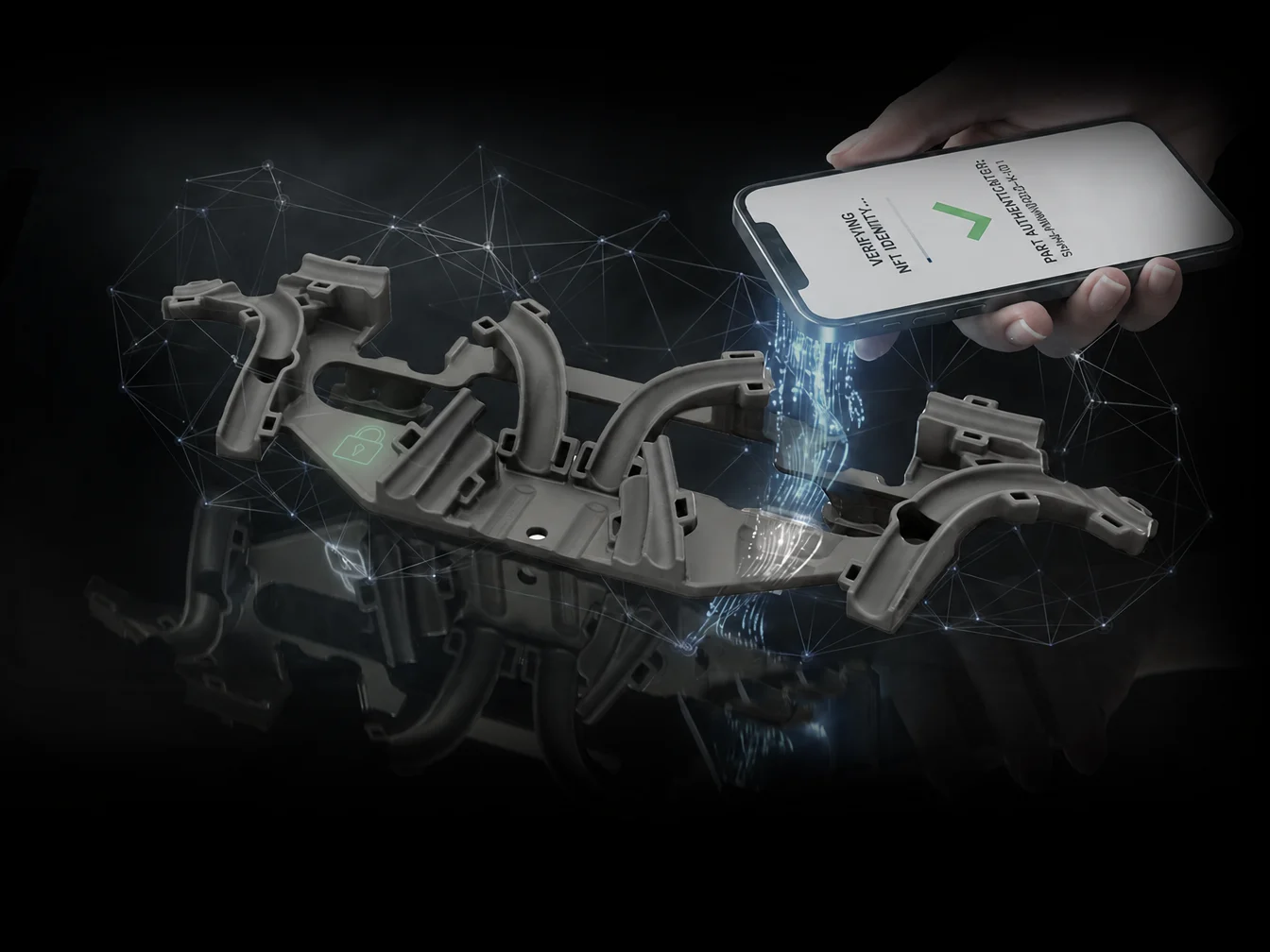
CRP Group Launches UniqTrust Digital Identity System for Windform 3D Printed Part Traceability

Application
Originally reported by adsadvance.co.uk
CRP Group, headquartered in Modena, Italy, has launched CRP UniqTrust, a digital identity system designed to improve traceability and authentication for components produced using its proprietary Windform technopolymer composites via selective laser sintering. The system assigns each Windform part a unique, non-clonable digital identity linked to a protected record accessible through an enabled device near the packaging. The digital record can include certificate of authenticity, order references, part code, material used, and customized technical documentation. Franco Cevolini, CEO and CTO of CRP Group, stated the system ensures components can prove their identity and conformity throughout their lifecycle, targeting sectors such as aerospace, motorsport, and defense where mission-critical parts are common.
This launch addresses a persistent gap in additive manufacturing: the lack of reliable, scalable part-level traceability for production-grade polymer components. While metal AM has seen some progress in digital thread integration through powder bed fusion OEMs and third-party software, polymer SLS parts-especially those used in high-stakes applications-have largely relied on paper certificates or batch-level tracking. CRP UniqTrust moves the industry toward a digital product passport model, aligning with emerging European regulatory trends around lifecycle data and supply chain integrity. For aerospace and defense customers, this reduces the risk of counterfeit parts entering complex supply chains and simplifies audit compliance. The system was developed with Contatto Divino, a specialist in phygital systems, indicating CRP is leveraging external expertise rather than building entirely in-house.
For CRP Group, the practical next step is demonstrating that UniqTrust integrates seamlessly into existing production workflows at CRP Technology without adding significant cycle time or cost. Buyers in aerospace and defense should evaluate whether the system supports their specific qualification documentation requirements and whether the non-clonable element can withstand real-world handling and environmental conditions. This is a focused, incremental improvement in materials governance for polymer SLS, not a market-wide disruption, but it fills a real operational need for customers who already rely on Windform materials.
Topics