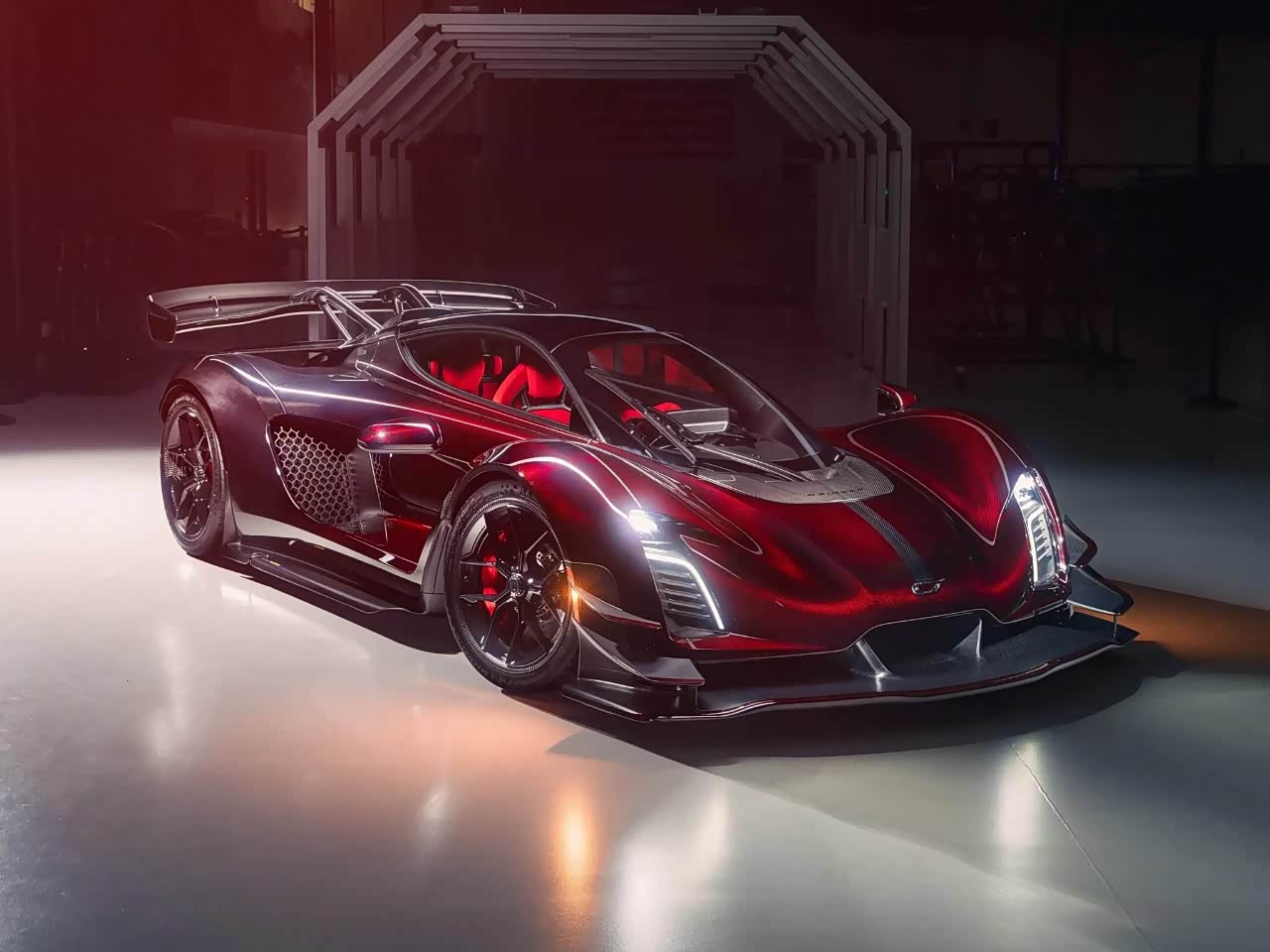
Czinger delivers 21C hypercar with 3D-printed components, featuring 2.88L twin-turbo V8 and 1+1 seating
Originally reported by chejiahao.autohome.com.cn
Czinger Vehicles, the California-based hypercar manufacturer, has delivered the first customer unit of its 21C model, produced at its Los Angeles facility. The 21C is powered by a 2.88-liter twin-turbocharged V8 engine producing 750 hp on standard fuel (850 hp on race fuel), paired with a hybrid system delivering an additional 500 hp from front-axle electric motors. The vehicle’s chassis and numerous structural components are produced using the company’s proprietary AI-driven generative design and metal additive manufacturing platform, with 3D-printed parts including the transmission housing and suspension elements. The 21C is limited to 80 units and features a 1+1 seating layout with extensive carbon fiber bodywork.
This delivery marks a rare production milestone for additive manufacturing in the automotive segment, which has historically been limited to tooling, prototypes, and low-volume racing components. Czinger’s approach - using metal PBF-LB for load-bearing, safety-critical chassis parts in a road-legal production vehicle - goes beyond the typical aerospace qualification grind by compressing design-to-production timelines through in-house AI and printing infrastructure. The company operates its own vertically integrated factory in Los Angeles, bypassing the traditional automotive supply chain and demonstrating that AM can serve as the primary manufacturing method for a homologated vehicle, not just a prototyping adjunct. This positions Czinger as a direct competitor to other low-volume, high-performance manufacturers like Rimac and Gordon Murray Automotive, but with a fundamentally different production philosophy centered on digital design and additive fabrication.
From a practical standpoint, Czinger must now prove it can scale from single-unit handover to consistent 80-unit production without the quality variance that has historically plagued AM in serial manufacturing. The 21C’s success will be measured not by its headline power figures, but by whether the company can deliver repeatable, certifiable parts across the full production run. For the automotive industry, this serves as a live case study in whether generative design and metal AM can move from concept cars to customer driveways without inflating per-unit cost or lead time beyond what the market will bear.
Topics