ORNL and GM test 3D-printable DuAlumin3D aluminum in heavy-duty truck engine prototype
Originally reported by 3Druck
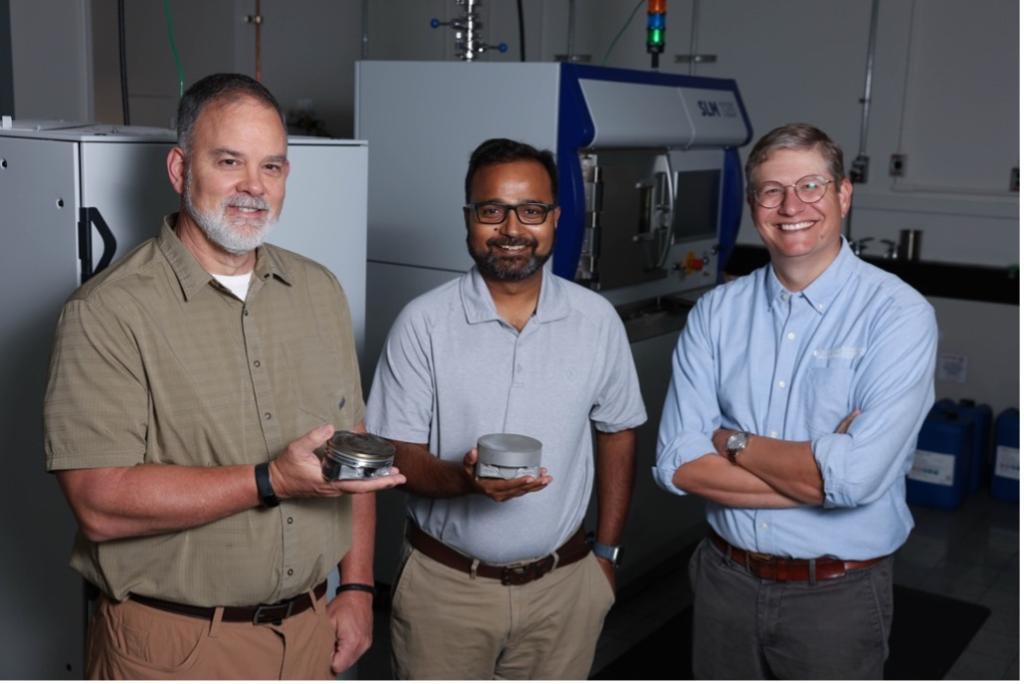
Researchers at Oak Ridge National Laboratory, in partnership with General Motors, have tested two aluminum alloys in a prototype medium-duty truck engine, achieving a 15% weight reduction and over 10% improvement in fuel efficiency. One of the alloys, DuAlumin3D, is specifically formulated for additive manufacturing and was used for highly stressed pistons, while the cast ACMZ alloy was used for the cylinder head and block. The project, led by ORNL's TTO Powertrain Materials Core Program, received an R&D 100 Award in 2025 and a DOE Team Award, validating the material science behind the approach.
This development is significant for the metal AM industry because it moves beyond lab-scale material characterization into a validated, integrated engine test - a rare step for any AM-specific alloy. The DuAlumin3D material addresses a persistent gap in the aerospace and automotive qualification grind: high-temperature aluminum alloys that can withstand the thermal and mechanical loads of combustion engines while remaining printable. For GM, this represents a strategic move to embed AM into its powertrain roadmap, targeting the heavy-duty truck segment where weight savings directly translate into fuel cost reductions over long-haul cycles. The partnership also underscores the value of national lab infrastructure in de-risking new materials for industrial adoption, a model that competes with in-house R&D at suppliers like Alcoa or Constellium.
From a practical standpoint, the key execution challenge for GM and ORNL is scaling DuAlumin3D from prototype pistons to production-grade components with consistent mechanical properties across batches. The 10% fuel efficiency gain is compelling, but it was achieved in a prototype context; translating that into a certified production engine will require additional durability testing and supply chain development for the powder feedstock. For the broader AM industry, this is a concrete data point that specially formulated alloys can outperform cast equivalents in high-stress applications, but it does not yet signal a shift in automotive production economics - the path from award-winning prototype to serial production remains measured in years, not quarters.
Topics