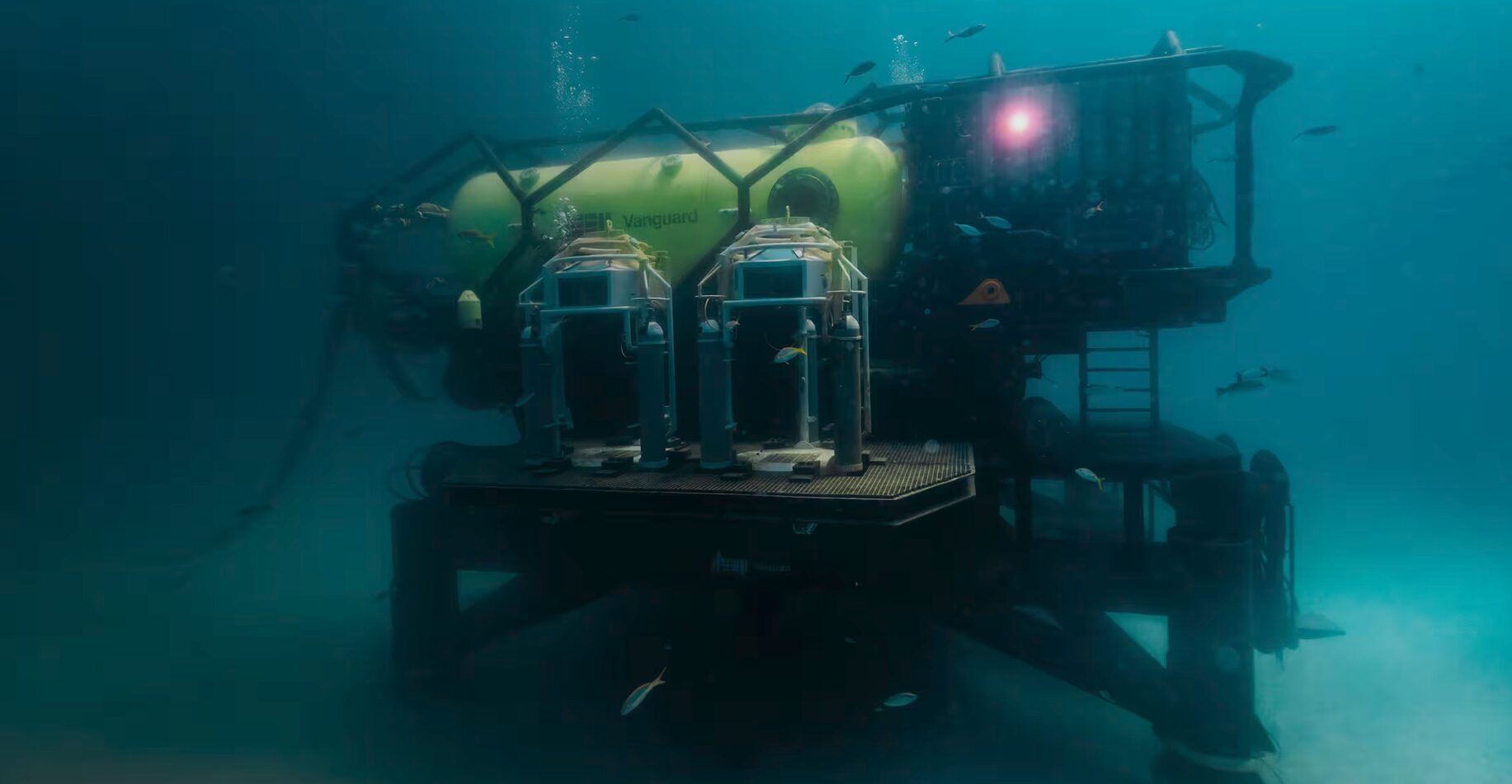
DEEP installs Vanguard underwater habitat built with WAAM metal 3D printing

Materials
Originally reported by 3Druck
Ocean engineering company DEEP has installed its pilot underwater habitat Vanguard at Tennessee Reef in the Florida Keys National Marine Sanctuary, at a depth of 17 meters. The station is designed for crews of up to four aquanauts for missions lasting five days or longer, and is the first open-ocean underwater station built, tested, and deployed in the USA in 40 years. For the additive manufacturing industry, the project is significant because DEEP is developing the larger modular Sentinel habitat concept using wire arc additive manufacturing (WAAM). The company operates its own WAAM production with welding torches from Valk Welding, robotic arms from Panasonic, and systems from RAMLAB, aiming to produce large metal structural components more economically than casting or machining while enabling rapid design modifications.
This deployment demonstrates WAAM's growing relevance for maritime infrastructure, where large customized metal components must combine compressive strength, corrosion protection, modular interfaces, and sensor integration. DEEP's approach positions WAAM as a production method for pressure-rated structures rather than just near-net-shape preforms, which is a frontier the metal DED segment has been working toward. The project also highlights the role of third-party certification in AM adoption: classification society DNV is overseeing Vanguard's sea acceptance and commissioning as the technical certifying body. This mirrors the aerospace qualification grind, where embedding AM into certified infrastructure removes it from marketing language and makes it operational reality.
From an industry perspective, DEEP's Sentinel program represents one of the most concrete large-format metal AM production applications outside of aerospace and energy. The key execution challenge will be scaling WAAM throughput and repeatability to meet habitat production timelines while maintaining DNV certification across multiple modules. For buyers evaluating metal DED, this project provides a reference case for how WAAM can serve mission-critical underwater structures with defined certification pathways, rather than remaining a prototyping or repair-only technology.
Topics