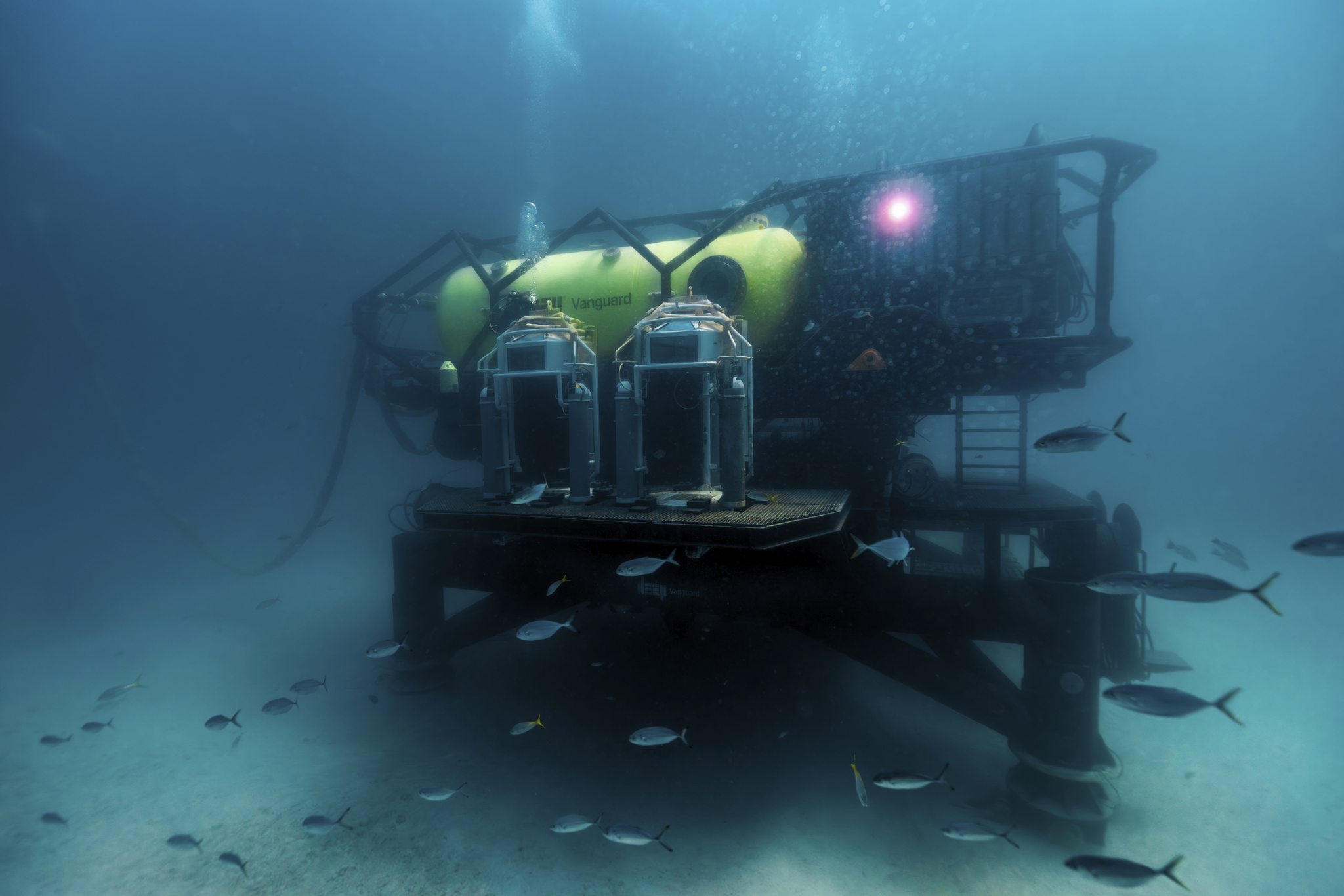
DEEP Installs Vanguard Subsea Habitat Built With WAAM at Florida Keys Site

Materials
Originally reported by 3D Printing Industry
DEEP, a Wire Arc Additive Manufacturing (WAAM) specialist, has completed the installation of Vanguard, its pilot subsea human habitat, on the seafloor at Tennessee Reef in the Florida Keys National Marine Sanctuary. The habitat’s livable section measures 10.7 meters long by 2.5 meters wide, designed to support crews of up to four aquanauts for research missions of five days or longer. Installation involved placing an ocean floor foundation, fixing the habitat to it, and tethering a surface support buoy, with partners including Unique Group, Bastion Technologies, Triton Submarines, and Resolve Marine. Sea acceptance testing and commissioning are now underway toward DNV classification, with crew training to follow before first research missions.
This installation represents a rare real-world validation of WAAM for pressure-vessel-for-human-occupancy (PVHO) applications, moving the process beyond the tooling and repair roles where it typically sits. DEEP Manufacturing, the subsidiary spun off to produce these components, secured full DNV Approval of Manufacture for WAAM production of pressure vessels and hull structures in October 2025, meaning the classification body has already vetted the process chain. The significance here is not just that a large WAAM part was made, but that it was embedded in a certified marine system subject to DNV class rules - a qualification burden comparable to aerospace in its demand for traceability and repeatability. This gives WAAM a credible reference case in the energy and marine verticals, where adoption has been fragmented and early-stage.
For the AM industry, the practical takeaway is that DEEP has executed a full value-chain play: it designed the habitat, developed the WAAM process, passed third-party classification, and handled the marine deployment itself. The next test is whether DEEP Manufacturing can replicate this qualification for external customers without the vertical integration advantage. Buyers in offshore energy and defense should watch whether the DNV approval translates into repeatable production economics, not just a single bespoke project. The company now needs to demonstrate that WAAM can deliver PVHO components at a cost and lead time that competes with conventional forging and welding, not just match them on novelty.
Topics