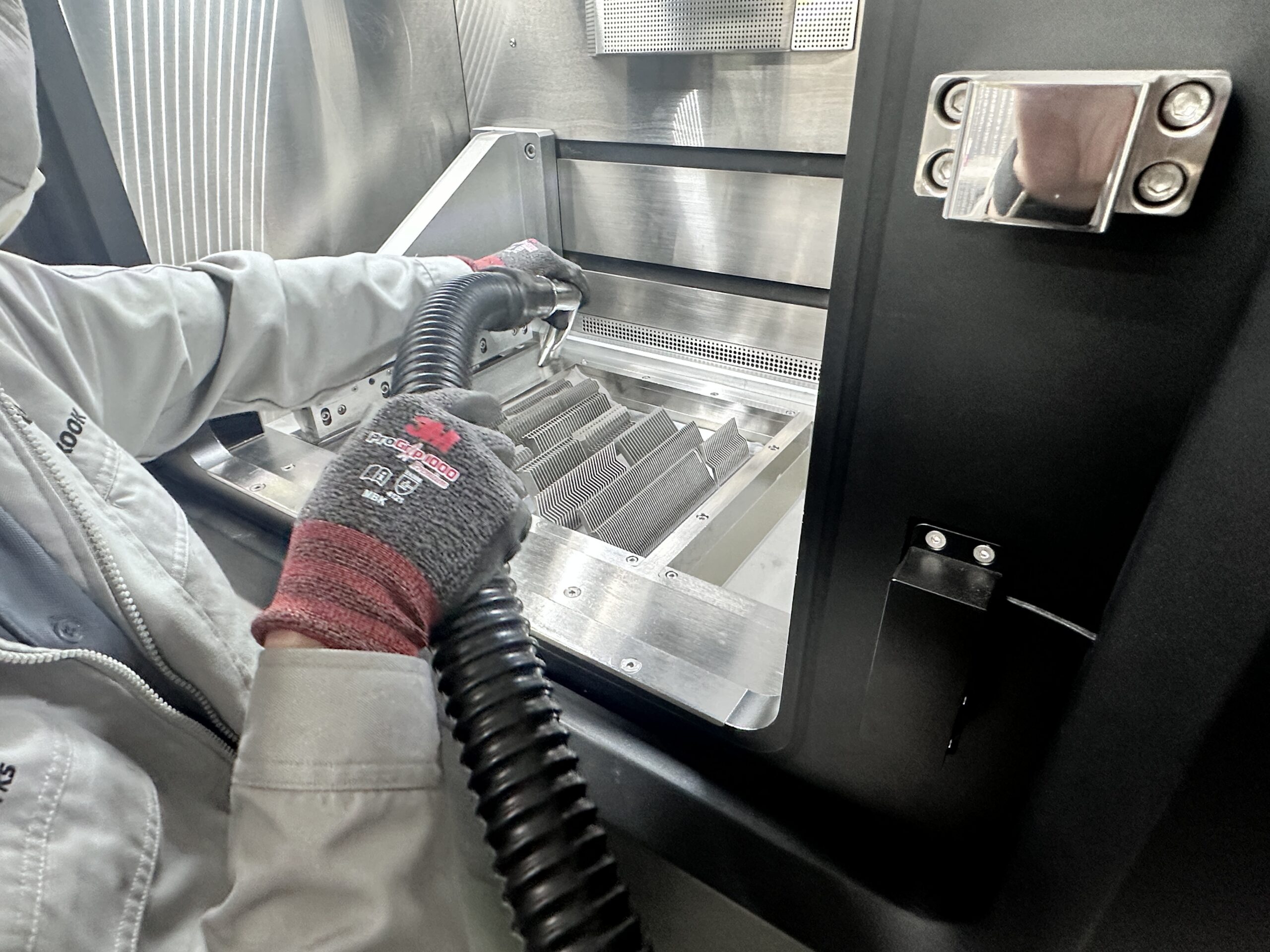
Eplus3D has partnered with Hankook Precision Works to integrate LPBF metal additive manufacturing into the production of specialized tire molds.

Hardware
Originally reported by 3DPrint.com
Eplus3D has partnered with Hankook Precision Works to integrate LPBF metal additive manufacturing into the production of specialized tire molds. The collaboration utilizes the Eplus3D EP-M300 system, a dual-laser platform featuring a 300x300x450mm build volume, to manufacture complex mold components. Hankook Precision Works, a subsidiary of the South Korean tire manufacturer, is deploying these systems to accelerate the development of tire sipes and kerfs, which are critical for vehicle handling, braking, and noise reduction. This deployment marks a strategic move by Hankook to shorten time-to-market for custom tire patterns tailored to specific vehicle segments, including EVs and heavy-duty transport.
This partnership highlights the increasing adoption of metal AM for high-value industrial tooling, a segment historically dominated by traditional CNC machining and casting. While Michelin has long utilized AM for tire mold production, the entry of major players like Hankook indicates a broader industrial shift toward decentralized, on-demand mold manufacturing. The use of LPBF technology allows for the creation of intricate, high-performance tread geometries that are difficult or impossible to achieve through conventional subtractive methods. As tire manufacturers face pressure to optimize performance for diverse vehicle architectures, the ability to rapidly iterate mold designs provides a distinct competitive advantage in the global automotive supply chain.
For Eplus3D, this partnership validates the performance of the EP-M300 in demanding industrial environments where reliability and geometric complexity are paramount. The success of this implementation depends on Hankook's ability to scale its internal DfAM capabilities and maintain consistent material properties across high-volume production runs. Users should evaluate this application as a benchmark for how metal AM can replace legacy tooling processes to improve end-product performance rather than simply reducing manufacturing lead times.
This article is an AI-assisted rewrite of the linked source report. Facts originate from the source; phrasing is AMPulse's. Use Read Original below to verify, or Report an issue if something is wrong.
Topics