Eplus3D withdraws RMB 1.2045 billion IPO application on Shanghai Stock Exchange

Hardware
Originally reported by 3D Printing Industry
Hangzhou-based metal 3D printing manufacturer Eplus3D has officially withdrawn its application for an initial public offering on the Shanghai Stock Exchange Science and Technology Innovation Board. The company and its sponsor, CITIC Securities, jointly submitted the withdrawal request, effectively halting a planned capital raise of RMB 1.2045 billion (approximately $176.6 million) through the issuance of 29.22 million new shares. This capital was specifically earmarked for four critical growth pillars: expanding metal LPBF production capacity at the Beijing Yijia facility, advancing equipment industrialization in Hangzhou, establishing a new R&D center for large-format and thick-layer laser splicing technologies, and building a global technical service network.
The withdrawal occurs despite a strong revenue trajectory, with Eplus3D reporting growth from RMB 247 million in 2022 to RMB 471 million in 2024, representing a two-year compound annual growth rate of 38%. While gross margins on 3D printing hardware reached 45.87% in 2024, the company faces significant structural headwinds in the form of a mounting accounts receivable burden. Receivables rose to RMB 216.73 million by the end of 2024, accounting for 46.04% of annual revenue, with approximately 34.59% of that balance aged beyond one year. This liquidity pressure complicates Eplus3D's ability to compete with global LPBF incumbents who maintain more stable cash flow profiles and extensive international service infrastructures.
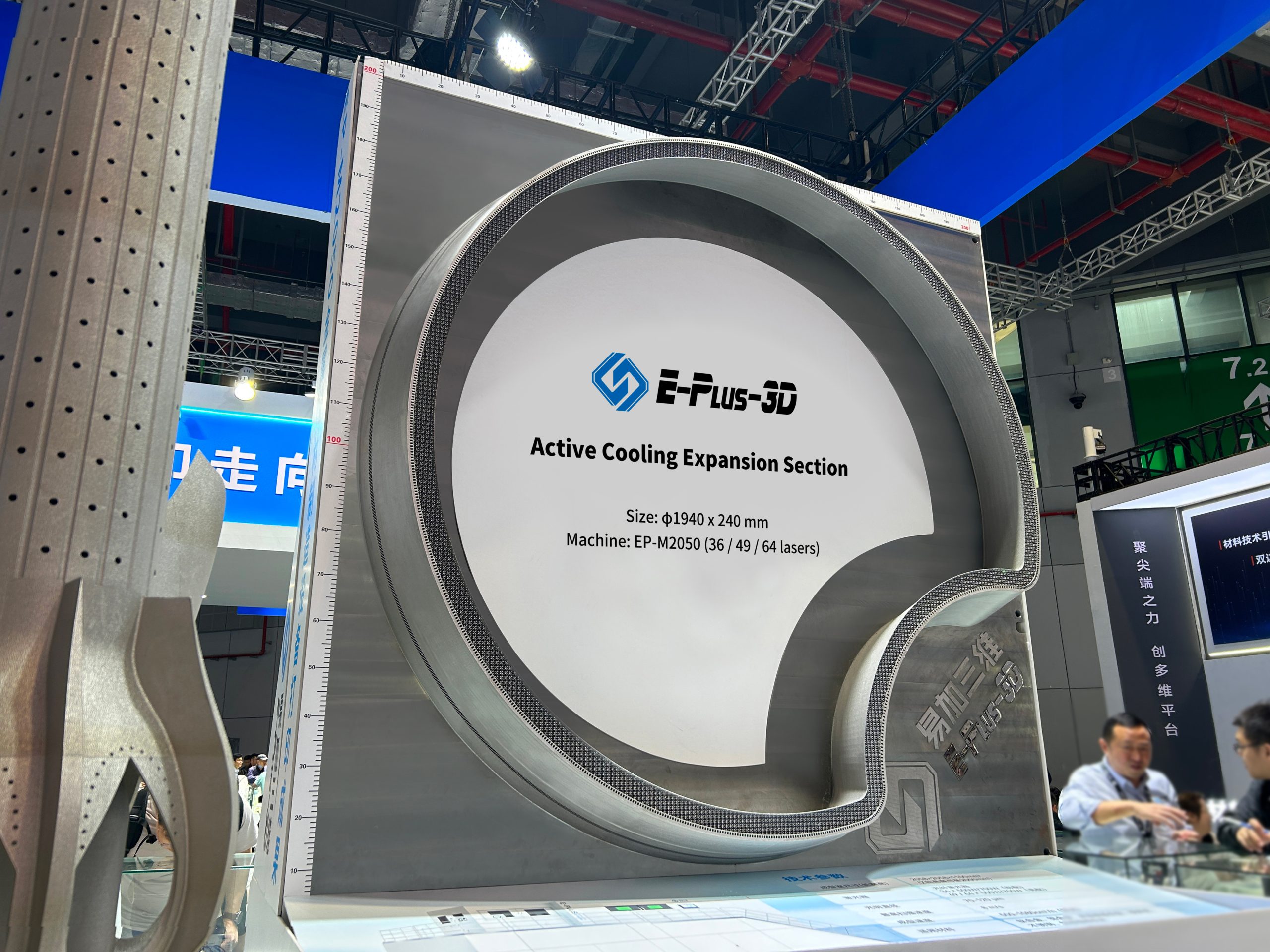
Eplus3D must now find alternative financing to prevent its expansion projects from stalling, particularly as it seeks to scale its meter-level build volume systems like the EP-M1250 and EP-M1550. The company needs to address its aging receivables and stabilize its cash position to maintain its technical lead in large-format metal powder bed fusion. Without the IPO proceeds, the execution of its global after-sales strategy and its R&D roadmap for next-generation laser splicing technologies remains at high risk.
This article is an AI-assisted rewrite of the linked source report. Facts originate from the source; phrasing is AMPulse's. Use Read Original below to verify, or Report an issue if something is wrong.