Eplus3D IPO fails; CITIC Securities sponsors disciplined months after withdrawal

Hardware
Originally reported by SOHU
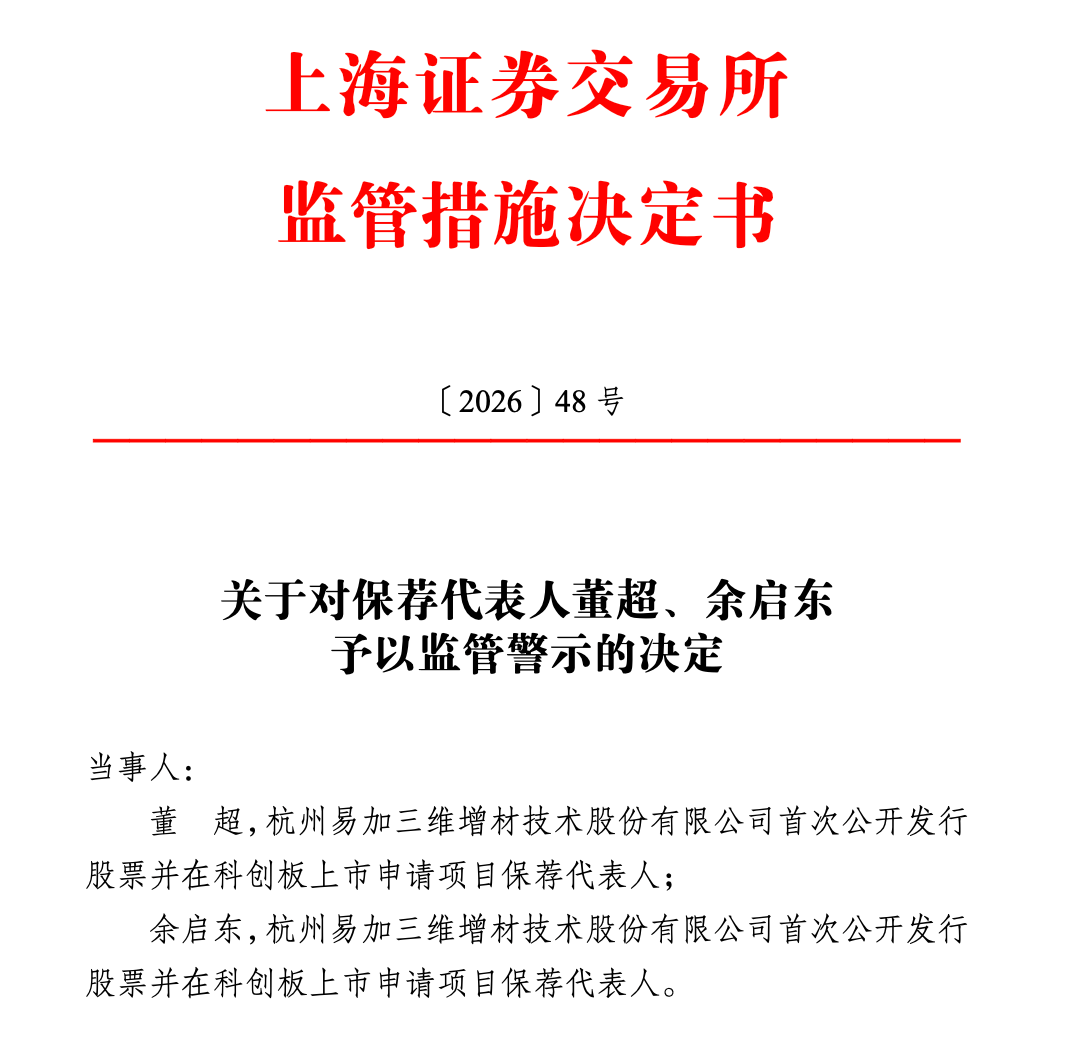
Chinese metal AM manufacturer Eplus3D (Hangzhou Eplus3D Additive Technology Co., Ltd.) has had its IPO application formally rejected by the Shanghai Stock Exchange, with the exchange issuing regulatory warnings to the company, three senior executives, and two CITIC Securities sponsors months after the application was withdrawn. The company filed for a STAR Market IPO in June 2025, aiming to raise CNY 1.205 billion with CITIC Securities as sole sponsor, but withdrew in March 2026 after on-site inspections revealed significant compliance failures. The exchange found that Eplus3D had systematically backdated R&D time sheets, waste disposal records, and project approval documents in its DingTalk system, with contradictory records across different sources, and that R&D expense allocations were inaccurate. Additionally, the exchange flagged undisclosed close relationships between a minority shareholder and the controlling shareholder, YongSheng Holding Group, including shared personnel, overlapping contact information, and funding flows that suggested potential undisclosed equity arrangements.
This case is significant because it demonstrates that China's securities regulators are now enforcing post-withdrawal accountability for IPO sponsors, closing a loophole where companies could simply abandon flawed applications without consequence. For the AM industry, Eplus3D is a notable Chinese metal LPBF manufacturer that had positioned itself as a national-level "specialized and new" small giant enterprise, competing with BLT (Bright Laser Technologies) and Farsoon in the industrial metal AM market. The failed IPO and the specific nature of the violations - systematic R&D record fabrication - raise questions about the reliability of reported R&D spending and technical capabilities across Chinese AM companies seeking public listings. The case also highlights the growing scrutiny of sponsor banks like CITIC Securities, which has seen multiple IPO withdrawals in 2026 and faces increasing regulatory pressure to conduct thorough due diligence on manufacturing technology companies.
From a practical standpoint, this development means Eplus3D will need to rebuild its governance infrastructure and potentially seek alternative financing before attempting another public listing, likely at a lower valuation. For the broader Chinese AM sector, the message is clear: regulators are now treating IPO documentation with the same rigor applied to other industrial technology segments, and companies with weak internal controls face real consequences even after withdrawing applications. Buyers and partners evaluating Chinese AM suppliers should note that regulatory findings of this nature typically indicate deeper operational issues that extend beyond the IPO process itself.
Topics