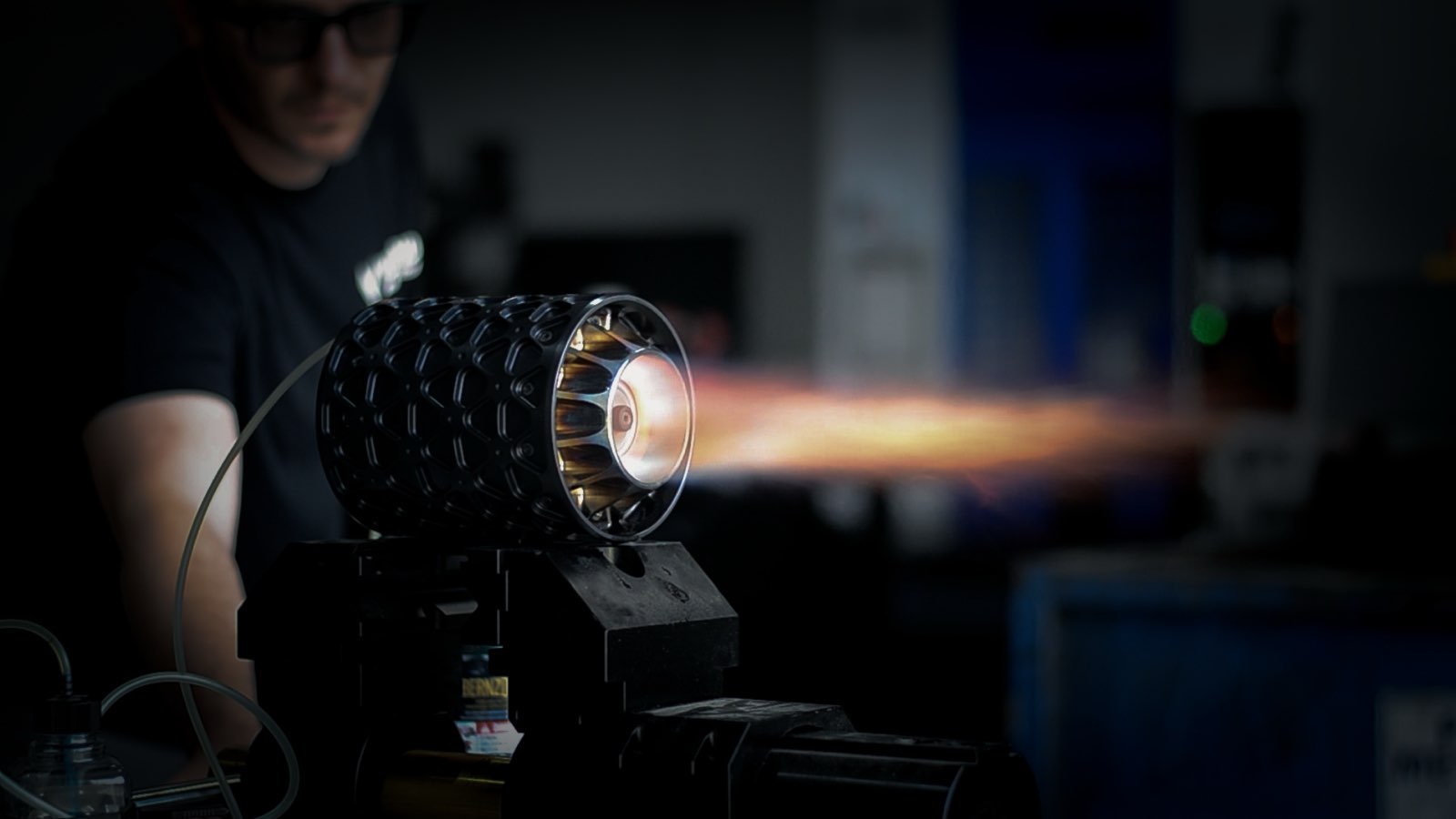
Volund Manufacturing Raises $12M Seed to Build Low-Cost Gas Turbine Engines for Attritable Systems

Hardware
Originally reported by tectonicdefense.com
Volund Manufacturing, a Huntington Beach, California-based startup founded in 2025, has raised a $12 million seed round led by Root Ventures, with participation from Squadra, Output Capital, Marlinspike, and First In. The company, led by CEO Eric Hostetler (formerly of Anduril, Oakley, and Apple), is building a vertically integrated factory to produce low-cost gas turbine engines for attritable defense systems. The 14-person team includes CTO Steven Stanley (Aerojet Rocketdyne, Blue Origin) and Chief Manufacturing Officer Ken Spaulding (precision machining veteran). Volund plans to finalize its first engine design by June 2026, build a prototype in months, and begin flying with integrators like Anduril, Raytheon, Lockheed, Zone 5 Technologies, and Leidos by early 2027, targeting hundreds of engines per year by end of 2027 and thousands per year by end of 2028.
This funding sits at the intersection of two powerful trends: the US defense pivot toward attritable, high-rate production systems, and the growing recognition that additive manufacturing alone is not a panacea for defense production. Hostetler explicitly noted that sheet metal manufacturing may prove more scalable than AM for their engine program, a pragmatic admission that cuts against the hype cycle. The company's approach-building a digital thread through off-the-shelf PLM/ERP systems plus a custom MES-reflects a broader industry shift toward factory-level software integration rather than machine-level heroics. Volund is targeting the Family of Affordable Mass Missiles (FAMM) program and similar DoD initiatives that demand production rates legacy suppliers cannot meet, placing it in direct competition with both traditional turbine manufacturers and newer entrants like Ursa Major and Kratos.
The practical test for Volund is not the seed round but the engine itself: can a 14-person team with no formal contracts deliver a flying, qualified gas turbine in under 18 months? The founders' consumer-goods and aerospace backgrounds suggest they understand both speed and quality discipline, but propulsion qualification is a multi-year grind even for experienced teams. The company's decision to remain agnostic on materials and processes-including potentially bypassing AM for sheet metal-is a sign of engineering maturity, not indecision. What matters now is whether Volund can convert its digital-thread factory concept into actual thrust on a test stand, then into a production contract that justifies the thousand-engine-per-year target.
Topics