Fleet Readiness Center East delivers first flight-certified metal 3D printed parts to US Navy fleet
Originally reported by seapowermagazine.org
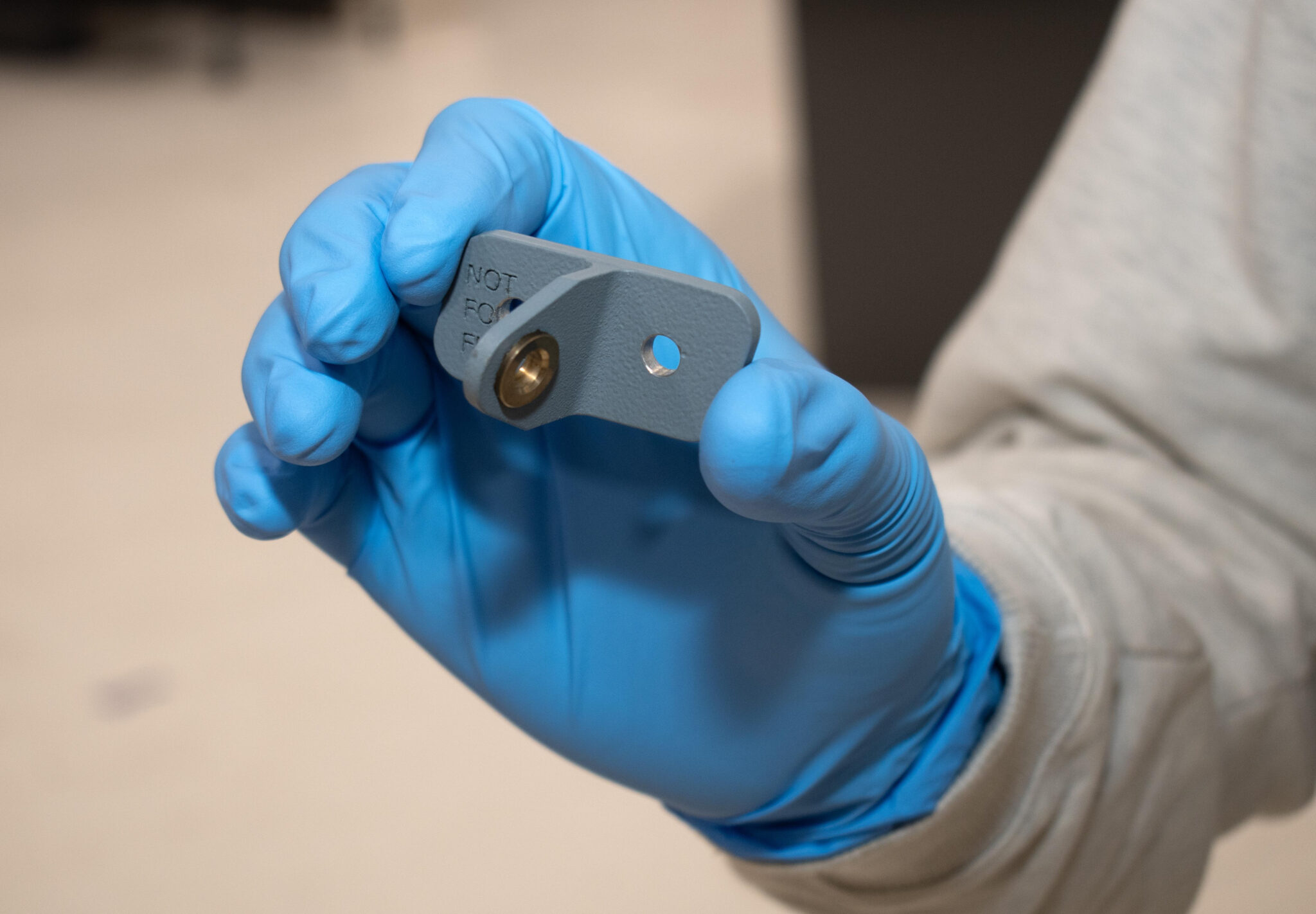
Fleet Readiness Center East (FRCE) at Marine Corps Air Station Cherry Point, North Carolina, has delivered its first flight-certified metal additive manufactured parts to the fleet, marking a milestone in naval aviation sustainment. The depot produced three non-flight-critical aircraft parts using laser powder bed fusion (LPBF) with aluminum powder: a weapons pylon fitting for the AH-1Z Viper, a main landing gear repair fitting for the V-22 Osprey, and a blanking plate for the C-130 Hercules. FRCE completed the qualification, production, and certification process in under six months, which the command states is the fastest such cycle within Naval Air Systems Command (NAVAIR). The parts were delivered to the respective Fleet Support Teams in early 2025 and later that year.
This achievement represents a concrete instance of the aerospace qualification grind pattern, where a government depot successfully compressed a process that typically takes years into months for non-flight-critical applications. The parts are classified as non-flight-critical, meaning they do not carry primary structural loads, which lowers the certification burden while still requiring rigorous process validation. FRCE’s ability to produce these parts on-demand addresses a chronic pain point in military aviation: long lead times for legacy parts through traditional supply chains. The depot is now positioned as a localized, in-house alternative to OEM supply for sustainment parts, directly improving flight line readiness by reducing aircraft downtime. This aligns with the broader Department of Defense push to embed additive manufacturing into depot-level maintenance, as seen in the Navy’s Additive Manufacturing Strategy and the NDAA §849 provisions that incentivize domestic AM sourcing.
From an expert standpoint, the six-month qualification timeline is the most operationally significant detail here. It demonstrates that a government depot can match or exceed industry standards for certifying non-flight-critical metal AM parts, which is a practical validation of the technology’s readiness for sustainment roles. The next step for FRCE will be expanding the part portfolio beyond the current three items and moving toward flight-critical components, which will require a higher certification bar and longer qualification cycles. For now, this is a measured but real step forward in embedding AM into the naval aviation supply chain, not a breakthrough but a repeatable process that can scale.
Topics