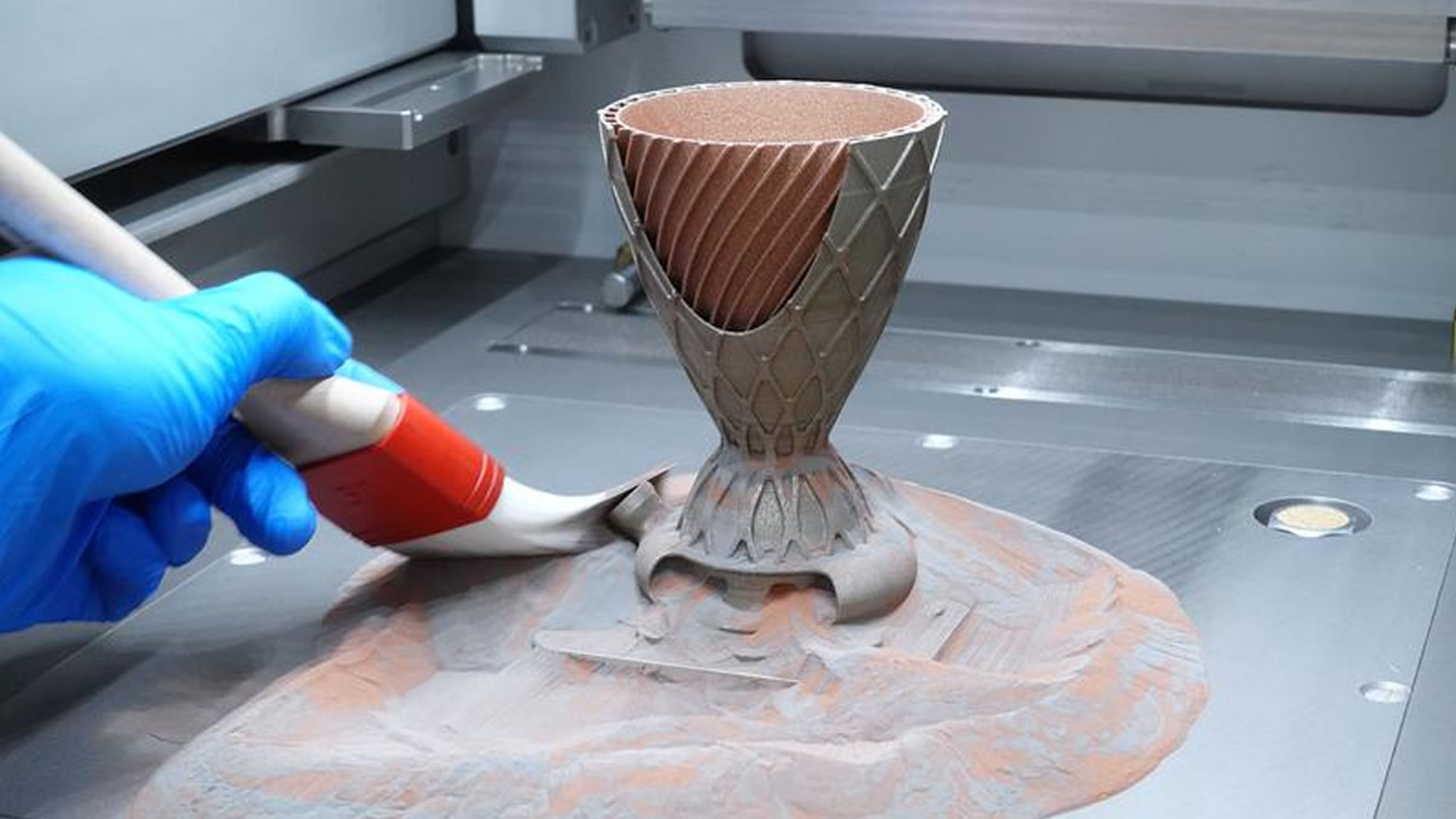
Fraunhofer IGCV has developed a multi-material metal additive manufacturing process as part of the 38 million Euro Enlighten project, funded by the European Union.
Originally reported by Interesting Engineering
Fraunhofer IGCV has developed a multi-material metal additive manufacturing process as part of the 38 million Euro Enlighten project, funded by the European Union. The research team, led by scientist Constantin Jugert, successfully demonstrated the fabrication of a rocket valve by integrating magnetic and non-magnetic steel in a single build run. To manage metallurgical compatibility, the process utilizes a molybdenum interlayer to prevent brittle intermetallic phases when joining dissimilar metals like titanium and nickel. This capability eliminates the need for post-process welding and machining of individual components, significantly reducing lead times for complex aerospace assemblies.
This development addresses a critical bottleneck in the European aerospace supply chain, where traditional manufacturing of rocket engines relies on labor-intensive assembly of machined parts. While private sector entities like SpaceX and Relativity Space have integrated advanced metal additive manufacturing into their production cycles, European public-funded organizations like ArianeGroup have lagged in adopting multi-material capabilities. By enabling the localized placement of specific material properties—such as heat resistance or magnetic functionality—within a single monolithic part, this technology offers a path toward lighter, more efficient propulsion systems. The shift toward integrated multi-material printing is essential for the European Space Agency to increase launch cadence and reduce reliance on external supply chains.
For aerospace manufacturers, the primary challenge remains the qualification of multi-material interfaces for flight-critical hardware. Engineering teams must now focus on validating the fatigue strength and thermal cycling performance of these transition zones to meet aerospace certification standards. Buyers should prioritize the integration of this process into existing LPBF workflows to ensure scalability and repeatability in production environments.
Topics