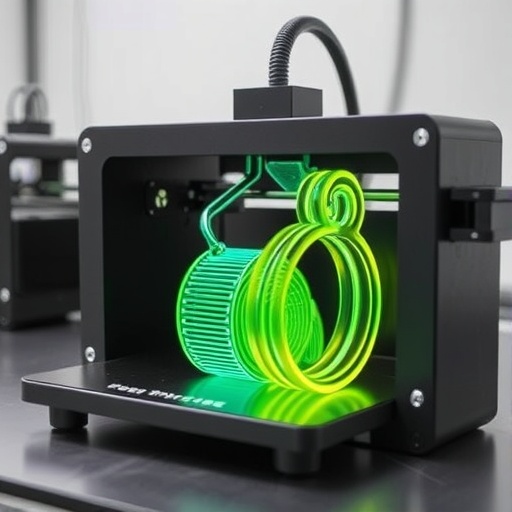
Helmholtz-Zentrum Hereon has developed a water-based 3D printing ink composed of 70% upcycled lignin from industrial waste.
Technology
1 min read

Helmholtz-Zentrum Hereon has developed a water-based 3D printing ink composed of 70% upcycled lignin from industrial waste.

Originally reported by Bioengineer

Helmholtz-Zentrum Hereon has developed a water-based 3D printing ink composed of 70% upcycled lignin from industrial waste. This material enables Direct Ink Writing at room temperature, eliminating the need for fossil-based polymers or high-heat curing. The core breakthrough is its 100% recyclability: printed parts can be rehydrated back into ink form and reused multiple times without structural loss. This innovation drives a systemic shift toward a closed-loop, bio-based manufacturing ecosystem. ♻️🌱 #3DPrinting #CircularEconomy #MaterialScience #Sustainability

How This Connects

5 related events
  1. Same pattern

    Researchers are developing soft robotic actuators by 3D printing structures using recycled industrial waste materials.

  2. Same pattern

    Oak Ridge National Laboratory has bridged the scale-control divide with a new modular extrusion system that multiplexes multiple smaller extruders into a single high-output stream.

  3. Same pattern

    MIT researchers have achieved a breakthrough by 3D printing a functional linear motor in 3 hours for just 50 cents.

  4. This article

    Helmholtz-Zentrum Hereon has developed a water-based 3D printing ink composed of 70% upcycled lignin from industrial waste.

  5. Same pattern

    Aeroptera has launched Lace, an open-source drone platform specifically engineered for 3D printed composite research.

  6. Same pattern

    MetalPrinting (Gauss AM) has launched the Gauss MT90, a desktop metal 3D printer that replaces hazardous powders with a proprietary paste-based extrusion system.