Hi3D releases version 2.1 of image-to-3D model generator with new 'split print' feature

Software
Originally reported by 3Druck
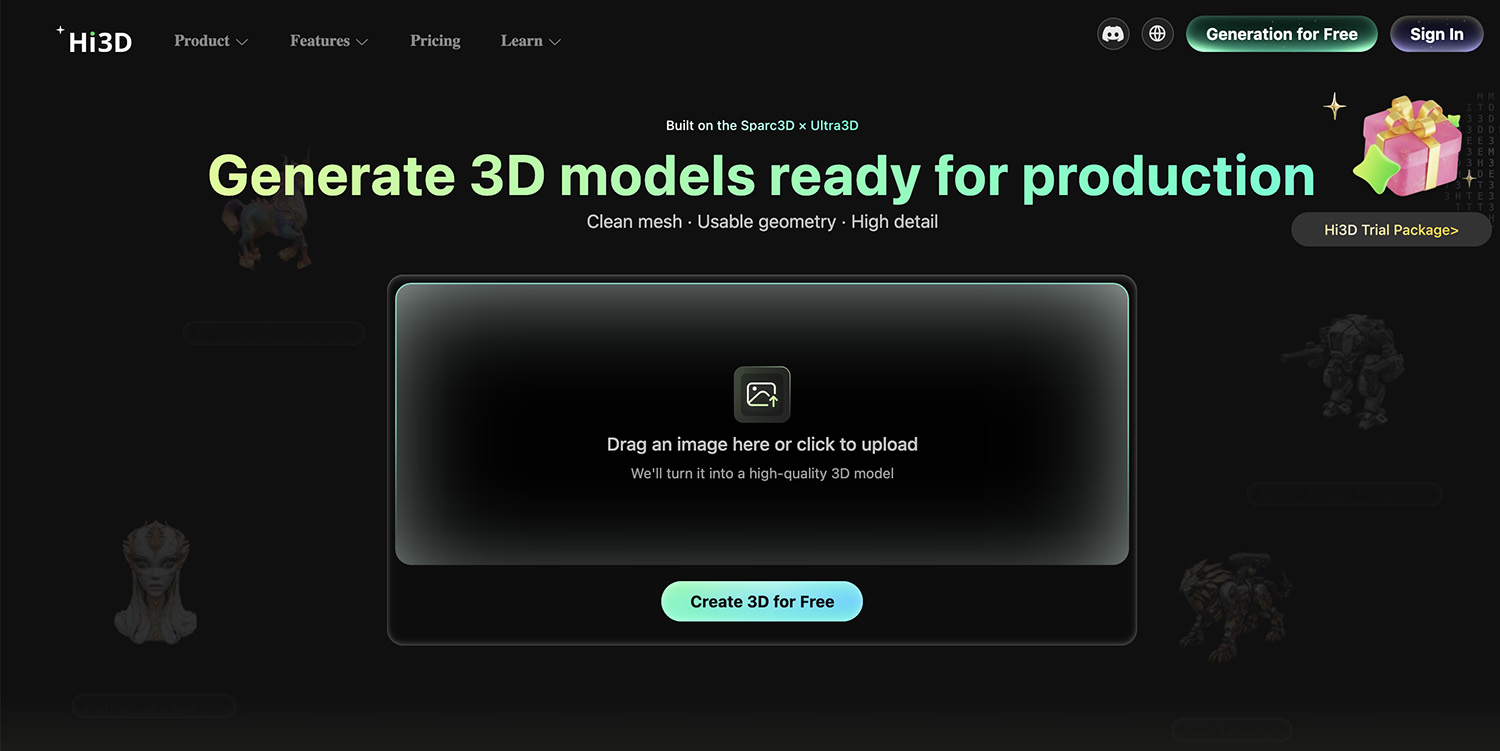
Hi3D has released version 2.1 of its AI-powered image-to-3D model generator, adding a 'split print' feature that allows users to select individual parts of a model and generate printable splits for larger or multi-part objects. The browser-based tool converts photos, illustrations, or logos into printable 3D models in approximately two minutes, with improved stability and control over previous versions. Key features include multi-color segmentation for separate color regions, automatic printability checks with error repair, and direct file transfer to slicers or printers via one-click export. The company also offers plugins, an API, and integrations with tools like OpenClaw and MCP. Pricing starts at a free tier with 100 credits for non-commercial use under CC license, while paid plans range from $13.93/month (Pro, 1000 credits) to $90.93/month (Ultra, 8000 credits) on annual subscriptions, with commercial usage and private assets included.
This update targets a specific gap in the consumer and prosumer AM workflow: the translation of everyday images into print-ready files without CAD expertise. Hi3D competes in the growing AI-to-3D space alongside tools like Meshy, Luma AI, and Kaedim, but differentiates by focusing on printability rather than just model generation. The 'split print' feature addresses a practical pain point for hobbyists and small sellers on platforms like Etsy, who often need to break large or multi-color models into manageable print jobs. In the context of the broader AM market, this is a software-service play that lowers the barrier to entry for polymer material extrusion (FDM/FFF) users, particularly in the consumer and maker segment. The subscription model, with credits expiring per billing period, reflects a common monetization strategy in AI tools but may frustrate occasional users.
From a practical standpoint, Hi3D's value proposition hinges on execution: the tool must consistently produce watertight, sliceable models with minimal manual cleanup. The two-minute generation time and automatic printability checks are strong selling points, but the real test will be user feedback on model quality for complex geometries or fine details. For buyers, this is a useful addition to a workflow if it reliably reduces the time from photo to print; for competitors, it raises the bar for integrated printability features in AI generation tools. The company's next step should be building a library of user-validated examples to demonstrate consistency across diverse input images.
Topics