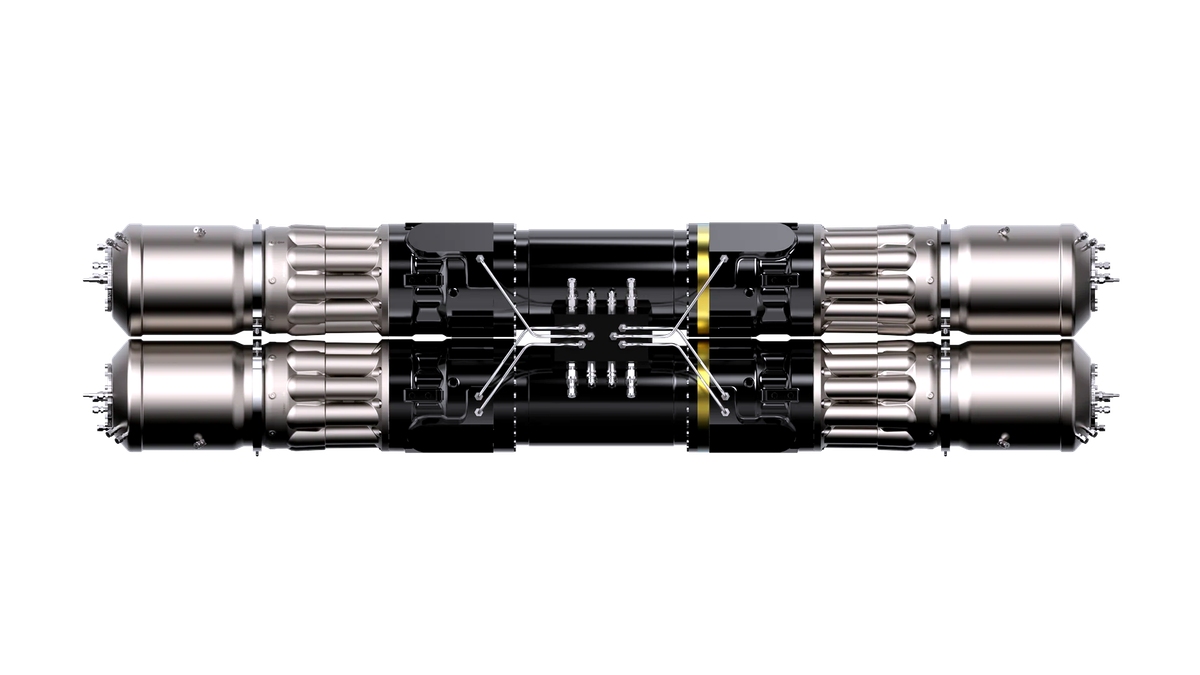
Hyliion commercializes KARNO 200kW generator with metal LPBF, scaling from M2 to M Line builds

Hardware
Originally reported by TCT Magazine
Hyliion has fully committed to the KARNO linear heat generator technology it acquired from GE Aerospace in 2022 for $37 million, transitioning from a commercial electric-vehicle startup to a power generation company. The KARNO 200 kilowatt module, which operates on a Stirling-like cycle with gas heated and cooled 20 times per second to drive a piston, is now a commercial product manufactured exclusively via metal laser powder bed fusion. CEO Thomas Healy told the Additive Insight podcast that the company uses Colibrium Additive M2 systems (250 x 250 mm build plate) for single-unit builds, X Line machines for two units per build, and M Line systems for four units per build, with larger multi-megawatt modules in development. Hyliion targets on-site power generation for data centers, commercial buildings, and military applications, including a role as the power plant for a new unmanned military ship.
This deployment is a rare case of a former SPAC company (Hyliion listed at $1.5 billion in 2020) successfully pivoting away from its original EV thesis into a production-scale AM application. The KARNO story fits the pattern of technology transfer from a deep-pocketed aerospace incumbent (GE Aerospace) to a smaller, more agile commercializer - similar to how GE’s LEAP fuel nozzle journey established LPBF for certified production, but here the end market is energy rather than aerospace. The reliance on metal PBF-LB is not optional: the heat exchanger geometry is too complex for conventional manufacturing, making AM the only viable production route. Hyliion’s ability to scale from M2 to M Line machines mirrors the broader industry trend where build-volume expansion becomes the gating factor for serial production economics. The company’s customer base - data centers facing grid constraints, commercial facilities seeking cheaper on-site power, and defense programs - represents a fragmented but growing demand vertical for distributed generation, where AM’s design freedom and low-volume flexibility align well with bespoke power solutions.
For the AM industry, Hyliion’s KARNO program is a concrete validation that metal LPBF can serve as the primary production process for a commercially viable energy product, not just a prototyping or qualification tool. The key execution risk is cost-per-part at scale: Hyliion must demonstrate that stringing together multiple 200kW modules - each requiring one to four builds depending on machine size - can compete with conventional generator manufacturing on total cost of ownership. The company’s reliance on older M2 platforms suggests a conservative approach to production, but the move to M Line and X Line machines indicates an awareness that build-volume economics are critical. Buyers in the data center and defense segments should evaluate Hyliion’s lead times and unit costs relative to incumbent turbine or reciprocating engine solutions, while AM suppliers should watch whether this application drives demand for larger-format LPBF systems with higher throughput.
Topics