Inkbit patent WO2025041082A1 describes UV-free inkjet 3D printing via transmetallation-activated ROMP

Hardware
Originally reported by 3Druck
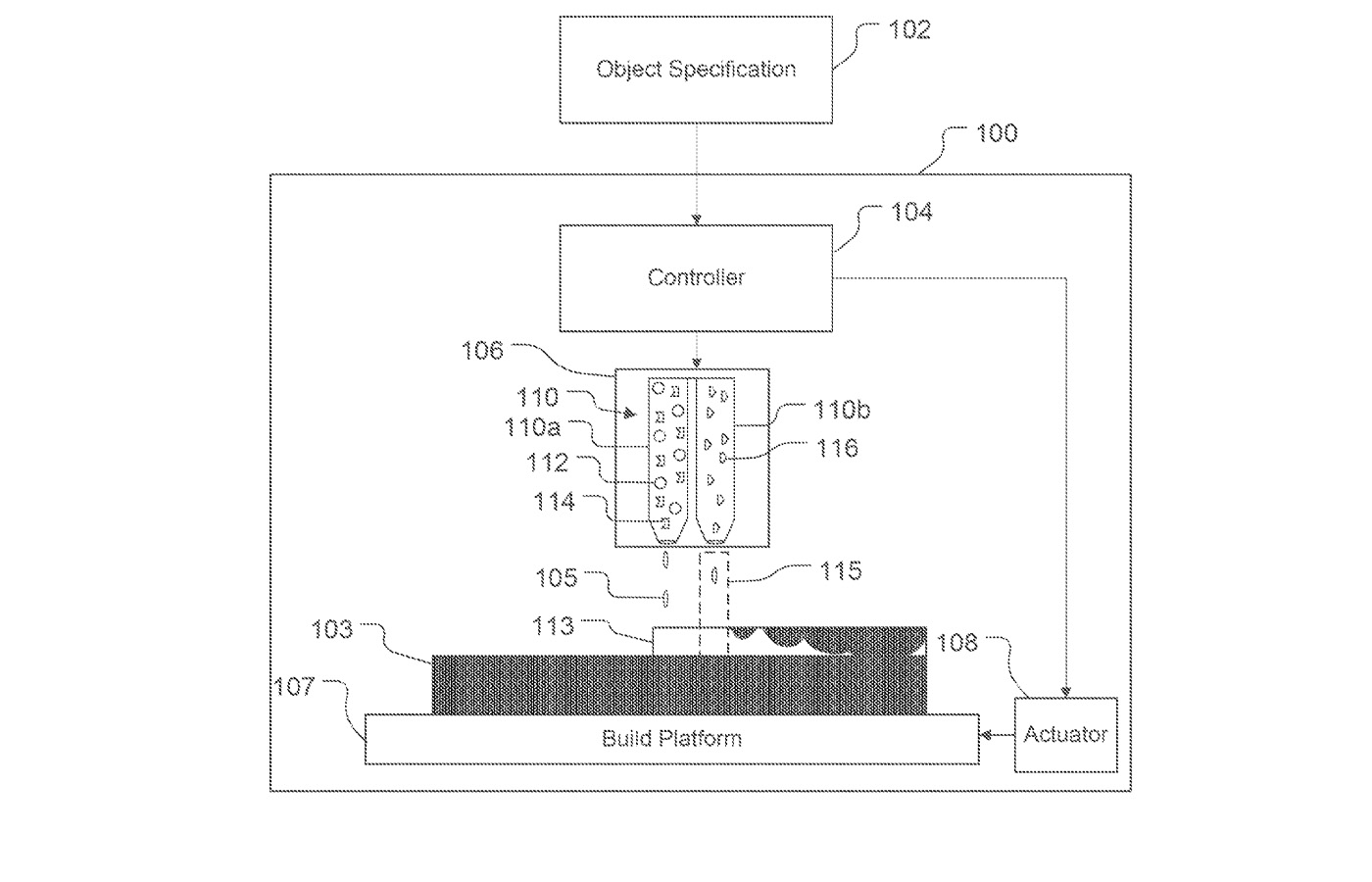
Inkbit has published patent application WO2025041082A1 describing an inkjet 3D printing process built on transmetallation-activated ring-opening metathesis polymerization, or ROMP, that cures without UV light. The system deposits two separate liquids: one carries a monomer plus an activator, the other a ROMP pre-catalyst. Polymerization starts only when the pre-catalyst penetrates the activator-laden layer on the build platform, forming an active catalyst in place, similar in principle to a two-part adhesive delivered through inkjet nozzles. The filing also describes a wax-based support variant that forms cavities during the print.
Vision Controlled Jetting, Inkbit's camera-monitored inkjet process, corrects each printed layer optically; this patent instead addresses material chemistry, the other constraint on inkjet AM. Photopolymer inkjet systems are largely limited to UV-curable resins, which excludes polymer chemistries prized for elongation at break and modulus. Keeping catalyst and monomer physically separate until the point of deposition removes the premature-cure risk that causes clogging when reactive components mix inside a print head, a limitation that has narrowed which materials inkjet vendors can offer against vat photopolymerization and powder-bed competitors.
Precise control of activator concentration determines whether a layer over-cures or cross-links poorly, so turning this chemistry into a shipping material system still depends on process tuning not detailed in the filing.
Topics