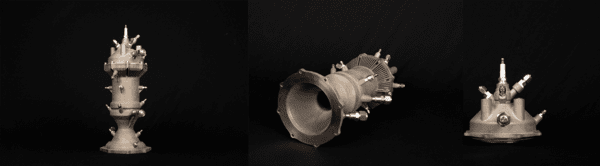
Innospace bipropellant methane engine technology designated 'Space New Technology' by Korea AeroSpace Administration

Application
Originally reported by globalnewsagency.kr
Innospace, the South Korean launch vehicle developer, announced on June 18 that its bipropellant regeneratively cooled methane engine combustor technology has been officially designated as a 'Space New Technology' by the Korea AeroSpace Administration (KASA) under the Space Development Promotion Act. The designation, awarded at a ceremony in Sacheon, certifies the novelty, advancement, and commercial viability of the technology. Innospace's engine uses both liquid methane and liquid oxygen as coolants in a dual-propellant regenerative cooling circuit, circulating both propellants through the combustion chamber cooling channels to improve thermal management. The company validated the design through a 420-second single-burn ground test in May 2026, the longest recorded for a domestic methane engine combustor, following initial ignition tests in July 2025 and cooling performance verification in February 2026.
This designation places Innospace within a small global cohort of private firms developing full-flow, regeneratively cooled methane engines for orbital and kick-stage applications, competing with players like Relativity Space (Aeon R), Blue Origin (BE-4), and LandSpace (Zhuque-2). The key technical differentiator is the use of additive manufacturing - specifically metal powder bed fusion (LPBF) - to fabricate the complex internal cooling channels as a single integrated structure, enabling higher design freedom and reduced part count. This approach directly addresses the aerospace qualification grind: by consolidating multiple traditionally welded or brazed components into one printed part, Innospace reduces leak paths and assembly risk while improving cooling efficiency at lower chamber pressures, which in turn allows lighter propellant tank and feed system structures. The technology is slated for first application on the HANBIT-Micro launch vehicle's LiMEK-04 kick-stage engine, with planned expansion into reusable launch vehicle engines, small satellite orbital transfer vehicles, and deep-space propulsion systems.
From an expert standpoint, the KASA designation is a formal signal that Innospace's engine architecture has passed a national technology readiness review, which may accelerate future government procurement and qualification pathways. The practical next step is scaling from a single 420-second test to a full mission-duty cycle - multiple restarts, longer cumulative burn time, and vacuum ignition - before the HANBIT-Micro can be considered flight-ready. For the broader AM industry, this case reinforces that metal LPBF's value in aerospace is not about printing large monolithic chambers, but about enabling internal geometries that improve thermodynamic performance while reducing supply chain complexity.
Topics