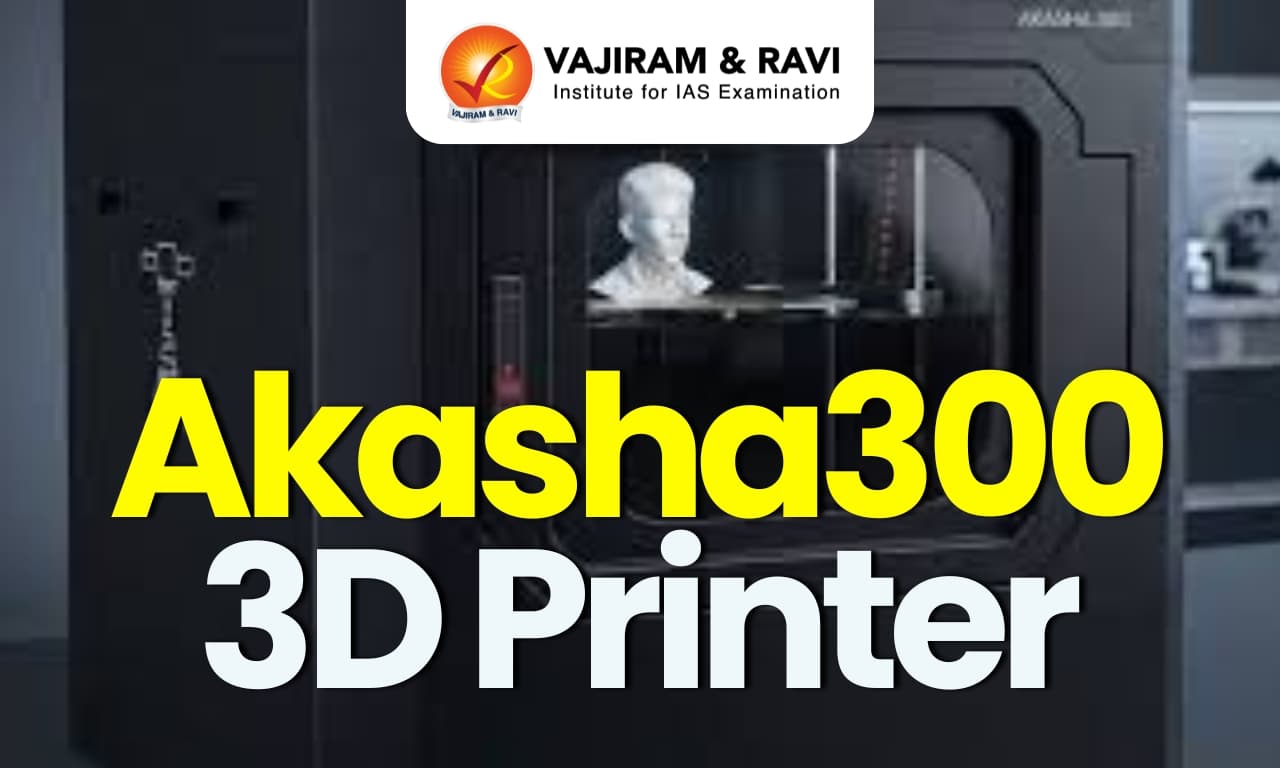
Kerala-based startup Akasha300 has delivered its high-temperature multi-material extrusion 3D printer to the Indian Space Research Organisation (ISRO).
Originally reported by vajiramandravi.com
Kerala-based startup Akasha300 has delivered its high-temperature multi-material extrusion 3D printer to the Indian Space Research Organisation (ISRO). The system utilizes dual-extrusion technology capable of operating at nozzle temperatures up to 350 degrees Celsius, with a roadmap to reach 500 degrees Celsius for advanced engineering polymers. It features a heated bed reaching 110 degrees Celsius, upgradeable to 150 degrees Celsius, and an enclosed chamber maintained at 80 degrees Celsius. The platform is supported by the Space Technology Innovation and Incubation Centre at the Indian Institute of Space Science and Technology (IIST) and the Kerala Startup Mission.
This deployment highlights the growing domestic capability in India for producing industrial-grade research platforms capable of processing high-performance thermoplastics. By providing a modular extrusion system, Akasha300 addresses the need for localized, flexible R&D hardware that can handle the thermal requirements of aerospace-grade materials. The system competes in the niche segment of high-temperature FDM/FFF printers, where thermal management and material compatibility are critical for functional prototyping. As ISRO continues to expand its indigenous manufacturing supply chain, the integration of such localized hardware reduces dependency on imported high-temperature extrusion systems.
For users, the value of this system lies in its modularity and thermal stability, which are essential for testing high-performance polymers in space-related applications. The company must now demonstrate long-term reliability and repeatability in a research environment to validate its performance against established global competitors. Future success will depend on the effective implementation of the planned 500 degrees Celsius upgrade to expand the range of printable materials beyond standard high-temperature filaments. 🚀
Akasha300, ISRO, FDM, 3D printing, India, aerospace, additive manufacturing, high-temperature extrusion
This article is an AI-assisted rewrite of the linked source report. Facts originate from the source; phrasing is AMPulse's. Use Read Original below to verify, or Report an issue if something is wrong.