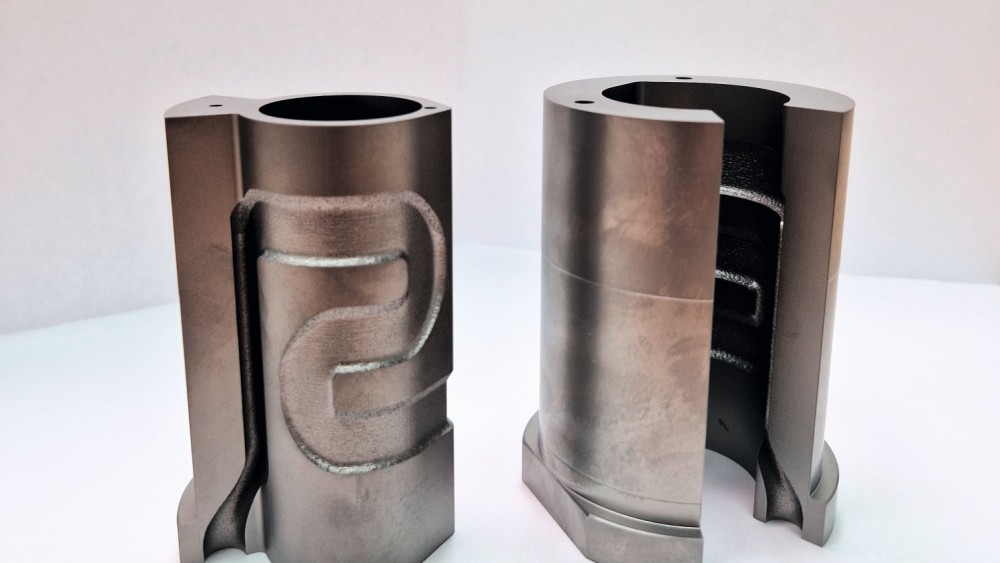
LaserTeck realizes conformal cooling channels in injection molding via metal LPBF

Service
Originally reported by form-werkzeug.de
LaserTeck, a German tooling and additive manufacturing specialist, has demonstrated the production of injection mold inserts with conformal cooling channels using metal laser powder bed fusion (LPBF). The company printed the inserts from 1.2709 tool steel (X3NiCoMoTi 18-9-5), a maraging steel commonly used for high-performance molds. By integrating cooling geometries that follow the contour of the mold cavity, LaserTeck reports cycle time reductions of up to 30% and improved part quality due to more uniform temperature distribution during the molding process. The project was executed at LaserTeck's facility in Germany, targeting serial production tooling applications.
This application sits squarely within the industrial tooling vertical, a segment that is economically important but often media-invisible compared to aerospace or medical headlines. Conformal cooling is one of the most mature and ROI-positive use cases for metal AM in tooling, yet it remains under-deployed because of qualification friction and post-processing costs. LaserTeck's realization matters because it moves the conversation from theoretical benefit to documented shop-floor results with a specific material and process parameter set. The company is competing against established conformal cooling providers like EOS (via its Additive Minds consulting arm) and regional service bureaus such as Oechsler or Toolcraft, but LaserTeck differentiates by offering the full chain from design to finished insert, reducing the handoff risk that often kills tooling AM projects.
For buyers evaluating metal AM for injection molding tooling, the key takeaway is that the technology works when the design and post-processing are tightly integrated. LaserTeck must now demonstrate repeatability across multiple mold geometries and prove that the cycle time gains hold under production volumes, not just in a single demo. The tooling market rewards consistency over novelty, and this case provides a concrete reference point for cost-benefit analysis rather than another aspirational case study.
Topics