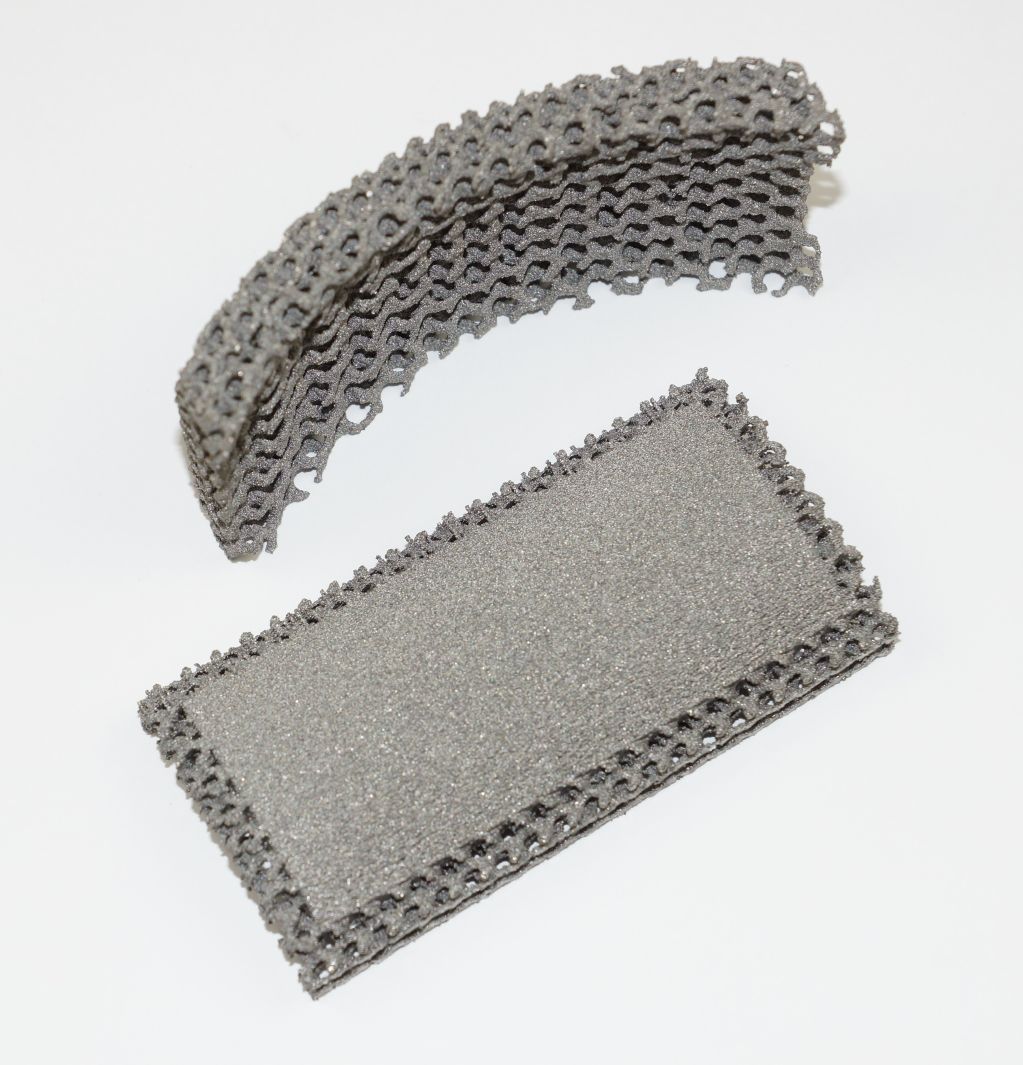
VBN Components integrates cemented carbide AM inserts into large castings via Nucleation Net Zone

Materials
Originally reported by 3D ADEPT
Swedish materials specialist VBN Components has developed a method to integrate additively manufactured cemented carbide inserts into large-scale cast components without requiring the entire part to be 3D printed. The process, created in collaboration with a major pump manufacturer, centers on Vibenite 480, the company's flagship cemented carbide, and a new interface called the Vibenite Nucleation Net Zone (VNNZ). Introduced during the LPBF printing process, the VNNZ enables high chromium cast iron to form a metallurgical bond with the Vibenite 480 insert during casting, solving a long-standing challenge where molten cast iron would otherwise melt or intermix with printed inserts and destroy geometry and performance. Wear testing in representative slurry pump environments shows that Vibenite 480 offers erosive wear resistance approximately ten times higher than conventional cast materials.
This development opens a practical route for AM to address wear in large industrial castings, a segment where full 3D printing of the entire component is economically and technically impractical due to size and cost constraints. The hybrid approach places small, strategically designed AM inserts only in the most wear-critical zones of a casting mould, directly addressing the industrial-tooling and energy verticals where pump, valve, and slurry handling components face extreme erosive conditions. VBN Components competes in the niche of ultra-hard, wear-resistant AM materials, a space where few players offer production-grade cemented carbide powders and qualified print parameters. The VNNZ interface is a process innovation rather than a material one, and its value lies in enabling existing foundry workflows to adopt AM inserts without retooling entire casting lines. The company's position as a materials supplier rather than a full-system vendor means this advancement targets service bureaus and OEMs that already operate casting operations, not the broader AM equipment market.
For buyers in mining, oil and gas, and slurry handling, the practical takeaway is that AM-wear inserts can now be specified in cast components with a validated metallurgical bond, not just mechanical interlocking or post-cast welding. VBN Components must now demonstrate that the VNNZ interface is repeatable across different foundry environments and casting geometries, and that the cost premium for the AM insert is justified by the tenfold wear life improvement in field conditions rather than lab tests. The company's next step is to publish field data from the pump manufacturer collaboration and to qualify the process for additional casting alloys beyond high chromium cast iron.
Topics