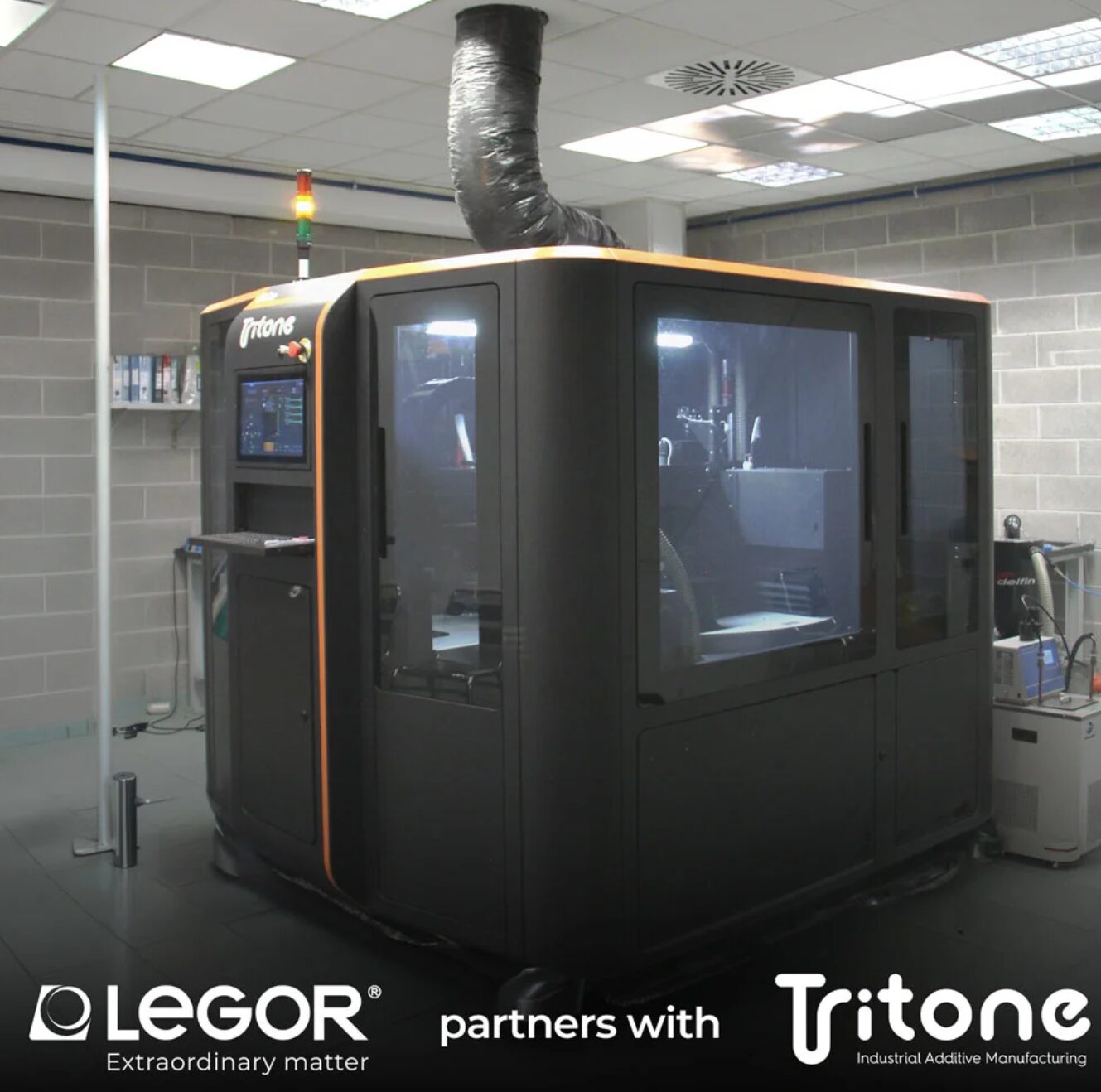
Legor Group adds gold and platinum 3D printing via Tritone MoldJet at expanded metal hub

Materials
Originally reported by 3Druck
Legor Group, a specialist in precious metals for jewelry and luxury goods, has expanded its 3D Metal Hub in Italy by integrating Tritone Technologies’ MoldJet platform. The partnership enables additive manufacturing of components in gold and platinum, complementing existing steel, silver, and bronze production on an HP Metal Binder Jet system. Legor and Tritone co-developed and validated gold and platinum pastes for the process, targeting complex geometries with high surface detail. Massimo Poliero, CEO of Legor, and Ofer Ben-Zur, CEO of Tritone, both framed the collaboration as a strategic push into serial production for the jewelry and luxury segments.
This move extends metal binder jetting into a vertical where material value, recovery efficiency, and surface finish are paramount. MoldJet differs from powder-bed processes by using metal-filled pastes and intermediate shaping steps, which can reduce material waste and simplify handling of expensive powders like gold and platinum. The jewelry and luxury goods market has long been a high-volume adopter of polymer vat photopolymerization for patterns and molds, but direct metal printing of precious alloys has remained niche due to process control and cost challenges. Legor’s material expertise combined with Tritone’s platform creates a credible path to production for filigree structures, hollow geometries, and customized designs that are difficult to cast or machine. The partnership also positions Legor as a service bureau and material developer, capturing value beyond machine sales.
For the AM industry, this is a measured but meaningful expansion of binder jetting’s addressable material set and application vertical. The real test will be reproducibility across batches, post-processing yield, and certification for precious metal purity standards. Legor and Tritone must demonstrate that MoldJet can deliver consistent surface quality and material properties at a cost structure that competes with traditional lost-wax casting for small-to-medium series. If successful, it opens a new revenue stream for metal AM in a segment that values design freedom and material integrity over raw throughput.
Topics