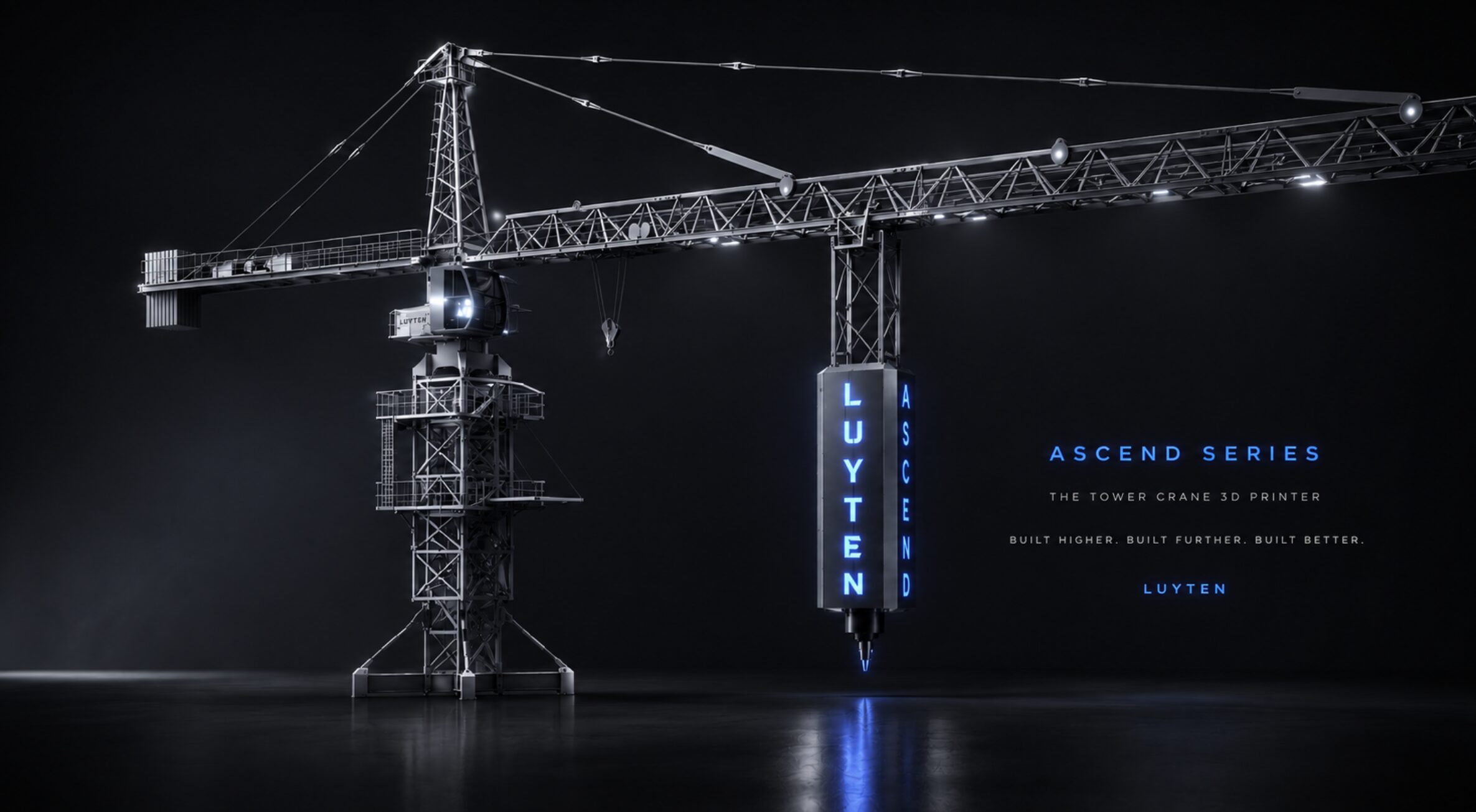
Luyten Ascend Series A27 combines tower crane with concrete 3D printing for 100-meter structures

Hardware
Originally reported by 3Druck
Australian robotics and construction 3D printing company Luyten has introduced the Ascend Series A27, a building system that integrates a tower crane with robotic concrete extrusion. The system can produce structures up to 100 meters high within a 45-meter working radius, using Luyten's proprietary Ultimatecrete material - a printable concrete formulation engineered for layer bonding in multi-story applications. The A27 is designed to be operational within one to two days on site, and incorporates AI-driven print path generation and digital construction workflow software. Founder and CEO Ahmed Mahil frames the system not as an add-on to existing crane infrastructure, but as a transformation of the tower crane itself into a robotic manufacturing platform that builds directly from digital designs.
This launch targets a persistent bottleneck in construction AM: the inability to scale beyond single-story or low-rise structures due to gantry size limitations and poor integration with existing site logistics. By embedding the print head into a standard tower crane - already present on most large construction sites - Luyten sidesteps the capital expense of dedicated large-format gantries and the workflow friction of introducing entirely new equipment categories. The approach fits the broader pattern of construction AM vendors moving from novelty demonstrations toward production-ready systems that must compete on cost, speed, and regulatory acceptance. Key challenges remain: building code approval for load-bearing printed walls at height, consistent material quality across multi-day pours, and integration with conventional reinforcement and MEP installation workflows. Luyten's direct competitors include COBOD, ICON, and Peri 3D Construction, none of which have yet demonstrated a crane-integrated approach at this scale.
For construction AM to move beyond single-story walls and decorative elements, the industry needs systems that fit existing site economics rather than requiring bespoke infrastructure. The Ascend A27 is a pragmatic engineering response to that requirement, but its real test will be whether it can pass structural certification for multi-story residential or commercial buildings in Australia and export markets. Buyers should evaluate the system's demonstrated layer adhesion data and third-party load testing before committing to projects above two stories.
Topics