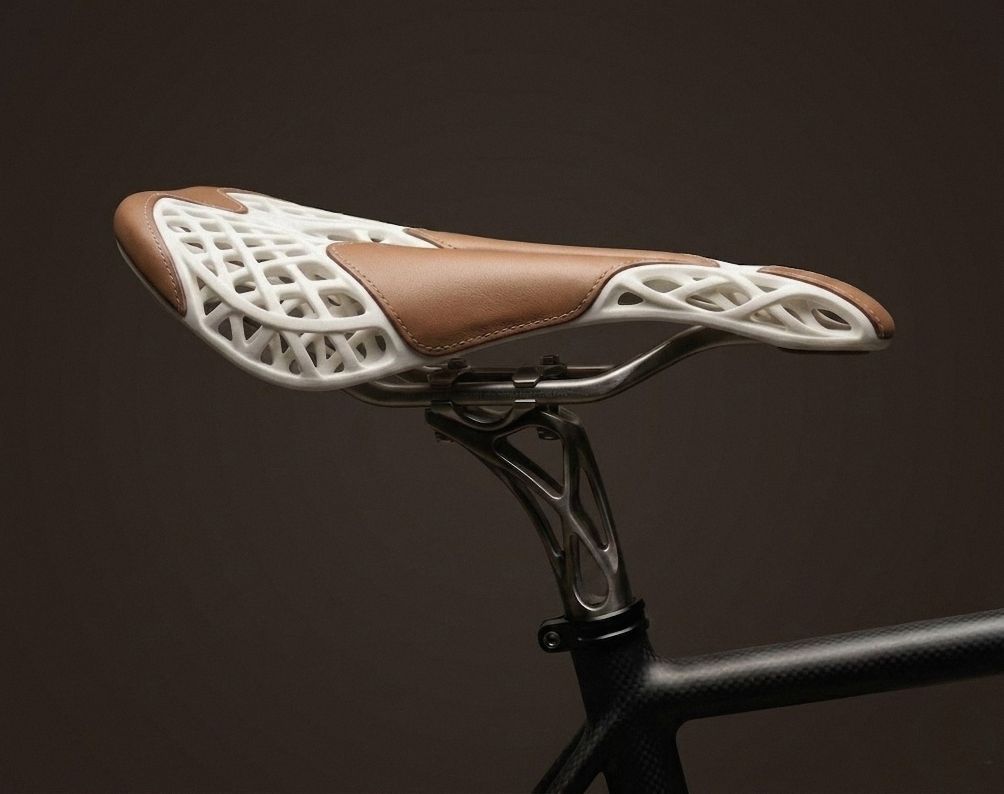
Mahdi Naïm Studio unveils AERIS, a 3D-printed bicycle saddle using lattice structures
Application
Originally reported by 3D ADEPT
Mahdi Naïm Studio, the Lyon- and Casablanca-based industrial design firm, has unveiled AERIS, a 3D-printed bicycle saddle currently in active development. The saddle leverages lattice structures optimized for pressure distribution and weight reduction, continuing Naïm's prior work with Satori on 3D-printed work-from-home objects. AERIS enters a product category where additive manufacturing has already established a commercial foothold, notably through Carbon's DLS technology powering the Specialized S-Works saddle, Fizik's One-to-One custom service using pressure-mapping data, and Czech company Posedla's Joyseat algorithm-driven design. No production timeline, pricing, or manufacturing partner has been disclosed for AERIS at this stage.
This launch updates the ongoing consumer-electronics titanium pull-through pattern, where AM's design freedom in high-end sporting goods creates a proving ground for lattice-based serial production. The bicycle saddle segment is a narrow but instructive vertical: it demands the exact combination of lightweighting, personalized ergonomics, and structural compliance that polymer vat photopolymerization and powder bed fusion excel at. Mahdi Naïm Studio's entry is not a technology breakthrough but a design-language extension - the studio is applying the same lattice-first methodology that worked for desktop objects to a higher-load, performance-critical application. The competitive landscape already includes Carbon's embedded partnership with Specialized and Fizik, meaning AERIS will need either a differentiated manufacturing process or a clear cost advantage to gain traction.
For Mahdi Naïm Studio, the practical next step is securing a production partner with certified polymer AM capacity - likely DLS or SLS - and validating the saddle against real-world cycling loads. Without a disclosed timeline or partner, AERIS remains a design concept rather than a market entry. Buyers should watch for fatigue-test data and rider-fit validation before treating this as a viable alternative to existing 3D-printed saddles.
This article is an AI-assisted rewrite of the linked source report. Facts originate from the source; phrasing is AMPulse's. Use Read Original below to verify, or Report an issue if something is wrong.
Topics