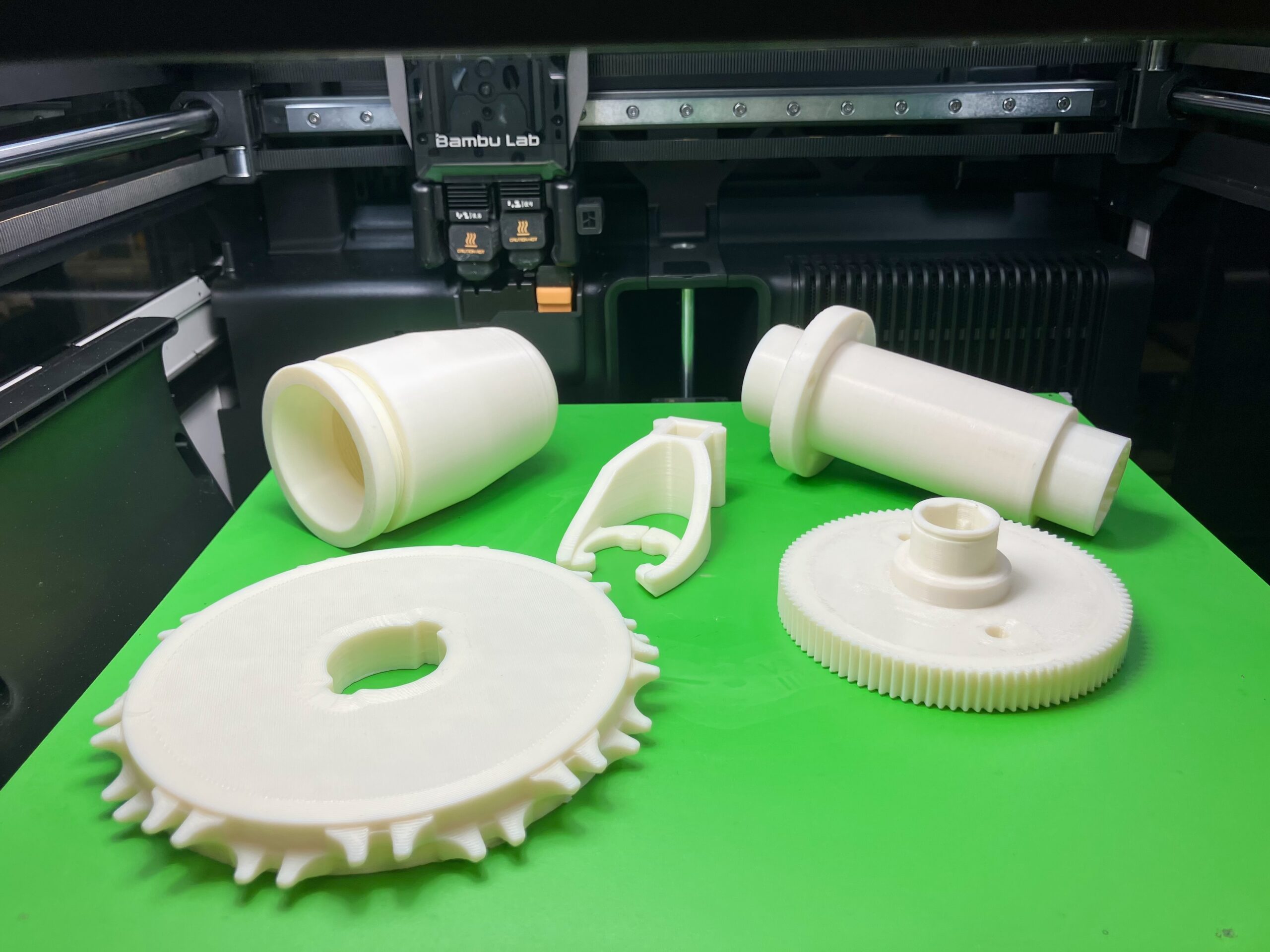
MORSAN and LEHVOSS partner on 3D printing spare parts for food and beverage industry

Service
Originally reported by 3DPrint.com
MORSAN, a Greek digital spare parts provider, has partnered with LEHVOSS, a German specialty materials company, to develop a 3D printing offering specifically for the food and beverage industry. The collaboration focuses on producing spare parts using LEHVOSS's LUVOCOM 3F extrusion materials, including PPS, PA, and PET grades, which are engineered to withstand mechanical loads, aggressive cleaning environments, and high cycle rates in filling and packaging lines. MORSAN is offering a digital warehouse solution for hundreds of spare parts, including conveyor belt gears, chain guides, grippers, and beverage can slides, with parts redesigned for improved performance under specific load cases. Christos Adam Morsy of MORSAN stated that 3D printing is an integral part of modern production and maintenance strategies, with plans to enable on-site part manufacturing via new software solutions.
This partnership targets a high-volume, low-visibility segment of industrial AM: replacement parts for food and beverage production lines, where downtime costs are severe and certification requirements are strict. The food and beverage vertical is a fragmented but economically significant market for polymer AM, often overshadowed by aerospace and medical applications. MORSAN's approach mirrors the broader industrial trend toward digital inventory and localized spare part production, but with a vertical-specific focus that includes material qualification for aggressive cleaning chemicals and mechanical cycling. LEHVOSS's LUVOCOM 3F range, already established in high-temperature and high-flow applications, provides the material backbone for this push, while MORSAN handles part design, digital warehousing, and eventual on-site printing capabilities.
From an expert standpoint, this is a practical, market-driven application of AM that avoids the hype around serial production. The key execution risk for MORSAN is building customer trust in part reliability and certification, particularly for food-contact and safety-critical components. If the company can deliver consistent quality and competitive pricing against traditional injection-molded spares, this model could scale across other industrial verticals with similar maintenance needs.
Topics