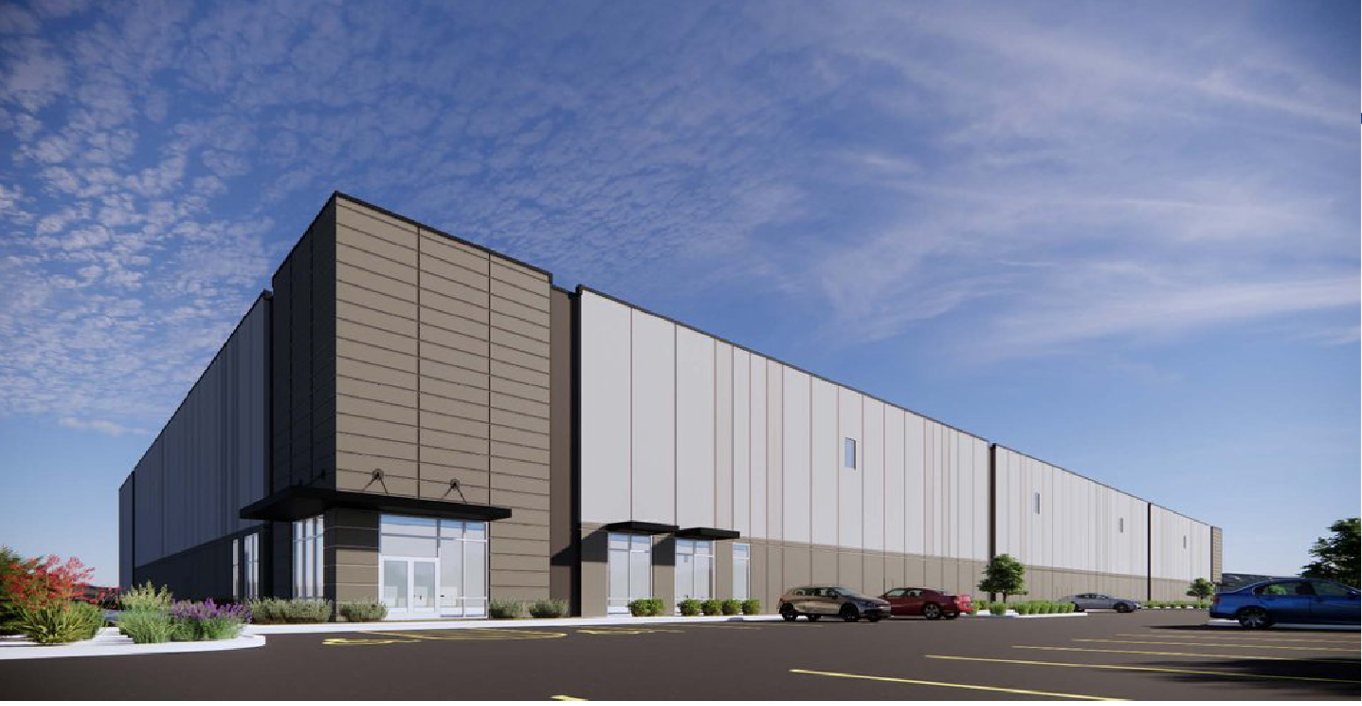
Neighborhood 91 breaks ground on 108,000-square-foot building at Pittsburgh airport advanced manufacturing campus

Platform
Originally reported by 3D Printing Industry
Neighborhood 91 (N91), the advanced manufacturing campus at Pittsburgh International Airport, has broken ground on a new 108,000-square-foot building as part of a planned 195-acre buildout. The $16 million project is funded by Allegheny County, the Commonwealth of Pennsylvania, and equity from the Regional Industrial Development Corporation (RIDC). The first building is fully occupied by tenants including HAMR Industries, Cumberland Additive, Metal Powder Works, RJ Lee Group, Westmoreland Mechanical Testing and Research, and JEOL Inc. Allegheny County Executive Sara Innamorato, ACAA CEO Christina Cassotis, and RIDC President Donald F. Smith Jr. attended the groundbreaking ceremony.
This expansion matters because Neighborhood 91 represents one of the few purpose-built, vertically integrated additive manufacturing campuses in the United States, co-locating powder producers, service bureaus, testing labs, and OEMs on a single airport-adjacent site. The model directly addresses a persistent industry friction: the fragmented value chain that slows qualification and increases logistics costs for metal AM production. By adding 108,000 square feet of capacity, the campus signals that demand for co-located AM infrastructure is real enough to justify public-private capital deployment. The tenant mix - spanning powder production (Metal Powder Works), printing services (Cumberland Additive), and materials characterization (RJ Lee Group, Westmoreland) - mirrors the full metal AM workflow, from feedstock to certified part.
For the AM industry, Neighborhood 91 is a test case for whether geographic clustering can reduce the per-part cost and qualification timeline that have limited metal AM's penetration into aerospace and defense production. The campus already benefits from proximity to the University of Pittsburgh's Center for Advanced Manufacturing, which provides a research pipeline. The practical question is whether the second building fills as quickly as the first, and whether the tenant mix shifts toward higher-volume production or remains weighted toward R&D and pilot-scale work. The airport location and public funding reduce site risk, but the campus still needs to demonstrate that co-location translates into measurable throughput advantages over distributed supply chains.
Topics