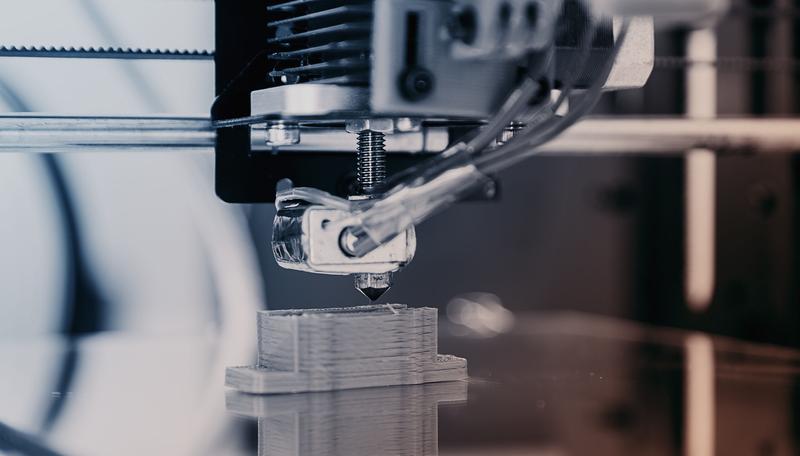
Palprint raises €125K DBU grant for custom recycled PET packaging via 3D printing

Hardware
Originally reported by nachrichten.idw-online.de
Palprint, a Paderborn-based startup spun out of the University of Paderborn's Garage33 incubator, has secured €125,000 in funding from the Deutsche Bundesstiftung Umwelt (DBU) to develop a closed-loop packaging system using 3D printing with recycled PET. The company targets the industrial machinery and equipment sector, offering both on-demand custom packaging production and a turnkey system comprising partner 3D printers, proprietary software, and material supply. Co-founders Paul Lindner and Andreas Ribul-Olzer are also collaborating with Fraunhofer IPA and Fraunhofer ICT on a PET foam variant that expands up to 75% faster and reduces weight by up to 90% compared to standard 3D-printed parts, enabling larger-volume packaging that competes with expanded polystyrene. Palprint will showcase its approach at the IFAT environmental technology trade fair in Munich starting May 4, 2026.
This development sits at the intersection of two underappreciated AM demand verticals: industrial tooling and logistics consumables. While most media attention focuses on aerospace or medical serial production, the replacement of oversized single-use packaging with custom-fit, recyclable alternatives addresses a massive, low-qualification market where switching costs are minimal and environmental regulation is accelerating. Palprint's model - selling hardware, software, and materials as an integrated system rather than just a service - mirrors the platform strategy that has driven adoption in polymer material extrusion for prototyping, but applied here to a consumable logistics application. The PET foam collaboration with Fraunhofer is particularly notable: if the speed and weight claims hold at scale, it could undercut the economics of traditional foam packaging while eliminating single-use waste. The DBU grant, while modest, signals institutional validation for a use case that has been largely absent from AM industry discourse.
From a practical standpoint, Palprint's immediate challenge is proving that its PET foam process can achieve consistent material properties and throughput at the volumes industrial customers require. The company should focus on securing a pilot deployment with a machinery manufacturer willing to replace its standard packaging inventory with on-demand printed alternatives. For buyers in industrial logistics, this represents a low-risk trial opportunity: the capital outlay for a single printer and software license is modest, and the material input is recycled PET readily available in the waste stream. If the economics pencil out at even moderate scale, Palprint could carve a defensible niche in a market that larger AM hardware vendors have largely ignored.
Topics