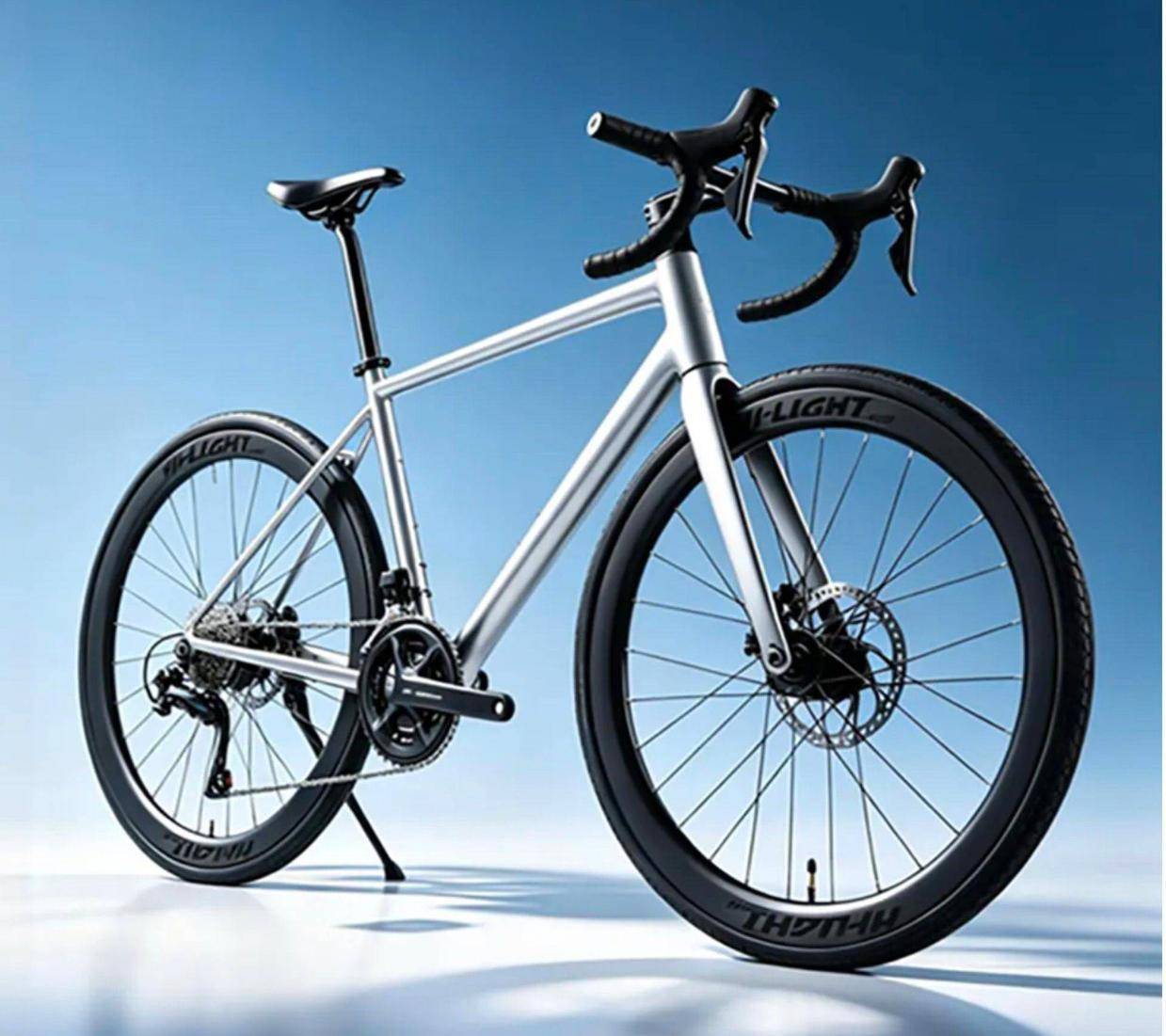
汉邦激光 partners with 河北航轮 to mass-produce 3D-printed titanium alloy bicycle components using HBD P400

Hardware
Originally reported by 南极熊3D打印网
汉邦激光 (Hanbang Laser) has partnered with Hebei Hanglun to mass-produce 3D-printed titanium alloy bicycle components using the HBD P400 metal LPBF system. Announced on May 20, 2026, the collaboration covers fork blades, cranks, bottom brackets, handlebars, and other core parts. The HBD P400 prints 72 structural units in a single 17.5-hour build, with fork blades weighing approximately 85g at a minimum wall thickness of 1.5mm, achieving 20-50% weight reduction versus conventional fabrication. Hebei Hanglun has deployed multiple HBD P400 units to scale from pilot validation to stable series production.
This partnership exemplifies the consumer-electronics titanium pull-through effect now extending into high-end sporting goods, where LPBF enables topology-optimized, monolithic structures that replace multi-part welded assemblies. The application fits the broader pattern of Chinese AM localization: Hanbang Laser provides the production-grade equipment and process know-how, while Hanglun brings domain expertise in titanium bicycle manufacturing and end-customer access. The 72-unit batch size and 17.5-hour cycle time demonstrate that metal AM can achieve production-level economics for mid-volume, high-value components, moving beyond the prototyping and small-batch paradigm that has constrained bicycle AM adoption. This is a concrete step toward the all-3D-printed titanium bicycle vision, though full-frame printing remains a frontier.
From an AM industry perspective, the significance lies in the repeatable production economics rather than the novelty of printing bicycle parts. Hanbang Laser must now prove that the HBD P400 fleet can maintain consistent part quality, surface finish, and mechanical properties across thousands of units, not just the initial validation batches. For buyers and OEMs evaluating metal AM for sporting goods, the benchmark to watch is cost-per-part parity with traditional titanium fabrication, not just weight savings. If Hanbang and Hanglun can deliver reliable, cost-competitive output at scale, this will serve as a reference case for other consumer-hardware verticals considering LPBF adoption.
Topics