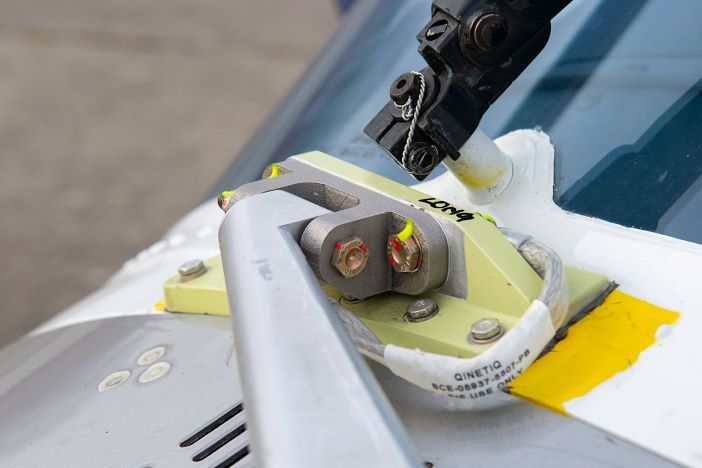
QinetiQ and AMS have achieved a world-first flight using a structural component 3D printed from 98% recycled titanium.
Technology
1 min read

QinetiQ and AMS have achieved a world-first flight using a structural component 3D printed from 98% recycled titanium.

Originally reported by aerospacetestinginternational.com

QinetiQ and AMS have achieved a world-first flight using a structural component 3D printed from 98% recycled titanium. Validated on an Agusta A109S, the part reached 97% material efficiency while slashing CO2e emissions by 93.5%. This validation proves that secondary aerospace-grade powders can meet rigorous flight-safety standards, enabling a truly circular defense economy. By decoupling from volatile global markets, nations can establish domestic material sovereignty through resource recovery. 🚀♻️

How This Connects

6 related events
  1. Same pattern

    Lockheed Martin has successfully integrated metal 3D printed components into the Orion spacecraft for the Artemis II mission, which launched on April 1, 2026, from the Kennedy Space Center in Florida.

  2. Same pattern

    Rocket Lab is scaling its additive manufacturing operations by transitioning proven LPBF 3D printing workflows from the Rutherford engine to the larger Neutron engine.

  3. Same pattern

    Space Compass Corporation has finalized an agreement to acquire a Hummingsat GEO satellite from Swiss-based manufacturer SWISSto12.

  4. Same pattern

    GE Aerospace has committed 110 million Euro to expand its European manufacturing footprint in 2026, with 77 million Euro specifically allocated to Italian facilities for additive m...

  5. Same pattern

    Addiguru is scaling metal additive manufacturing quality assurance through strategic partnerships with Renishaw, LISI Aerospace, and the MTC.

  6. This article

    QinetiQ and AMS have achieved a world-first flight using a structural component 3D printed from 98% recycled titanium.

  7. Same pattern

    LandSpace has filed for a 1 billion dollar IPO on Shanghai’s Star Market, the first rocket firm to use new rules prioritizing technical milestones over profits.