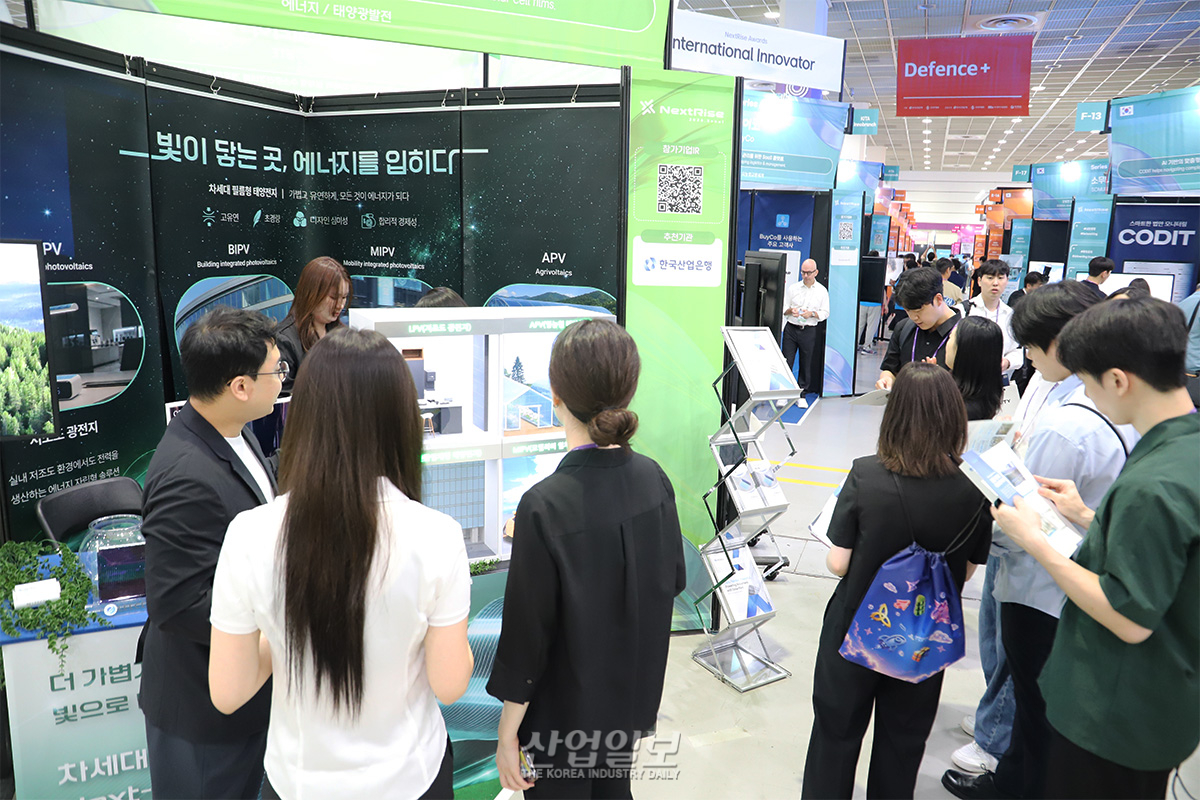
Rissel unveils film-type solar cells at NextRise 2026, targets curved buildings and indoor appliances

Materials
Originally reported by KIDD
South Korean solar specialist Rissel (LEECELL) demonstrated its flexible film-type solar cell prototypes at NextRise 2026 in Seoul COEX on June 18-19. The GIST spin-off is targeting three initial application verticals: low-illumination photovoltaic (LPN) cells for indoor appliances and wall surfaces, building-integrated photovoltaics (BIPV) for curved facades and windows, and agrivoltaic (APV) films for greenhouses and smart farms. Rissel plans to begin roll-to-roll mass production of LPN products by end of 2026, followed by BIPV in 2027 and APV thereafter, with mobility-integrated photovoltaics (MIPV) under development.
This announcement sits at the intersection of two structural trends: the push to decouple solar from rigid silicon panel infrastructure, and the growing demand for energy-harvesting surfaces in smart buildings and IoT-enabled agriculture. Rissel's film approach directly addresses the weight and form-factor limitations of conventional silicon panels - which require roughly 30 kg per square meter of support structure - by offering adhesive, lightweight films that conform to curved surfaces. The company's graduated rollout strategy, starting with indoor low-light applications before moving to building-integrated and agricultural use, mirrors the adoption pattern seen in other thin-film photovoltaic segments: prove efficiency under controlled conditions first, then scale to more demanding outdoor environments. Rissel's academic lineage from GIST provides credibility in materials science, but the critical execution challenge will be achieving competitive power conversion efficiency at commercially viable roll-to-roll throughput rates.
For buyers evaluating building-integrated solar or indoor energy harvesting, Rissel's film technology offers a genuine alternative to rigid panels in form-factor-constrained settings, but the company must demonstrate that its LPN cells can maintain stable performance over multi-year indoor cycles and that its BIPV films meet building code requirements for fire safety and durability. The 2026-2027 production timeline is aggressive for a university spin-off entering a capital-intensive manufacturing process, and Rissel will need to secure pilot customers and potentially additional funding to bridge from prototype to volume production. The technology is promising; the execution roadmap remains the open variable.
This article is an AI-assisted rewrite of the linked source report. Facts originate from the source; phrasing is AMPulse's. Use Read Original below to verify, or Report an issue if something is wrong.
Topics