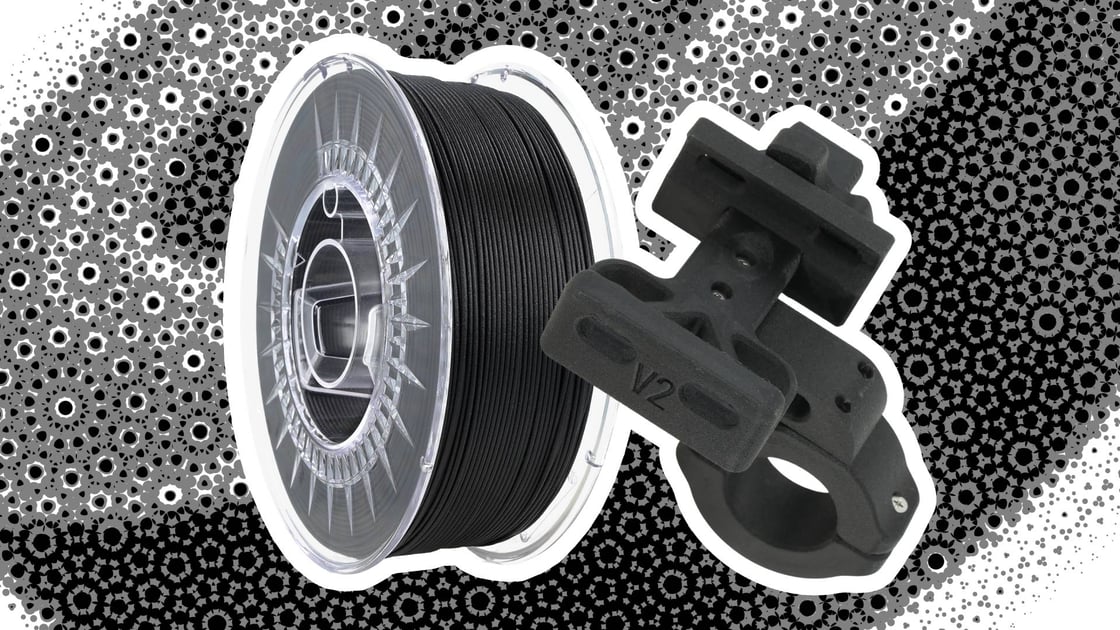
Rosa3D launches glass-fiber TPU 75D filament for high-temperature automotive applications
Originally reported by All3DP
Rosa3D has introduced a new glass-fiber reinforced TPU filament with a Shore hardness of 75D, specifically targeting high-temperature automotive environments such as engine compartments. The material combines the flexibility of TPU with the stiffness and chemical resistance provided by glass-fiber reinforcement, allowing parts to bend without fracturing under extreme loads. Rosa3D positions this as a technical composite for demanding mechanical and environmental conditions, moving beyond conventional soft TPU grades into semi-rigid engineering territory. The product is available immediately through Rosa3D's distribution channels, though pricing and specific print parameters have not been fully detailed.
This launch addresses a persistent gap in the polymer AM materials market: the lack of a durable, flexible-yet-stiff filament that can survive sustained under-hood temperatures and chemical exposure. Most TPU filaments sit in the 85A–95A range, which is too soft for structural automotive brackets, clips, or ducting. Rosa3D's 75D formulation pushes into the realm of polypropylene or nylon performance while retaining TPU's impact resistance and layer adhesion advantages. The automotive vertical has long been selective about AM adoption, using it primarily for tooling and low-volume jigs rather than end-use parts. A material that can withstand engine-bay conditions - heat cycling, oil, coolant, vibration - could expand the addressable use case for FDM/FFF in automotive service parts and aftermarket components. Rosa3D competes here against established engineering filament makers like Polymaker (PA6-CF), BASF (Ultrafuse TPU), and Fiberlogy, but the glass-fiber TPU 75D occupies a specific niche that none of those cover directly.
For Rosa3D, the practical challenge is qualification: automotive OEMs and tier-1 suppliers will need thermal aging data, chemical resistance curves, and creep testing before this material enters any production-adjacent application. The company should prioritize publishing those test results and securing at least one reference customer in the automotive aftermarket or motorsports segment. For users, this filament is worth evaluating if they need a part that must flex without cracking and survive under-hood conditions - but it is not a drop-in replacement for conventional TPU; print temperature and bed adhesion will differ significantly.
Topics