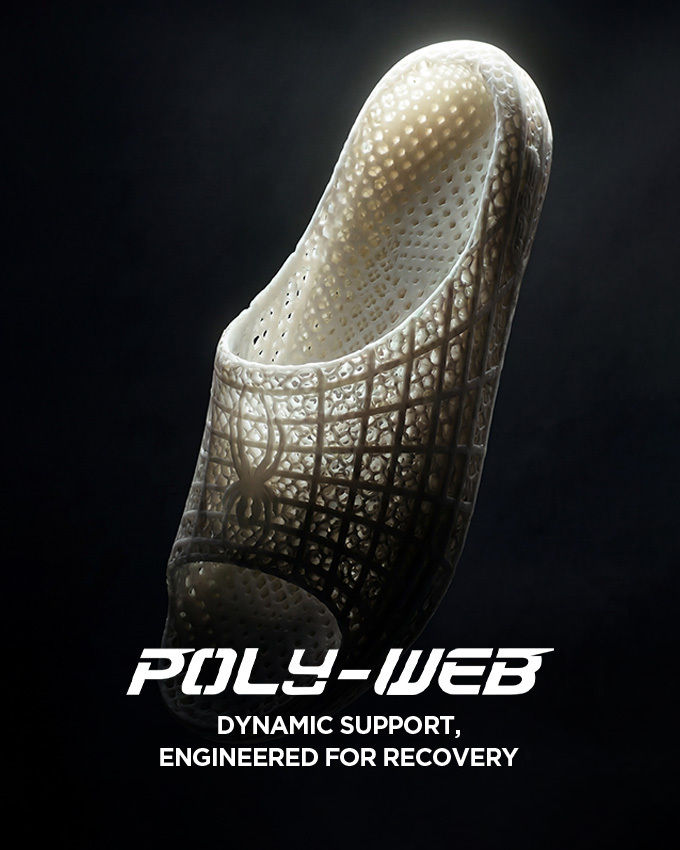
SPYDER launches Polyweb recovery slide manufactured with 3D printing technology
Originally reported by sportsworldi.com
SPYDER, the global premium sports brand, has introduced the Polyweb recovery slide, a footwear product manufactured using 3D printing technology. The slide features a multi-density lattice structure designed from foot pressure data, with a soft heel for impact absorption, a rigid midfoot arch support, and a spring-like forefoot for propulsion. The core material is ELASTO 1000, a Shore 73A durometer elastomer that delivers approximately 40% greater firmness than standard slides, and the open-cell structure is engineered to pump heat and moisture out during walking, confirmed by thermal imaging tests. The product has passed 100,000 flex-cycle durability tests and has been wear-tested by athletes across multiple sports disciplines.
This launch represents a targeted application of polymer AM in the consumer goods vertical, specifically within the athletic recovery and footwear segment. While most high-volume AM footwear applications have centered on midsoles from companies like Adidas (Futurecraft) and New Balance (TripleCell), SPYDER is applying the technology to a recovery slide - a lower-complexity, higher-margin accessory category where lattice design and material properties directly address user pain points like heat buildup and arch fatigue. The use of a single elastomer material with variable density structures avoids the multi-material assembly challenges of traditional foam-plus-rubber slides, and the open-cell geometry is a structural feature that cannot be replicated by injection molding. This positions the Polyweb as a functionally differentiated product rather than a cosmetic AM application, and it demonstrates how polymer AM (specifically material extrusion or powder bed fusion of flexible materials) can enable performance features that justify a premium price point in a crowded market.
From a practical standpoint, SPYDER has executed a disciplined product launch: the engineering claims are specific and test-backed, the athlete validation is real, and the manufacturing method is clearly tied to a functional advantage rather than marketing novelty. The key execution risk is scaling production consistently at acceptable per-unit costs, as AM of elastomeric lattice structures at consumer volumes remains more expensive than injection molding. If SPYDER can maintain quality and hit a retail price that consumers accept for a recovery slide, this could become a reference case for how established sports brands use AM to create niche, high-performance accessories without overcommitting to full footwear production lines.
Topics