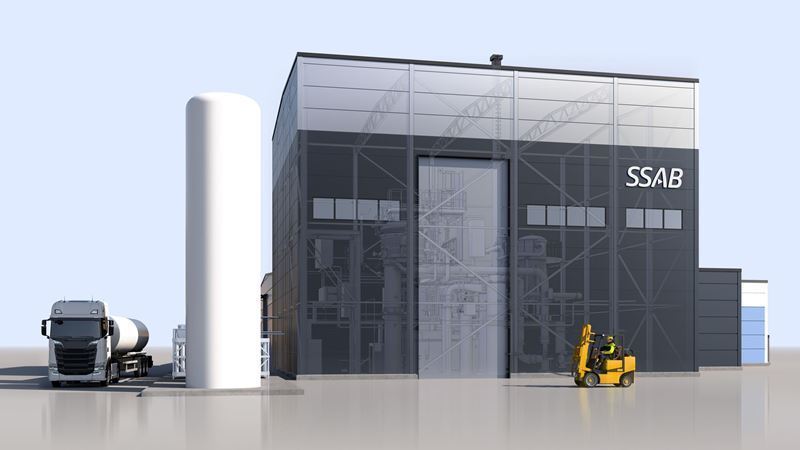
SSAB invests in 350-tonne steel powder production expansion in Oxelösund

Materials
Originally reported by steelradar.com
Swedish steelmaker SSAB has announced an expansion of its steel powder production facility in Oxelösund, Sweden, dedicated to additive manufacturing applications. The investment targets commercial-scale production, with capacity scheduled to increase gradually from the first quarter of 2028 to approximately 350 tonnes annually. The project is being executed in cooperation with SMS group, with construction beginning in 2026 and the facility expected to employ around 20 people at full capacity. SSAB Powder Technology President Jesper Vang cited growing demand for high-performance metal powders from defense, automotive, and engineering sectors as the driver for the expansion.
This expansion places SSAB within a critical but often overlooked segment of the AM value chain: materials production at industrial scale. While much of the industry's attention focuses on printer OEMs and service bureaus, the availability of qualified, consistent metal powder remains a binding constraint for production adoption, particularly in defense and automotive where SSAB sees demand. The company's claim that its powders can be used without post-production heat treatment is a meaningful differentiator, as it directly addresses the post-processing bottleneck that inflates cost and lead time in metal AM workflows. SSAB leverages over 50 years of high-performance steel expertise, positioning its powder portfolio as a materials-first alternative to the aluminum substitution narrative that has dominated consumer electronics titanium pull-through discussions.
The 350-tonne capacity figure is modest relative to the broader metal powder market, but it signals a deliberate, capital-efficient expansion rather than a speculative buildout. For buyers evaluating metal AM for production, the availability of a steel powder that eliminates a heat treatment step is a concrete operational advantage, not a marketing claim. SSAB's success will depend on qualification timelines with end users and whether the powder's mechanical properties hold across different LPBF and DED platforms. This is a materials qualification discipline story, not a machine story, and it deserves proportional attention.
This article is an AI-assisted rewrite of the linked source report. Facts originate from the source; phrasing is AMPulse's. Use Read Original below to verify, or Report an issue if something is wrong.